Free English consultation · Three medical directors on-site · Gangnam, Seoul
Lifting · Cog & Silhouette Soft Threads

Thread Lift in Gangnam, Seoul — Cog and Silhouette Soft Threads, and How Thread Lift Korea Cost Is Counted

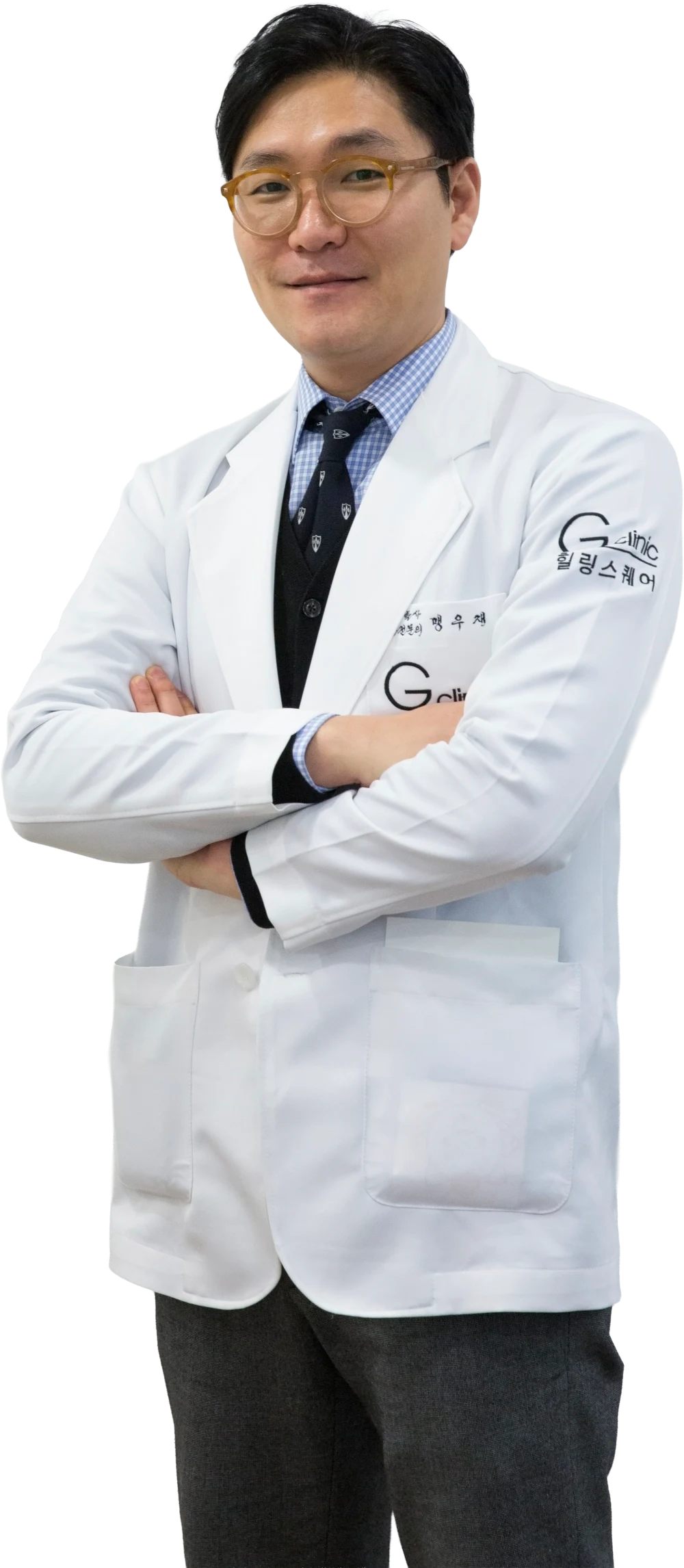
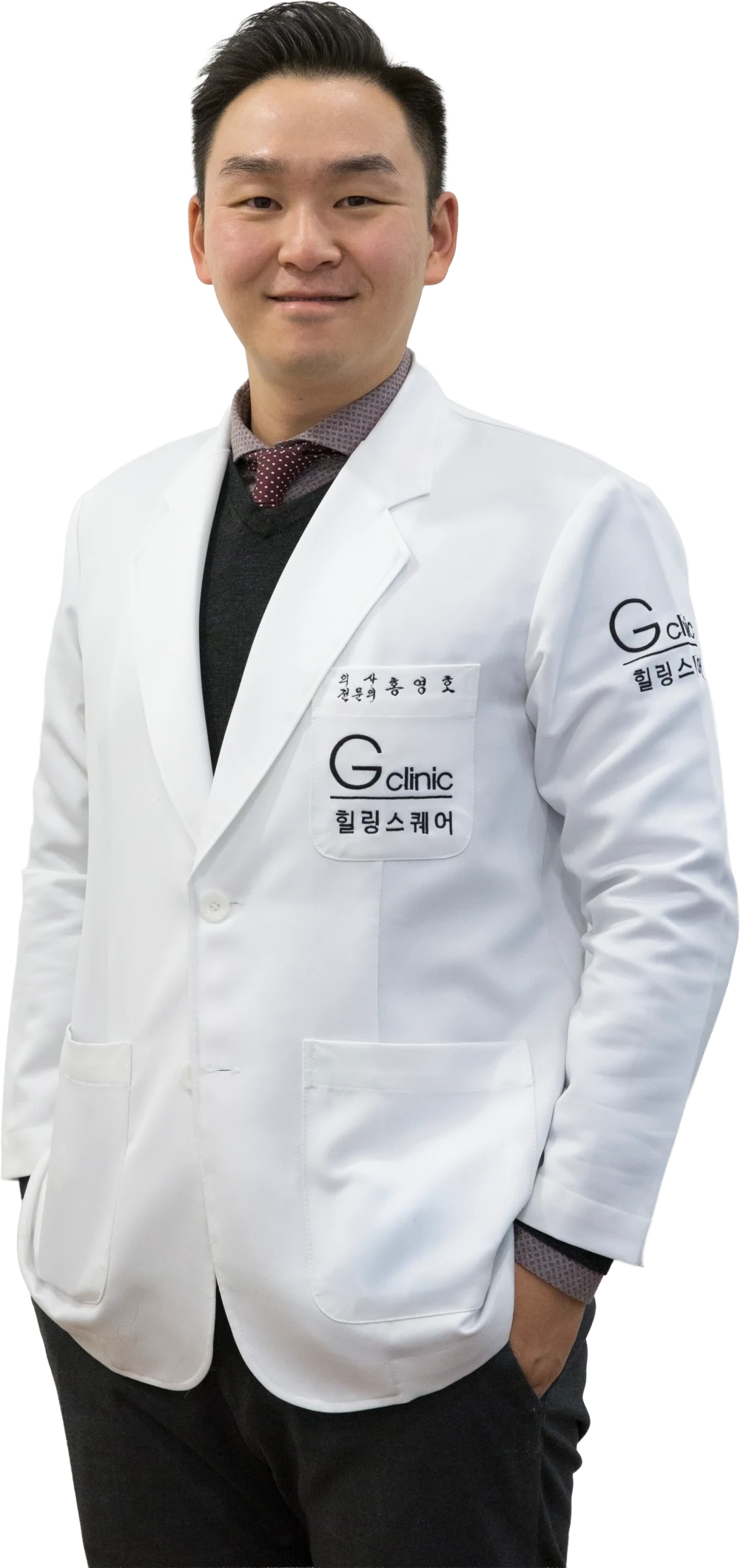
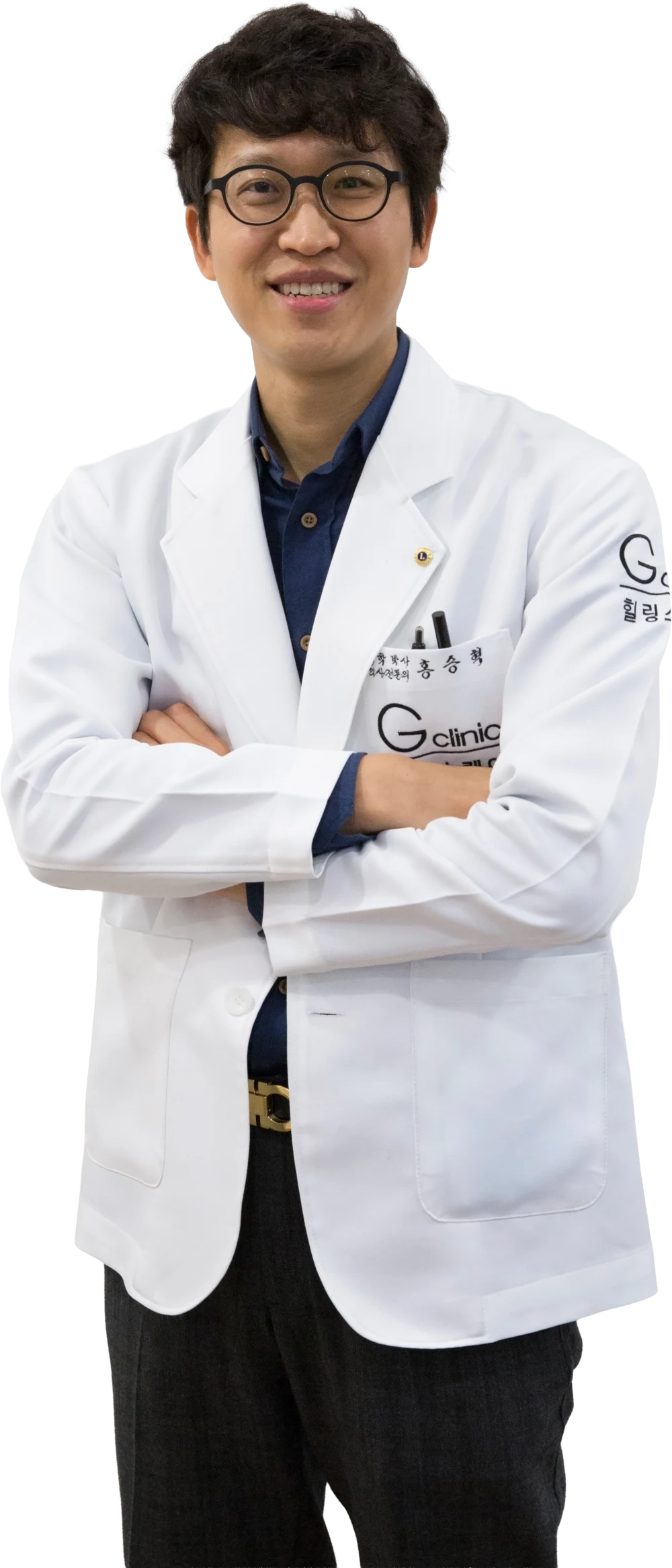
Every thread is mapped and placed by Dr. Hong Seung-hyuk, Dr. Maeng Woo-jae or Dr. Hong Yeong-ho, the three resident directors, each a board-certified Family Medicine specialist working in aesthetic dermatology. The path is drawn on your face while you sit upright, and the number of threads on your quote is the number that path was judged to need.

  • ✦Silhouette Soft certified clinic under Sinclair, alongside cog threads for finer path work
  • ✦Quoted by the thread, with the count fixed in the room at a free consultation
  • ✦Clinic-reported 20,000+ lifting cases since 2006, with English spoken throughout the appointment
20,000+
Lifting & petit cases
clinic-reported, since 2006
3
Resident Directors
Family Medicine specialists · aesthetic dermatology
10
Languages
messenger support

How is thread lift cost in Korea worked out, and what fixes a Seoul price?

By the thread. G Clinic quotes thread lifting per thread placed and runs two routes: cog threads and Silhouette Soft, for which the clinic holds Sinclair certification. A director draws the lift path on your face at a free consultation, decides how many threads each side needs to carry that path, and the total follows the count, so a figure only becomes real once the map exists. The threads absorb over time; while they are present they grip loosened tissue and hold it where the path put it, and the body answers the track they leave with its own collagen. Placement is done under local anaesthetic with you awake, and sedation can be arranged at an additional cost where a patient genuinely needs it. Threads suit mild to moderate jowling. Where laxity has passed what a suspension thread can carry, your director says so and sends you for a surgical opinion.

Inside the Room

A thread lift appointment, from drawn path to trimmed end.

Four stages, all of them in the hands of a resident medical director, with the count and the path agreed while you are still sitting up.

  1. 01

    Drawing the lift path while you sit upright

    Sagging behaves differently lying down, so the marking is done with you seated and your face at rest, then repeated with you talking and smiling. The director marks entry points near the temple or in front of the ear, traces where each thread will travel, and marks the vector it will pull along. That drawing, and the count it implies, is what you are quoted from. The examination costs nothing and you are free to leave with the drawing photographed and nothing booked.

  2. 02

    Local anaesthetic, and why you stay awake for it

    The entry points and the marked tracks are numbed with a local anaesthetic given in the room. Staying awake earns its keep here: at the moment tension is taken up you are asked to sit forward, open, close and speak, and what the two sides look like in motion decides how far each thread is drawn. Sedation is available where a patient genuinely needs it, at an additional cost the director states up front.

  3. 03

    Passing the threads and taking up tension

    A fine cannula or needle carries each thread through the plane under the skin along the drawn track. Once it is seated, the tissue is eased upward over the grip points and the end is anchored. Threads are placed one at a time and checked against the other side of the face after every pass, since symmetry is easier to build than to correct. You feel pulling and pressure, and you are asked to report anything sharper.

  4. 04

    Trimming the ends, then the review appointment

    Loose ends are trimmed below the surface and the entry points are dressed, which is the whole of the closure. You are shown the face in a mirror while any early puckering is still visible so that nothing surprises you at home. A review is booked for after the swelling has gone, because a face at the door and the same face a fortnight later are two different assessments.

The Threads

What a thread lift is, and what the threads are actually doing.

A thread lift is mechanical. Absorbable suspension threads are introduced under the skin along a planned track; grip points along their length catch soft tissue that has drifted downward, and the thread carries that tissue back along the vector the director drew. The change is present the moment tension is taken up, which separates this route from every energy device in the building, where you wait weeks for tissue to answer.

A second, slower thing happens alongside it. The material provokes a healing response along the track it occupies, and the body lays down collagen there while the thread itself is broken down and cleared. So a thread lift has two clocks running at once: an immediate repositioning that you see in the mirror, and a gradual tissue response along the path that outlives the thread. G Clinic does not publish a fixed span for how long the effect holds, and your director discusses the likely course with you one to one instead of quoting you a number that was measured on somebody else.

Two thread routes are used here. Cog threads carry barbs cut or moulded along the body of the thread and are worked into finer paths. Silhouette Soft is a suspension system for which the clinic is a certified provider under Sinclair, its manufacturer. Where this route sits against ultrasound and radiofrequency is laid out across the Face Lifting hub, which carries the whole line-up in one place.

Counting Threads

How a thread count is settled, side by side across a jaw line.

The unit of work is one thread along one track. Because that unit is countable, the clinic can quote per thread and hold the arithmetic in plain view: the two sides of your face are counted separately, added, and that sum is your plan. Faces are rarely symmetrical to begin with, so an odd total is ordinary and a director will explain why one side took an extra pass.

What drives the count is how far the tissue has travelled and how many vectors it takes to bring it back. A jaw line that has only begun to blur may need a small number of tracks running toward the temple. A face where the cheek has also flattened and the fold beside the mouth has deepened needs tracks in two directions, and the count climbs accordingly. Neck work adds its own tracks again. None of this is decided from photographs sent ahead of a flight; the drawing is made on your skin, and directors here regularly propose fewer threads than a patient walked in expecting to buy.

Route matters as much as number. A plan of several cog threads and a plan built on Silhouette Soft are quoted differently because the threads themselves are, so two patients with the same visible complaint can leave with quotes that look nothing alike. Patients weighing a mechanical plan against an energy plan often read the Ultherapy Prime page before their consultation, since the two are counted on completely different units.

Suitability

Who suits cog or Silhouette Soft threads, and who gets turned away.

The patients this route was built for have mild to moderate jowling: a jaw line that has lost its edge, a cheek that has slipped a centimetre south, skin that still has some spring left in it. Threads need tissue with enough body to grip. They also suit people who want the change visible at the end of the appointment and cannot spare the weeks an energy route asks for.

The refusals are just as defined, and they are made out loud. Heavy laxity is the common one: where the soft tissue has descended far enough that a thread would be carrying a load it was never designed to carry, the director says so plainly, declines the booking, and refers you for a surgical opinion. Nobody at this clinic sells a larger thread count to paper over that gap, and a patient leaving with a recommendation against treatment is a legitimate result of a free consultation. Very thin, poorly supported skin is a second refusal, because grip points sitting close to the surface are the ones that show.

Threads are also postponed during pregnancy and breastfeeding, where skin in the field is inflamed or infected, where a bleeding disorder or anticoagulant treatment has not been reviewed, and where an unstable medical condition needs settling first. And some complaints are simply the wrong shape for a thread: heaviness made of fat volume belongs with the G-fat Fat Dissolving Injection side of the clinic, and crepey texture across a wide field is a conversation about Volnewmer.

The Weeks After

What the weeks following a thread placement look like.

You leave with the lift already in place, and then it moves. The first days usually overstate it: swelling exaggerates the tension and can make the treated side look tighter or higher than it will settle. Some patients describe a drawn feeling at the temple when they open wide. Over the following weeks the tissue relaxes onto the threads and the line you keep emerges from underneath the swelling.

The slower half of the response arrives later, as the body builds collagen along each track. That part is not something you can watch happening; it shows up as the face holding its position after the initial tightness has faded. Individual results may vary, and how much of the change survives depends on your age, skin quality, how much laxity was present at the start, and how much weight moves in either direction afterwards.

Because two clocks are running, the review appointment matters more here than the discharge conversation does. A director looks at the face once the swelling has cleared, checks the two sides against each other, palpates the tracks, and tells you whether the plan achieved what it was drawn to achieve. That is also the appointment where a further thread, a top-up on one side, or a move to an energy route gets discussed on the evidence in front of you.

Named Risks

Dimpling, extrusion and the rest of the thread lift risk list.

Thread lifting is a medical procedure and it carries medical risk. Swelling, bruising along the tracks, tenderness and a pulling sensation on wide mouth opening are the ordinary events, and they belong to the first days. Small entry-point marks are expected and fade.

The list beyond that is what your director goes through before you sign anything. Dimpling or puckering of the skin over a grip point, sometimes needing the thread released or repositioned. Asymmetry between the two sides while everything settles, and occasionally after it has. A thread that can be felt as a firm line under the skin, or seen as a ridge when the face moves. Extrusion, where a thread end works its way toward the surface at an entry point and has to be trimmed or removed. Infection along the thread path, which is uncommon and treated urgently when it happens. Prolonged tightness, nerve irritation felt as numbness or tingling over a patch of skin, and a visible track that takes longer than expected to settle all appear on the same list.

Written consent is taken once that list has been read through with you, and the clinic asks you to make contact early — the same day — if pain climbs, redness spreads, or a thread end becomes palpable at the skin surface. Reporting those early is what keeps a small problem small.

Living With It

Chewing, sleeping and the habits to park while threads settle.

There is no ward and no recovery room. You are up and out on your own feet, and most patients go back to ordinary life the same day, with the caveat that the face on that day is a swollen face and photographs taken then are worth nothing as evidence.

What you are asked to drop for a while is anything that stretches, presses or heats the tracks. Wide yawning, hard chewing and tough food pull directly on the grip points. Sleeping face-down, or with a cheek pressed into a pillow, drags one side out of line overnight. Facial massage, cleansing devices, saunas, hot yoga and strenuous training all sit on the same list, and so does dental treatment that requires your mouth held open for a long stretch. Your director gives you the window for each of these in writing at discharge, because it varies with how many threads were placed and where they run.

Sleeping slightly propped up for the first nights helps the swelling drain, and cold applied gently over the cheeks makes the first evening more comfortable. Patients flying home are asked to keep at least a day in Seoul so a director can look at the entry points before departure. Coordinators arrange the appointment around your dates once you send them.

Set Against

Thread lifting measured against the energy routes in the same clinic.

Four routes share the lifting category here. What follows is the frame a director uses when deciding which of them fits the face in the chair.

Planning question Thread lift Ultherapy Prime Shurink (+Universe) Volnewmer
What moves the tissueAbsorbable threads gripping and carrying itMicro-focused ultrasound placed at the SMASAn ultrasound lifting platformRadiofrequency through skin and the layer beneath
Unit the quote is built onEach thread placed, counted per sideShot count, in published tiersShot count, tier agreed in the roomShot count, tier agreed in the room
When you see the changeAt the end of the appointment, under swellingOver the weeks the collagen response takesOver the weeks that followOver the weeks that follow
Anaesthesia at G ClinicLocal anaesthetic, awake; sedation at extra costNumbing cream; sedation at extra costSettled with your directorSettled with your director
Hold the clinic publishesNo fixed span published; discussed one to oneSix months to a year or moreDiscussed one to oneDiscussed one to one
Manufacturer certification heldSilhouette Soft certified provider (Sinclair)Ulthera Authenticity Certified Clinic—Volnewmer Official Certified Clinic (Classys)
Where it stops being rightHeavy laxity needing a surgical liftLaxity past what energy can holdGiven at consultationGiven at consultation

Read the table as preparation for a conversation. Anatomy, health history and the specific change you want decide the route, and a resident director works through it with you at no charge. The other ultrasound platform in the same room has its own page at Shurink HIFU.

Scientific Evidence

Published literature on suspension threads and suture lifting.

The papers below are listed for what their titles cover and for nothing further. One reports on the safety of combining facial lifting using suspension threads with microfocused ultrasound with visualization (Casabona, 2020). A second describes a two-year outcome of thread lifting with absorbable barbed PDO threads, together with a scoring approach for objective and subjective assessment (Ali, 2017). A third addresses facial thread lifting with suture suspension (Tavares, 2017). These are entries in the published record about a technique category. They are not statements about outcomes at G Clinic, they forecast nothing for any individual face, and they replace no part of the consultation with your director.

  1. Casabona G. Safety of Combining Facial Lifting with Suspension Threads and Microfocused Ultrasound With Visualization. Journal of Drugs in Dermatology. 2020. doi:10.36849/jdd.2020.4771
  2. Ali Y. Two years’ outcome of thread lifting with absorbable barbed PDO threads: Innovative score for objective and subjective assessment. Journal of Cosmetic and Laser Therapy. 2017. doi:10.1080/14764172.2017.1368562
  3. Tavares J et al. Facial thread lifting with suture suspension. Brazilian Journal of Otorhinolaryngology. 2017. doi:10.1016/j.bjorl.2017.03.015
Pricing

How a thread lift quote is built, one thread at a time.

Quoting runs per thread, and the clinic lists the two routes separately: a single cog thread, and a single Silhouette Soft thread. Multiply either by the count on your drawing and you have the plan. The same rates apply to every patient through the door, with no separate figure for visitors from abroad, and the total is confirmed at the free consultation before anything is booked. Sedation, where a patient genuinely needs it, carries its own additional charge that the director states beforehand.

TreatmentOptionPrice (KRW)
Thread LiftCog thread, 1 thread₩110,000
Silhouette Soft1 thread₩550,000

All prices in KRW, VAT included. Quoted at consultation; final cost depends on treatment plan. Published rates as of 2026-09-08.

Get Your Personalized Quote

FAQ

Thread lift questions.

Why is thread lift cost in Korea quoted per thread?

Because one thread along one track is the unit of work being done. A path drawn on your face resolves into a whole number of tracks, each side counted on its own, and a countable plan can be priced transparently. Package labels would hide how much lifting your face actually received; the thread count keeps that visible on the quote you are handed.

What separates cog threads from Silhouette Soft?

Both are absorbable suspension threads and both work by gripping tissue and carrying it along a planned vector. They differ in construction and in how they are quoted here: cog threads carry barbs along the thread body and suit finer path work, while Silhouette Soft is a system from Sinclair for which G Clinic is a certified provider. Your director recommends a route after seeing how your tissue behaves when it is drawn upward.

How many threads is my own face likely to need?

That is settled in person and never in advance. The director marks the tracks required to bring the tissue back along each vector, counts the two sides separately, and adds them. A jaw line that has just started to blur takes few; a face where the cheek has flattened and the fold beside the mouth has deepened takes tracks in more than one direction. An odd total across an asymmetric face is completely normal.

What does the placement feel like, and can I be sedated?

The entry points and tracks are numbed with a local anaesthetic first, and you stay awake through the placement. Most patients describe pressure and a distinct pulling as each thread is drawn up, with the deepest sensation at the anchor point near the temple. Being awake lets the director ask you to sit forward and move your face while tension is set. Sedation can be arranged at an additional cost where it is genuinely needed.

How soon can I be seen in public again?

There is no dressing beyond the entry points and nothing is stitched closed, so many patients are out the same day. Swelling and some bruising along the tracks are at their most obvious over the first days, and early puckering over a grip point can appear in that window and settle by itself. Patients with something unmissable in the diary usually book with a clear week ahead of it.

How long does a thread lift hold?

G Clinic publishes no fixed span for threads, and this page will not invent one. Two things determine your course: how long the threads themselves remain before being absorbed, and how much collagen the tracks generate along the way. Age, skin quality, the amount of laxity present at the start and any significant weight change all move that answer, so your director discusses the likely course with you at the review appointment.

Will I be able to feel the threads under my skin?

Some patients do, particularly in the first weeks and particularly where skin sits thin over a grip point. It usually presents as a firm line you can trace with a fingertip and it commonly settles as swelling clears and tissue relaxes onto the thread. A thread that stays palpable, becomes visible as a ridge when you move your face, or grows tender is something to raise at the review so a director can examine it.

What happens if a thread end works its way to the surface?

That is extrusion, and it belongs on the named risk list you are taken through before consent. It shows up as a thread end becoming palpable or visible at an entry point, sometimes with local irritation. Contact the clinic the same day rather than waiting for the scheduled review. Management depends on what a director finds: the end may be trimmed below the surface, or the thread removed and the plan revised.

Under what circumstances would a director refuse to treat me?

Heavy laxity is the clearest refusal. Where tissue has descended past what a suspension thread can carry, you are told so directly and referred for a surgical opinion, with no larger thread count offered to fill the gap. Very thin, poorly supported skin is declined on the same grounds. Treatment is also postponed in pregnancy and breastfeeding, over inflamed or infected skin, and where a bleeding disorder or an unstable condition needs review first.

Can threads be combined with an energy device in the same plan?

Staged combinations are discussed here, since threads reposition tissue mechanically while ultrasound and radiofrequency work on the tissue itself, and the two aims are not in conflict. Sequencing and interval are decided by your director for your face specifically, and this page states no protocol of its own. Patients comparing the two ultrasound platforms in the building generally start with Ultherapy vs Shurink before that conversation.

I already have filler in my cheeks. Does that change the plan?

Declare it at the first appointment, including what was placed, where, and roughly when. Existing filler and any previous threads change the plane a director is working in and can alter both the track and the vector chosen. Depending on the examination, a director may route around the treated area, stage the work differently, or advise against placing threads through that field at all until it has settled.

Will threads do anything about a heavy double chin?

It depends entirely on what the heaviness is made of. Where it is slackened tissue along the jaw line, tracks running toward the temple are a reasonable proposition. Where the heaviness is fat volume, a thread has nothing useful to grip and the consultation moves to the G-fat Fat Dissolving Injection side of the clinic, or to Liposuction in Korea where a surgical route is being weighed.

Who places the threads, and is the appointment run in English?

Dr. Hong Seung-hyuk, Dr. Maeng Woo-jae and Dr. Hong Yeong-ho place every thread personally; all three are board-certified Family Medicine specialists and all three are on site during clinic hours at 5F–7F Emerald Tower on Dosan-daero in Gangnam-gu. G Clinic has treated international patients since 2006 and consults in English without an interpreter. To see the full lifting line-up first, start at the Face Lifting hub, or read the imaging-led route at Ultherapy Prime.

Start Here

Bring the jaw line you want carried, and get a thread count.

Book a free consultation in Gangnam, Seoul, and a resident medical director will mark the tracks on your face while you sit upright, count them side by side, and give you the plan those marks add up to — including the answer that threads are the wrong tool for your face. Individual results may vary, and the count is fixed with you before anything is booked.

Book Consultation
Three Resident Medical Directors

Your director sees you, and performs your treatment.

Every consultation and procedure at G Clinic is conducted on site by one of three resident medical directors — never handed to a substitute practitioner. All three are Family Medicine specialists who have cared for international patients for years.

Dr. Hong Seung-hyuk, Medical Director at G Clinic, Gangnam, Seoul

Dr. Hong Seung-hyuk

Kyung Hee Univ. College of Medicine · MD, PhD
Board-certified Family Medicine Specialist · Aesthetic Dermatology
President, Korean Rejuvenation & Obesity Aesthetic Medicine Association (KORA). Co-translator, Body Shaping: Skin · Fat · Cellulite (2016).
Dr. Maeng Woo-jae, Medical Director at G Clinic, Gangnam, Seoul

Dr. Maeng Woo-jae

Kyung Hee Univ. College of Medicine · MD, PhD
Board-certified Family Medicine Specialist · Aesthetic Dermatology
President, Korean Association of Obesity Treatment (KAOT); Vice-President, Korean Anti-Aging Association. Co-author, Clinical Obesity Pharmacology (2017).
Dr. Hong Yeong-ho, Medical Director at G Clinic, Gangnam, Seoul

Dr. Hong Yeong-ho

Kyung Hee Univ. College of Medicine · MD, MS
Board-certified Family Medicine Specialist · Aesthetic Dermatology
Former KOICA international cooperation physician. Full member, Korean society for aesthetic and rejuvenation medicine.
Current Programs

Body contouring & lifting programs.

G Clinic's core programs centre on G-fat body contouring and non-surgical lifting — clinic-reported 20,000+ G-fat cases since 2018. Pricing is shared during your free consultation — the same figures are quoted to every patient, with no separate visitor markup.

G-fat · Body

G-fat body contouring course

Targeted fat dissolving injections for the abdomen, arms and thighs — planned and performed by a resident medical director. Course length is decided at your free consultation.

Explore G-fat
Lifting

Non-surgical face lifting program

Director-performed lifting treatments for jawline and facial contour, matched to your skin at consultation.

Explore Lifting
Petit

Botox & filler refinement

Precise contour refinement to complete a body or lifting course, personally administered by your director.

Explore Petit
Programs are reviewed with your director at your free consultation
Certifications & Partner Recognition

A decade of recognized clinical partnerships.

The G Clinic name dates to a 2012 device-maker advisory appointment. Each recognition below is stated as issued by its organisation.

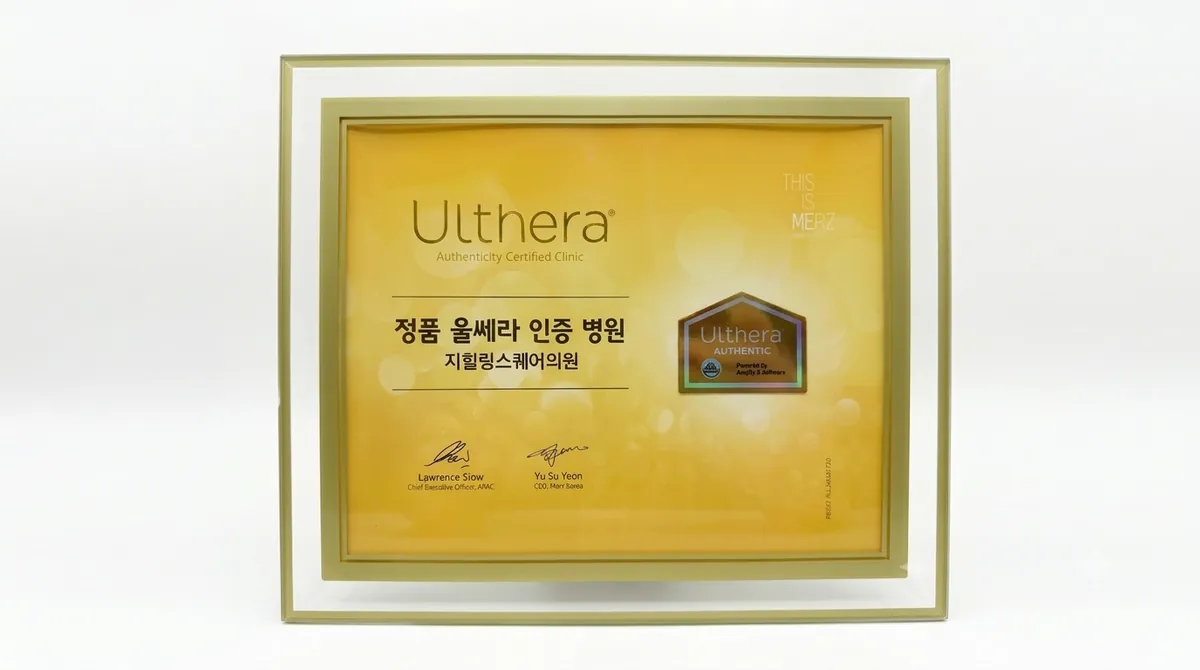
Ulthera
Ulthera Authenticity Certified Clinic
Certified by Merz Aesthetics for authentic Ulthera equipment.
2018
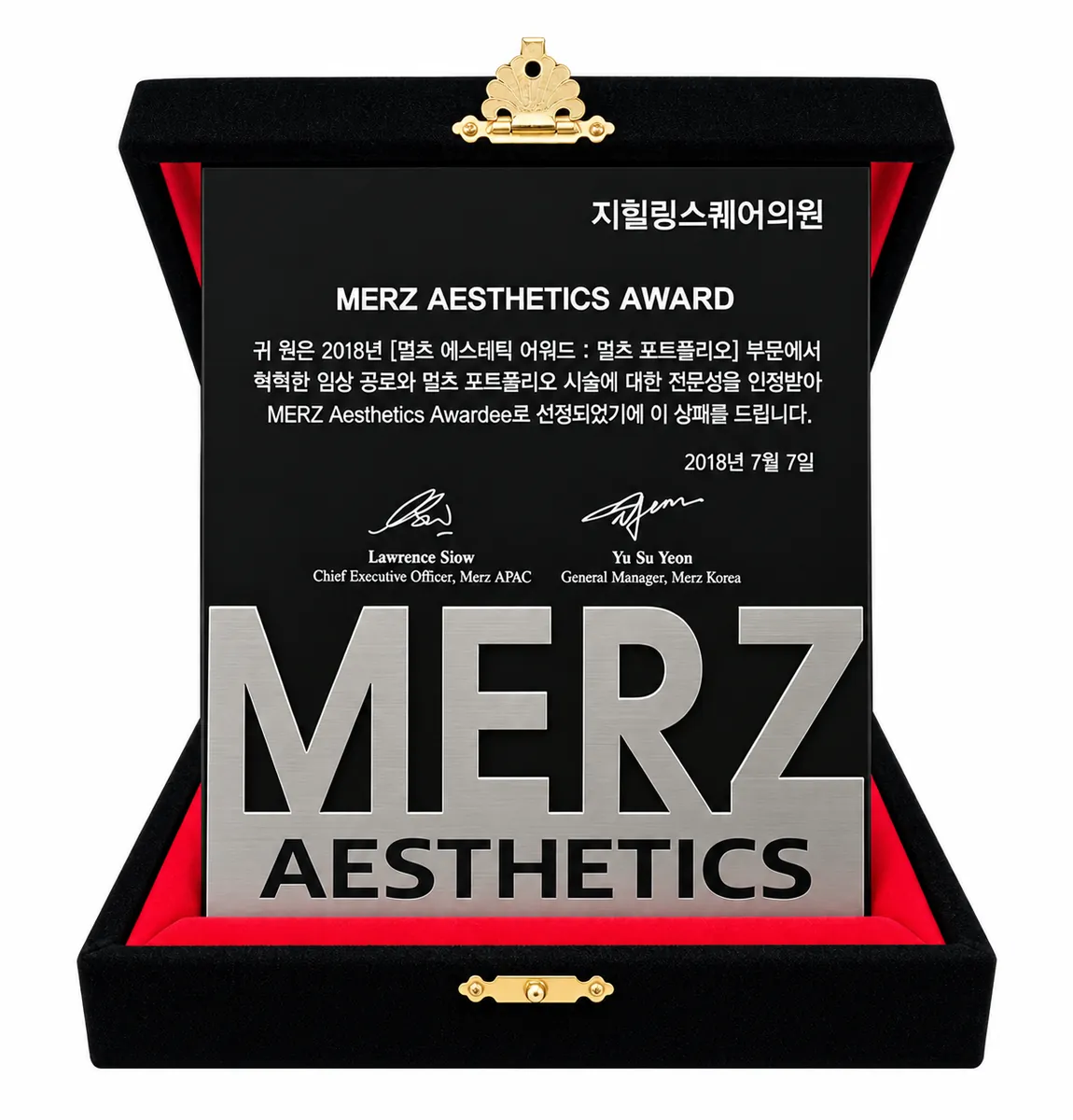
Merz Aesthetics Award
Portfolio category, Merz Aesthetics, July 2018.
2018
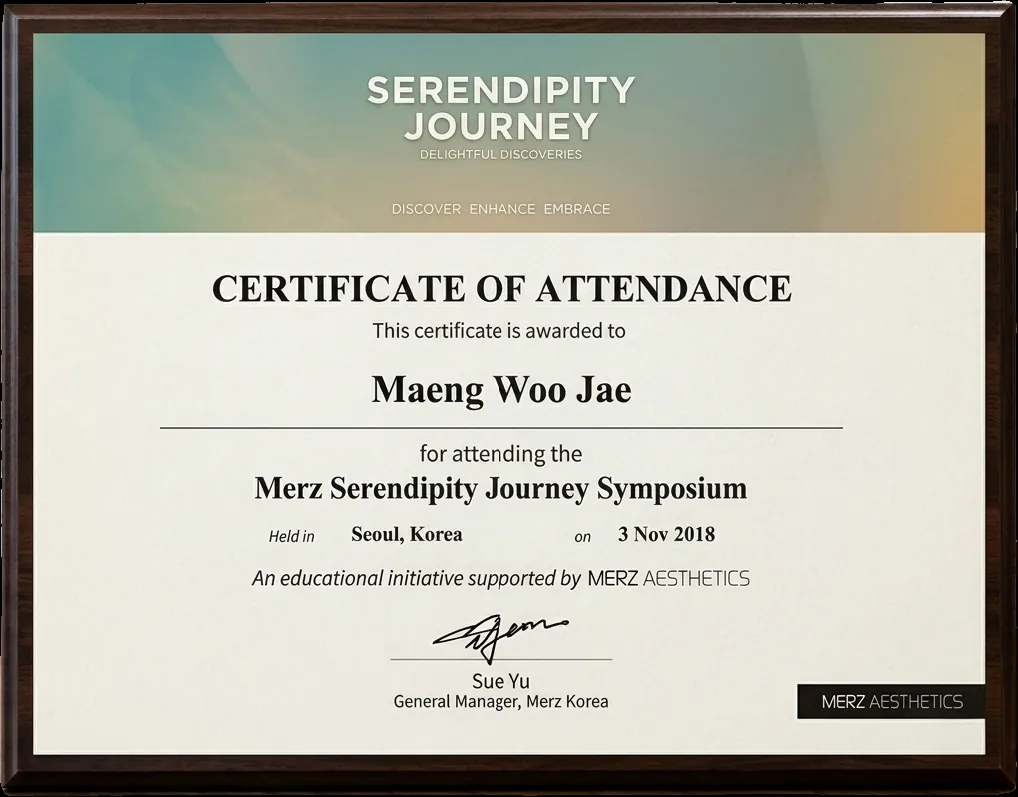
Merz Serendipity Journey Symposium
Attendance certificate, Dr. Maeng Woo-jae, Seoul 2018.
2018
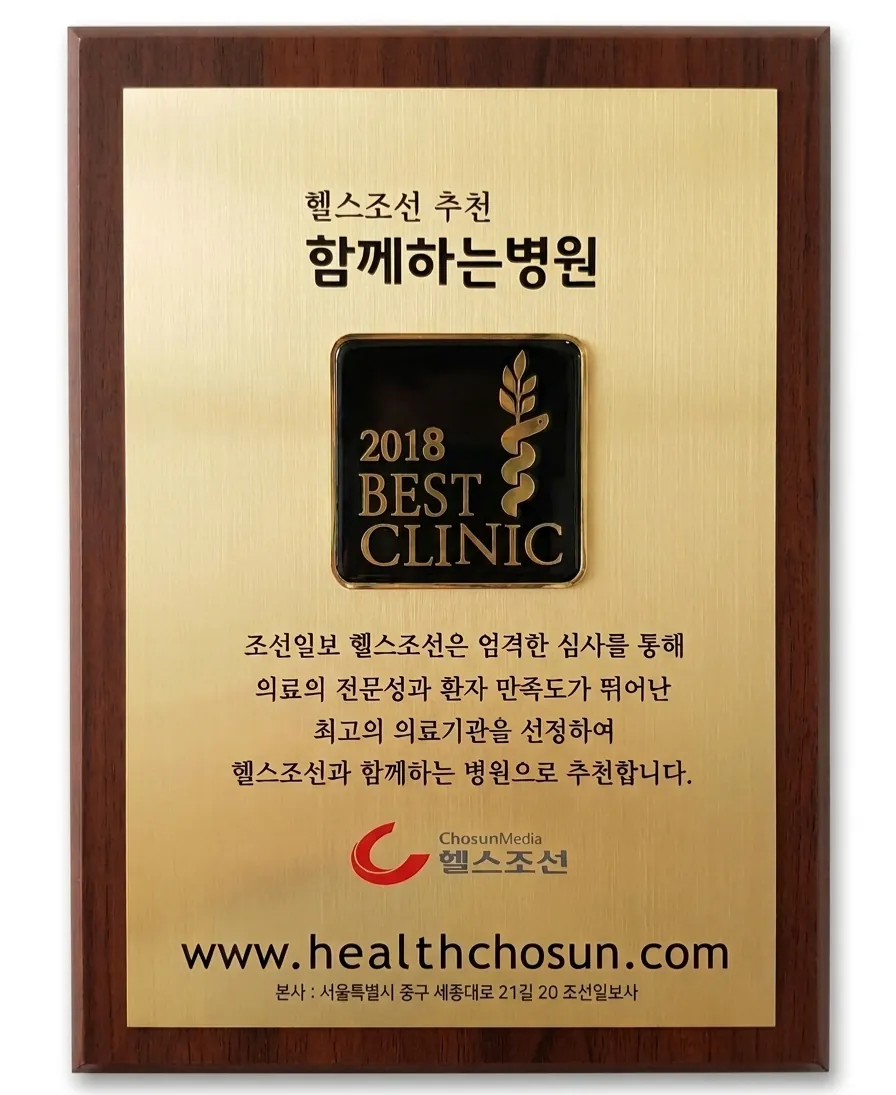
Health Chosun — Best Clinic listing
Recommended clinic feature, Chosun Media, 2018.
2013
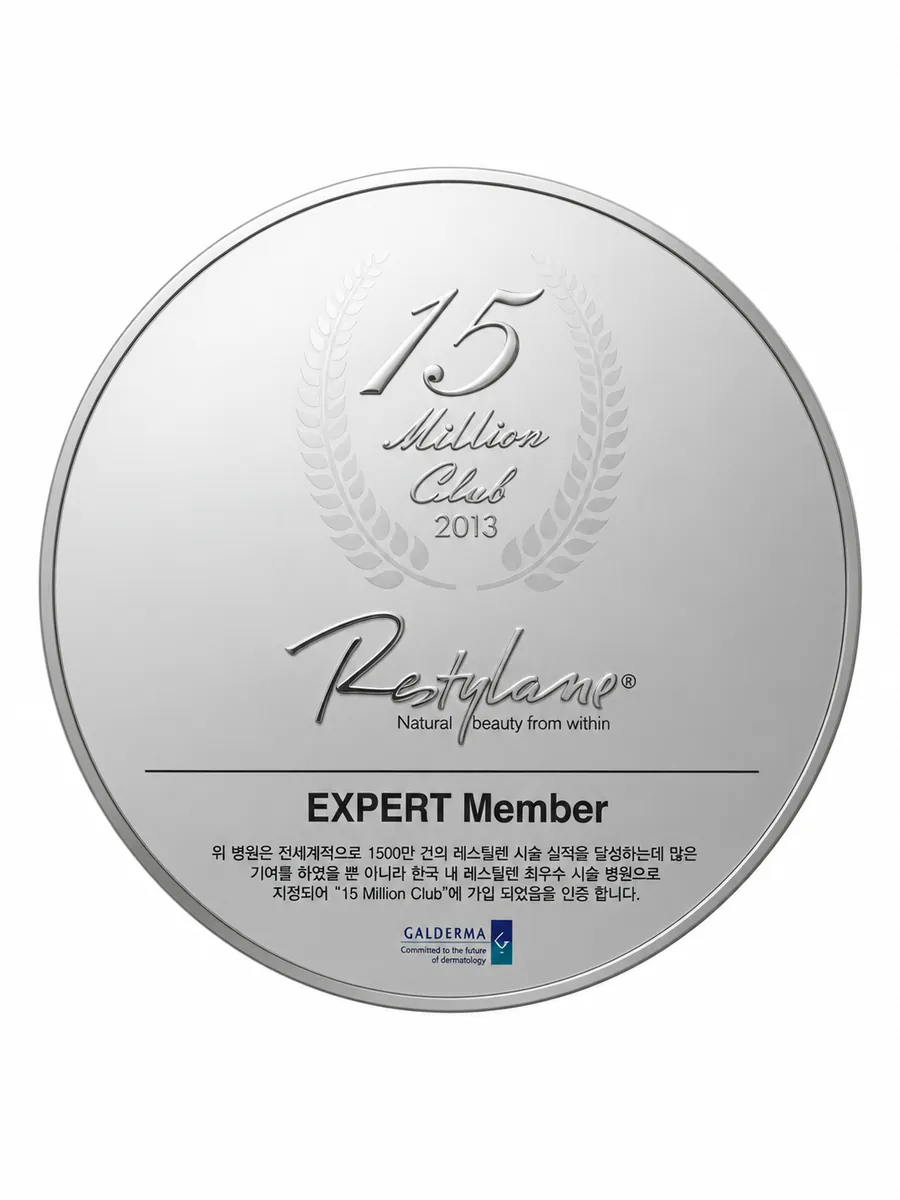
Restylane 15 Million Club — Expert Member
Expert member recognition issued by Galderma.
2012 · 2016–2019
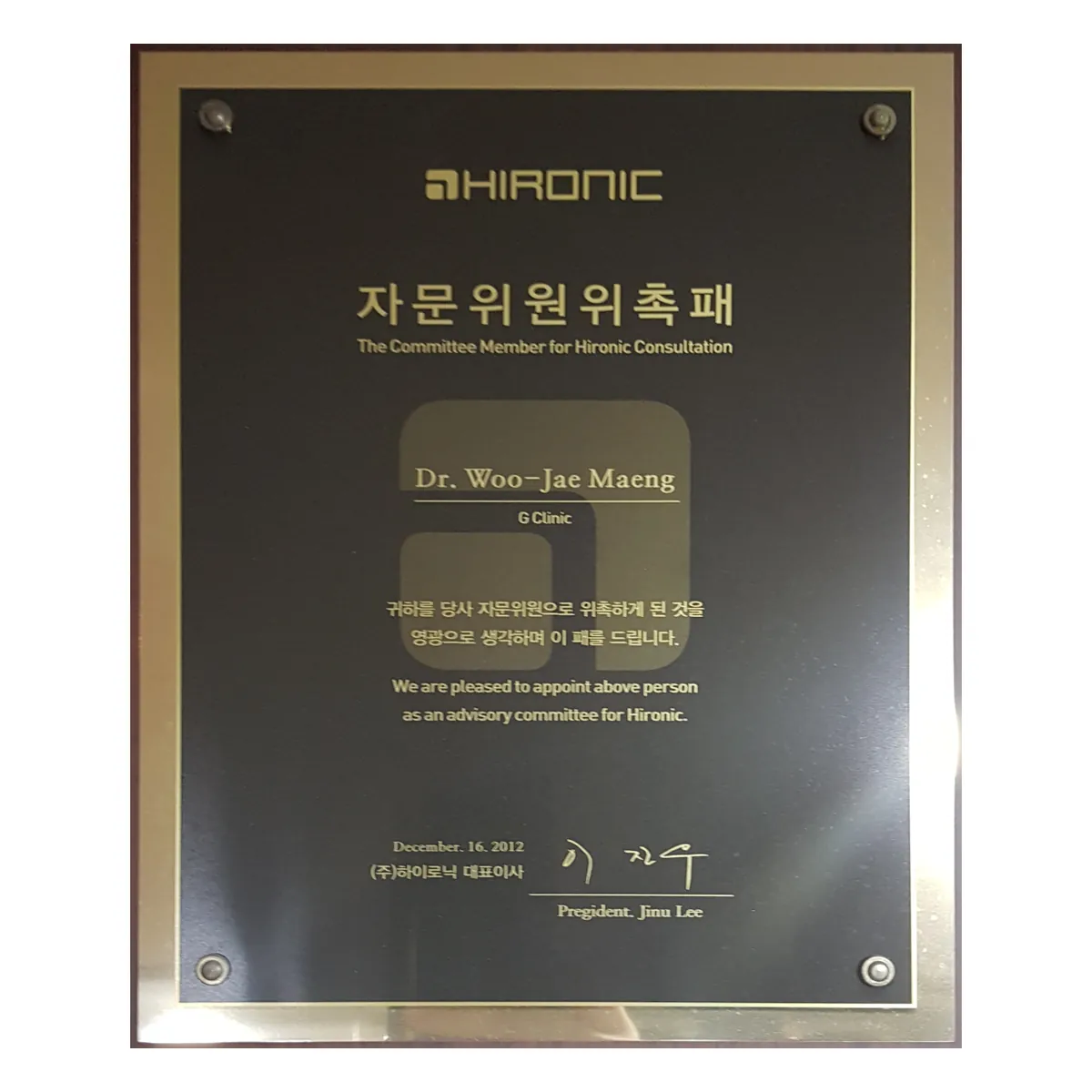
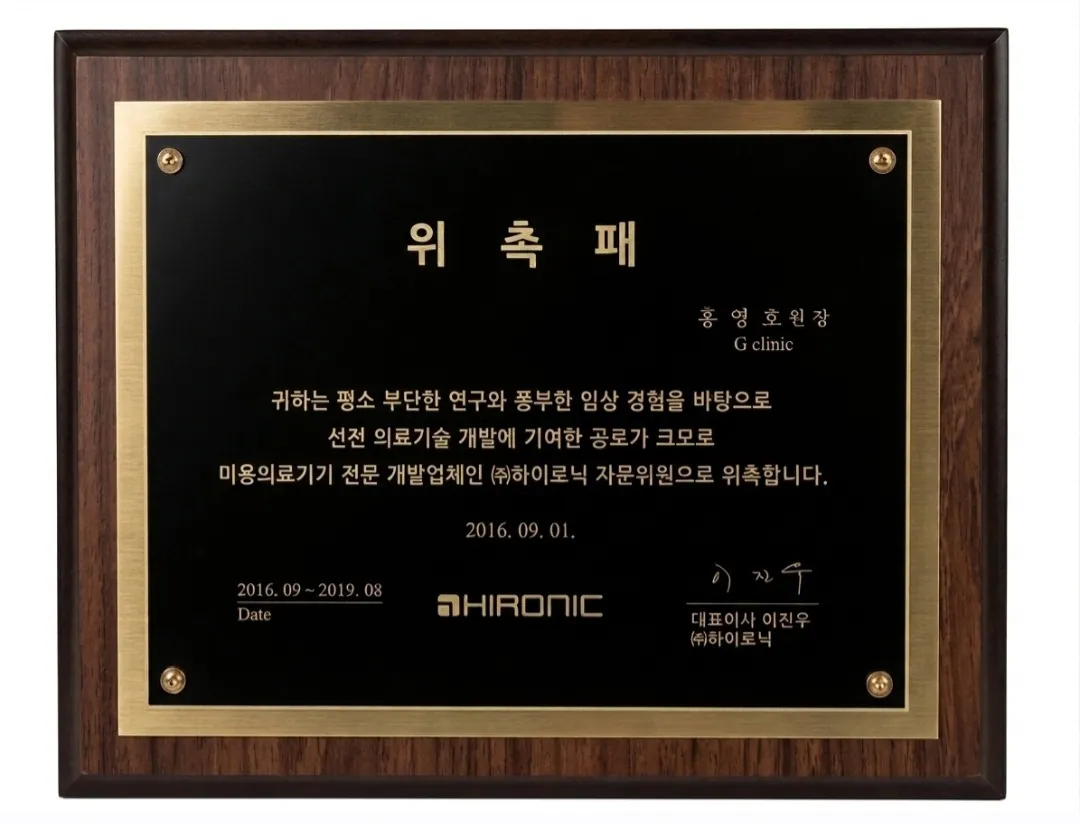
Hironic Advisory Appointments
Advisory committee: Dr. Maeng (2012, certificate bears the G Clinic name), Dr. Hong Yeong-ho (2016–2019).
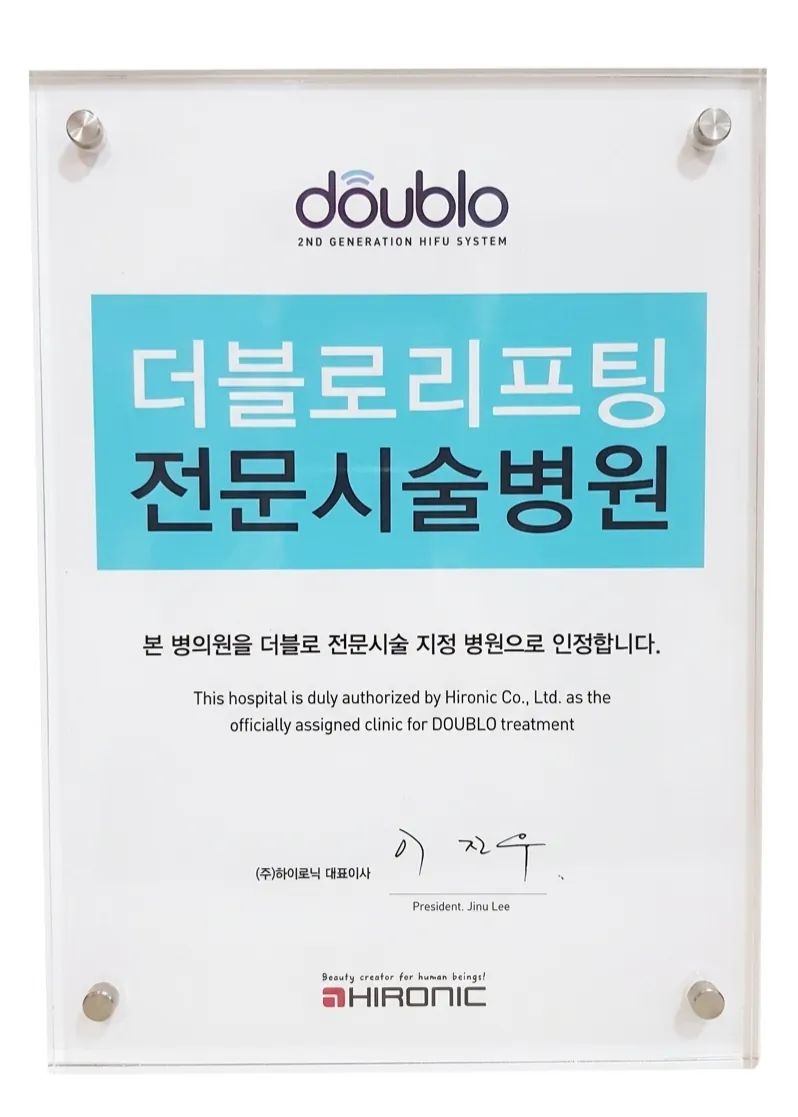
Doublo
Doublo HIFU Designated Clinic
Officially assigned Doublo clinic, Hironic Co., Ltd.
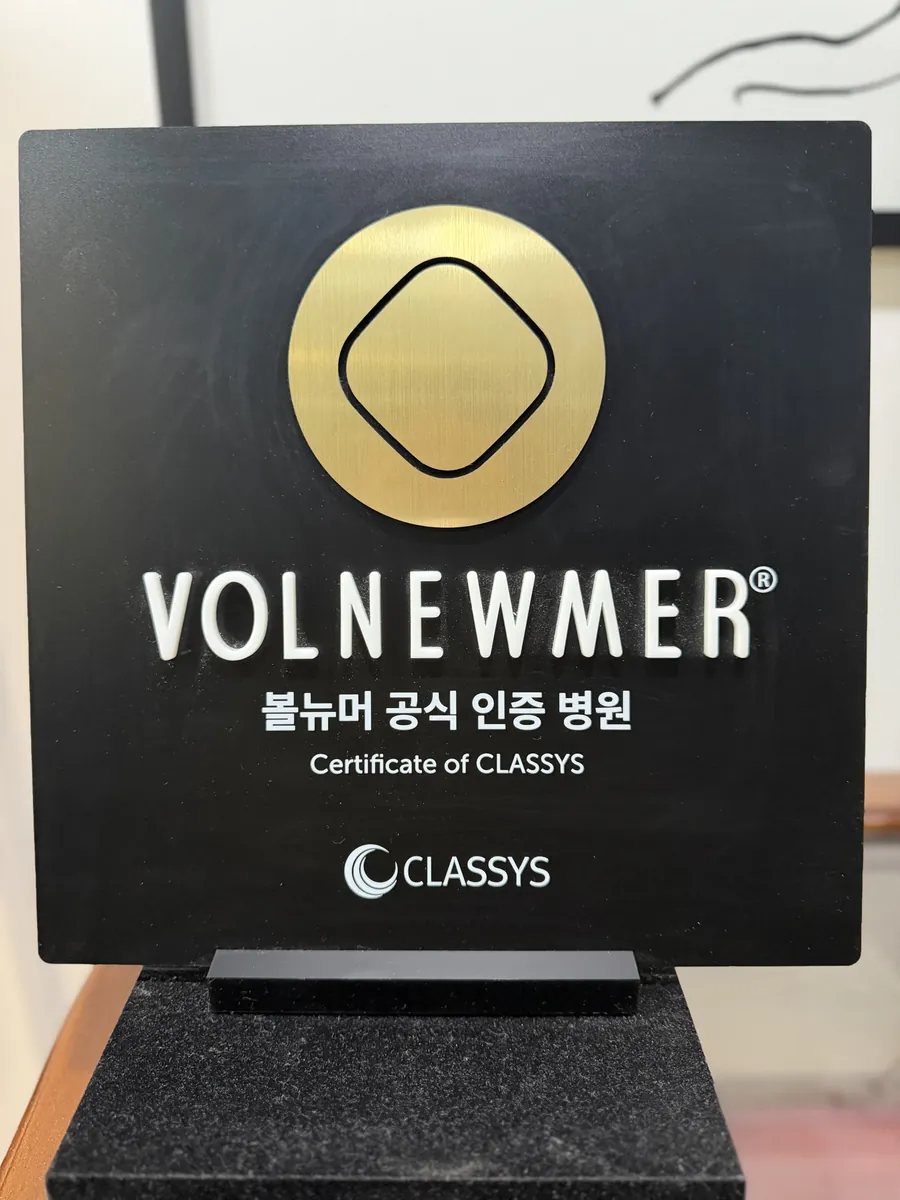
Volnewmer
Volnewmer Official Certified Clinic
Certificate of Classys.
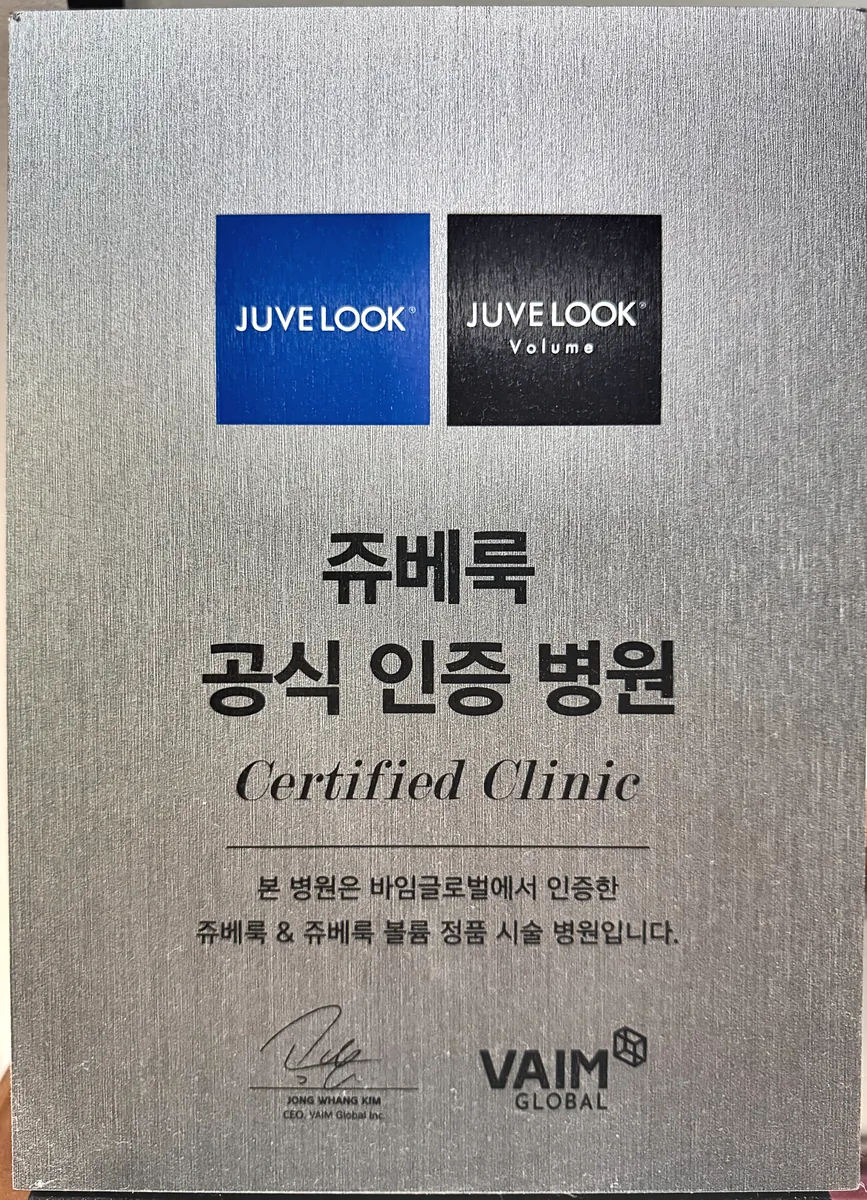
Juvelook
Juvelook Official Certified Clinic
Certified by VAIM Global for authentic Juvelook treatment.
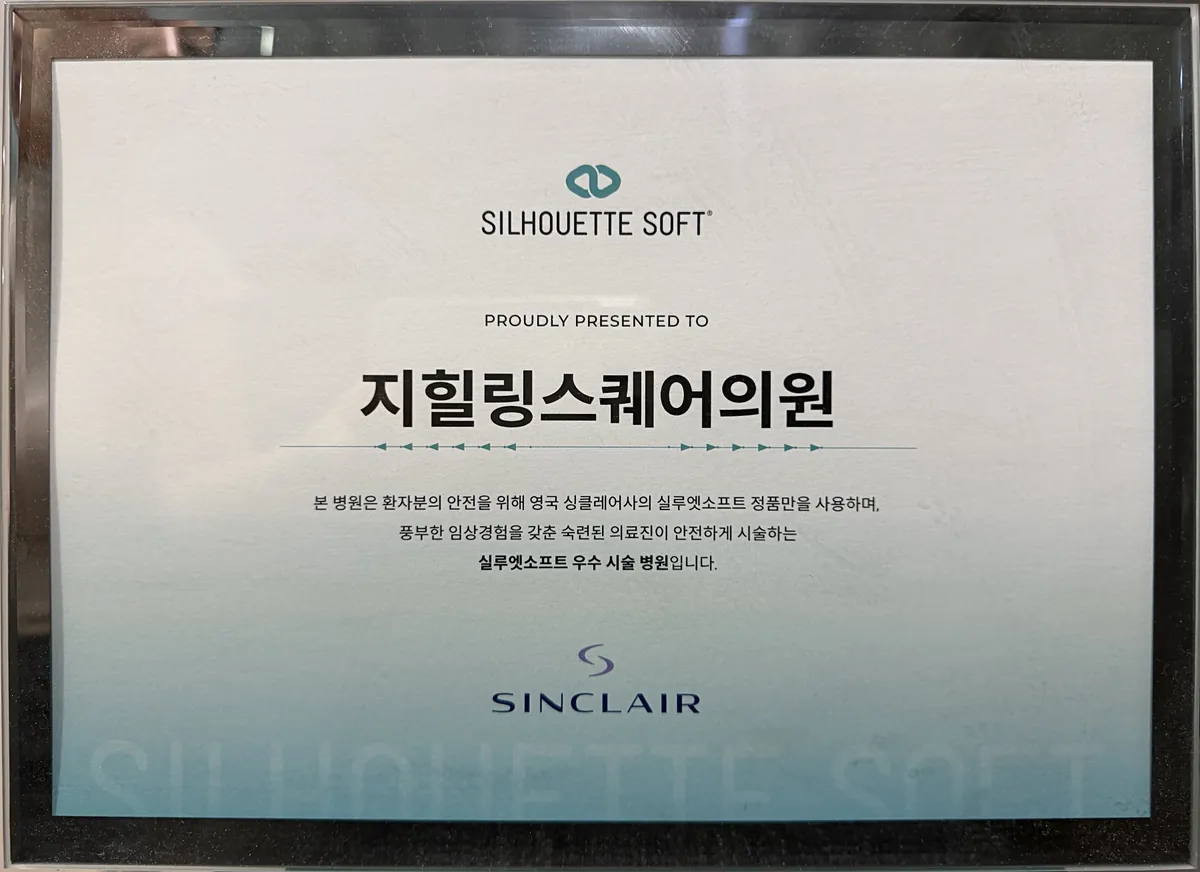
Silhouette Soft
Silhouette Soft Certified Clinic
Recognized by Sinclair for authentic Silhouette Soft thread lifting.
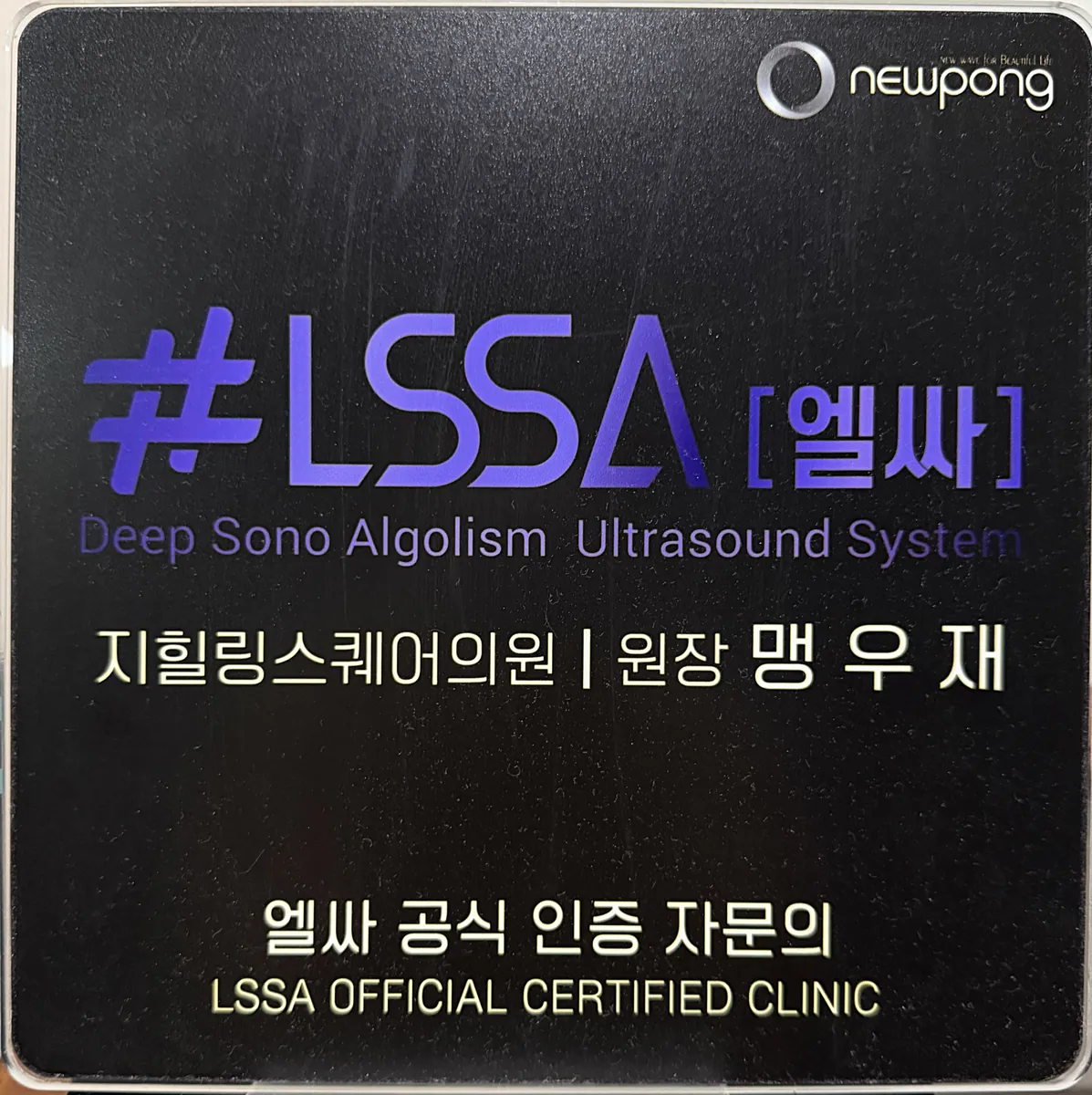
LSSA
LSSA Official Certified Clinic
Deep Sono Algolism Ultrasound System; certified advisory physician Dr. Maeng Woo-jae.
2010–2017
Academic & Society Roles
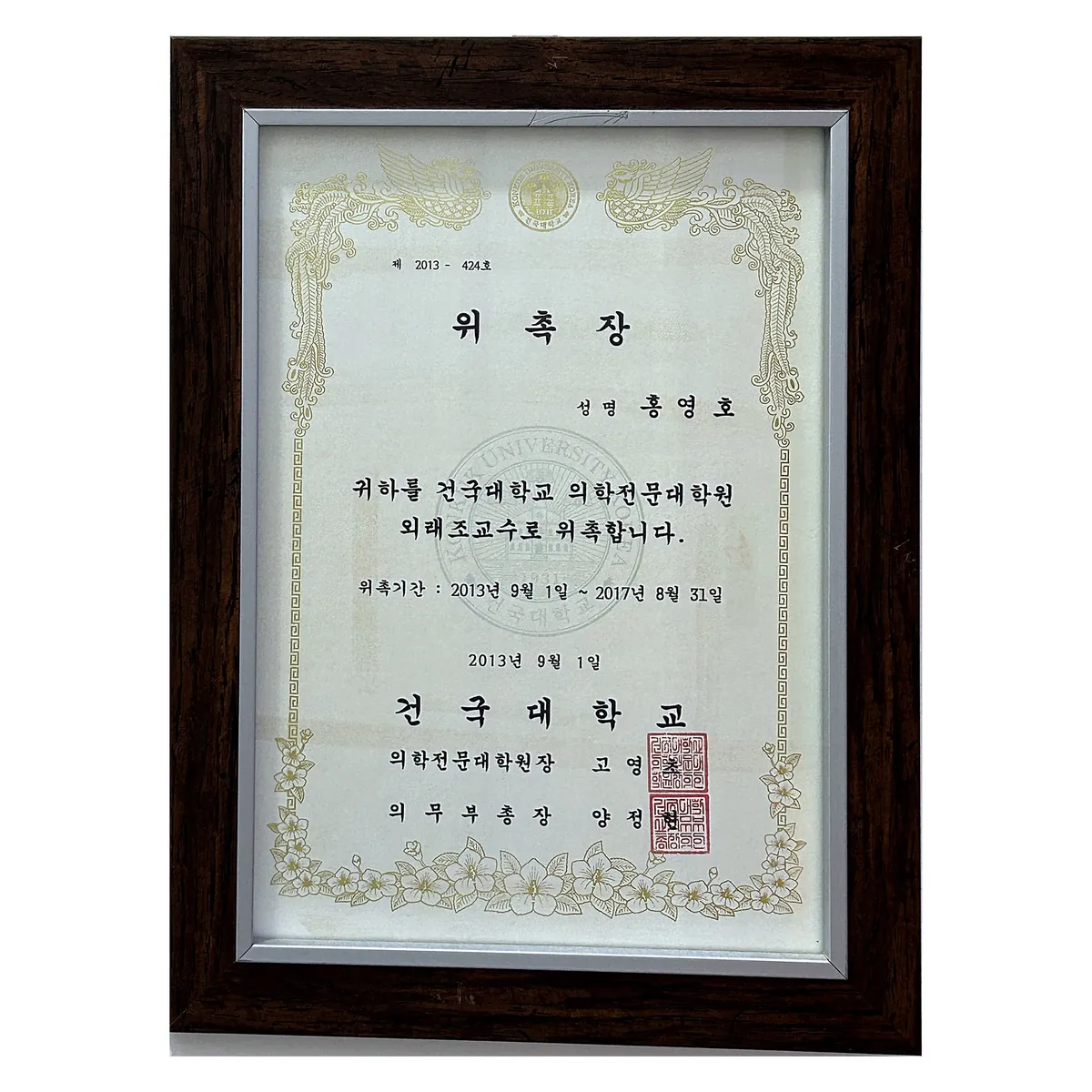
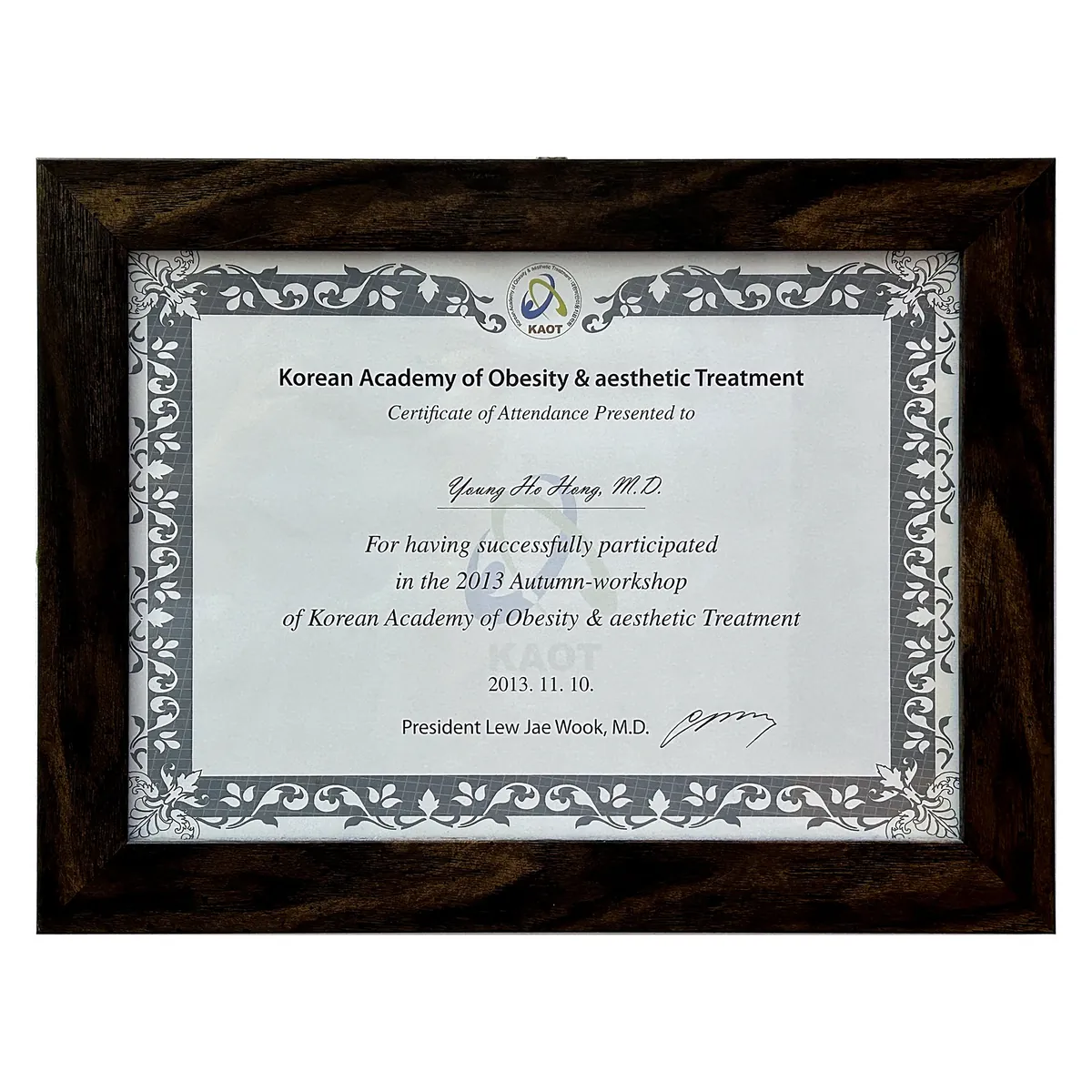
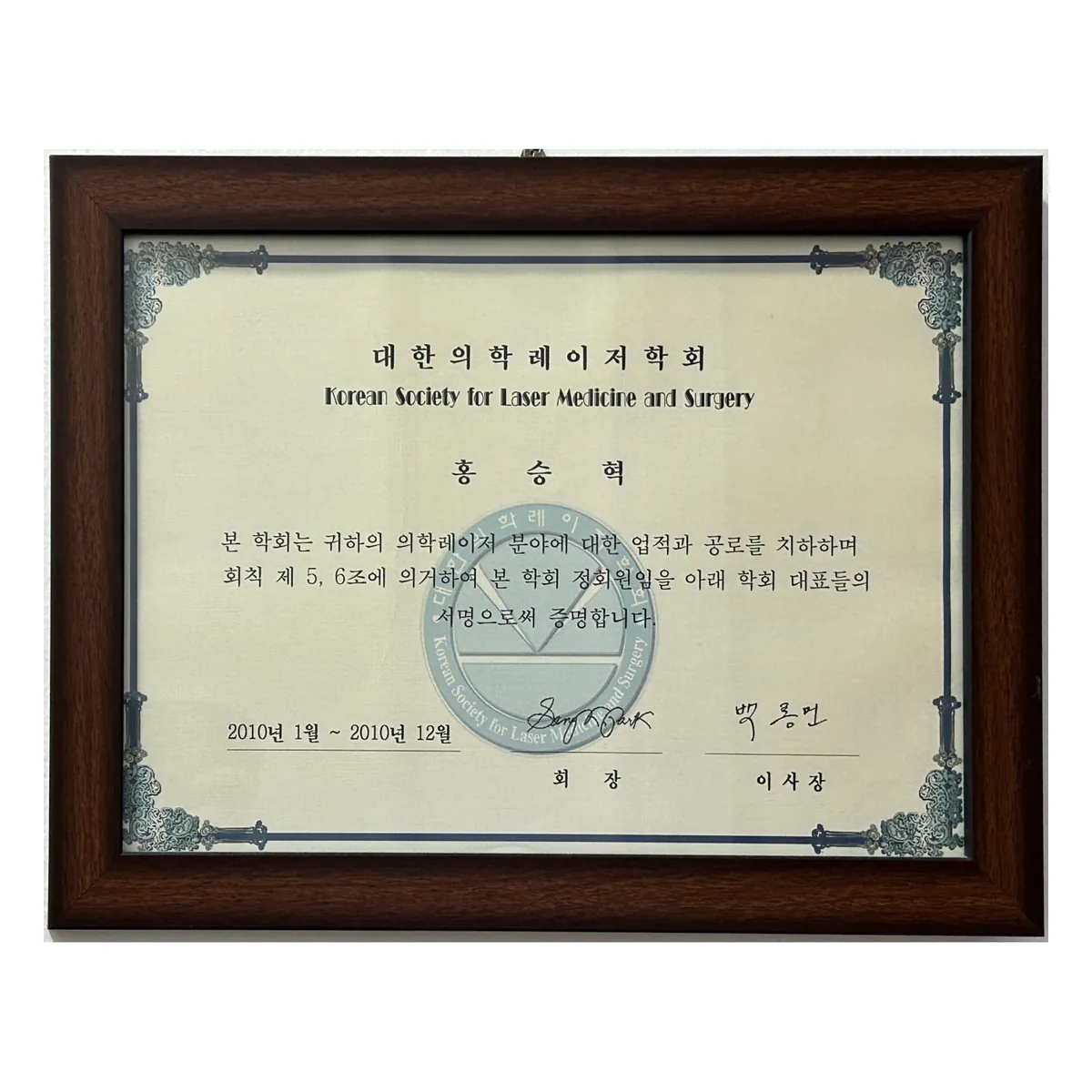
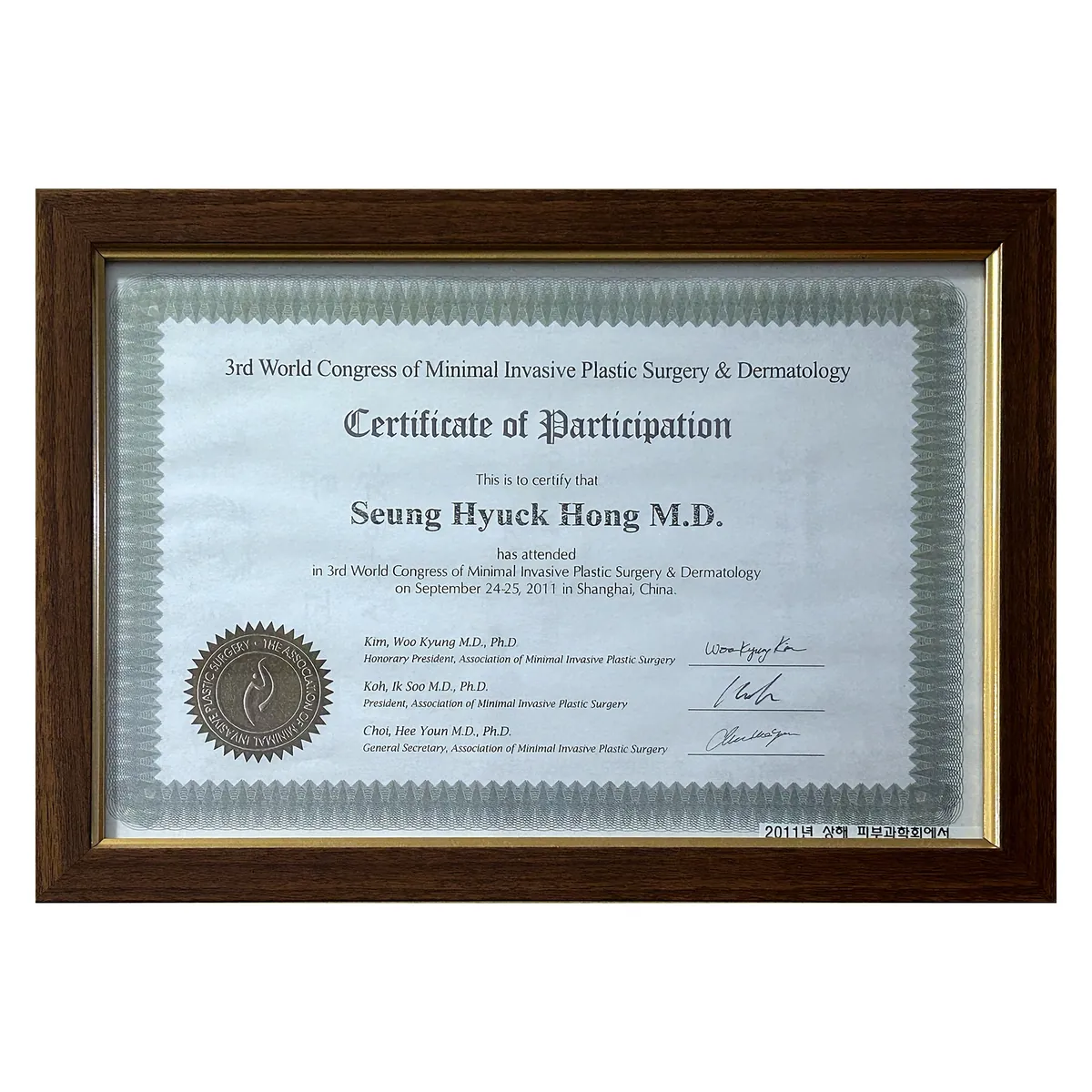
Dr. Maeng: KAOT chair, appreciation plaque 2014. Dr. Hong Yeong-ho: adjunct assistant professor, Konkuk Univ. (2013–2017). Dr. Hong Seung-hyuk: KSLMS member 2010; World Congress MIPS&D 2011.
Ulthera authenticity certified clinic certificate
Merz Aesthetics Award 2018 plaque
Merz Serendipity Journey Symposium 2018 attendance certificate, Dr. Maeng Woo-jae
Health Chosun 2018 Best Clinic plaque
Restylane 15 Million Club expert member plaque
Hironic advisory committee appointment plaque, Dr. Maeng Woo-jae, 2012
Hironic advisory appointment plaque, Dr. Hong Yeong-ho, 2016–2019
Doublo HIFU designated clinic certificate
Volnewmer official certified clinic plaque, Classys
Juvelook official certified clinic plaque
Silhouette Soft certified clinic certificate
LSSA official certified clinic plaque
KAOT appreciation plaque, Dr. Maeng Woo-jae, 2014
Konkuk University School of Medicine adjunct appointment, Dr. Hong Yeong-ho
KAOT 2013 workshop attendance certificate, Dr. Hong Yeong-ho
Korean Society for Laser Medicine and Surgery membership certificate, Dr. Hong Seung-hyuk
3rd World Congress of Minimal Invasive Plastic Surgery and Dermatology participation certificate, Dr. Hong Seung-hyuk
Patient Reviews

What our patients say.

Verified reviews from our Google Business Profile.

★★★★★

Yesterday, I had a fat extraction procedure from Dr. Hong Young-ho. The staff, especially the doctor, were so kind that it was very comfortable. Right after the procedure, it was just a little uncomfortable yesterday because of swelling, but today there is almost no pain and I'm waiting for the swelling to go away to see the beautiful res…

Ka year ago
★★★★★

Recommendations are made based on actual circumstances. The attitude is very good. Highly recommended.

Ya year ago
★★★★★

I cannot recommend G-clinic highly enough. From the moment I walked in, my experience was nothing short of exceptional. The clinic itself is modern, clean, and welcoming. The front desk staff were incredibly warm and efficient. Checking in was a breeze, and they were very helpful with my new patient paperwork. The waiting time was minimal…

ma year ago
★★★★★

Process was perfect! I got some liposuction done, the doctor and staff were very nice and very professional. 100% would recommend anyone to get there procedures done here! They took out A LOT of fat! The doctor speaks perfect English as well!

K3 years ago
Free Consultation

Get your personalized quote.

Share your details and our team will reply through your preferred messenger. Consultation is free and pricing is quoted at your free consultation.

  • ✓Free consultation reviewed by one of three resident directors
  • ✓Personalized quote at your free consultation — same figures for every patient
  • ✓Care performed on site by your director in Gangnam, Seoul
  • ✓10-language support via messenger

Book a Free Consultation

⚠ Please select a country code for WhatsApp

Your details are protected under our privacy policy and are never shared with third parties.

Chat with us
Visit Gangnam · Dosan-daero

Emerald Tower, 5F–7F.

Address
5F–7F Emerald Tower122 Dosan-daero, Gangnam-gu, Seoul, South Korea
Hours
Mon–Fri · 11:00–19:00Sat · 10:30–14:00 · Sun & holidays closed
Languages
English consultation10-language messenger support
Reach
International patient deskContact us through the consultation form