Free English consultation · Three medical directors on-site · Gangnam, Seoul
Comparison Guide · Ultrasound Lifting

Ultherapy Prime vs Shurink in Gangnam, Seoul: Two Ultrasound Lifts, One Room, Weighed Point by Point

Both platforms belong to this clinic and both are operated by Dr. Hong Seung-hyuk, Dr. Maeng Woo-jae and Dr. Hong Yeong-ho, three resident directors who are board-certified Family Medicine specialists working in aesthetic dermatology. Because neither device has to be sold to you, the comparison below can afford to describe what separates them and leave the assignment to a hand on your face.

  • ✦Ultherapy vs Shurink written by the clinic that owns and runs both platforms
  • ✦Imaging-led placement set beside hand-mapped delivery, on the points raised at consultation
  • ✦Free consultation in English at the Dosan-daero address in Gangnam-gu
20,000+
Lifting & petit cases
clinic-reported, since 2006
3
Resident Directors
Family Medicine specialists · aesthetic dermatology
10
Languages
messenger support

Ultherapy Prime vs Shurink — which of the two should your face be booked for?

Both are focused-ultrasound platforms, both live in this building, and the split between them is how the aim is set and how the plan is packaged. Ultherapy Prime carries a screen: your skin thickness and structure are read live and energy is placed into the SMAS layer with that picture in view. A Prime session runs about thirty to forty minutes according to shot count, and the clinic states a hold of six months to a year or more. Shurink is aimed by hand. Its focused ultrasound builds thermal coagulation points that contract slack tissue, a session takes roughly fifteen to twenty minutes, and the clinic states a hold of about three to six months. Prime is published in four shot tiers; Shurink is published as one block. Nothing on this page ranks them. A director grades your tissue and assigns one.

Choosing Between Them

How one of the two gets picked for your face.

Comparison tables prepare you for the room. The assignment itself is made in the room, with fingers on the tissue, and it takes four steps.

  1. 01

    Bring the line that bothers you, leave the platform open

    Patients who arrive having already chosen a device from a search result often describe a face the device was never the strongest answer for. Describe the jaw line, the cheek or the neck you want moved, say what your calendar allows, and let the director attach a platform to that.

  2. 02

    A director grades skin thickness and locates the slack

    Skin is examined for thickness, recoil and where the descent actually sits, because a broad surface of mild looseness and a single dropped line are different problems. On Prime this reading is confirmed on the ultrasound monitor; on Shurink it is confirmed by palpation and landmarks marked on the skin.

  3. 03

    The count gets built: tiers on one side, one block on the other

    Prime is quoted by shot tier, so the conversation is about which tier covers the zones you care about. Shurink arrives as a single published block that the director then divides across your zones. Both counts are drawn out in front of you before anything is reserved.

  4. 04

    Platform, count and named risks are signed off first

    The chosen platform, the zones it covers and the risks that apply to your history are written down and signed as informed consent. If the answer to your face is a surgical opinion or a device this clinic does not hold, that goes in the note as well and no deposit is taken.

Plain Definitions

What each platform physically does to tissue.

Ultherapy Prime: microfocused ultrasound with a picture

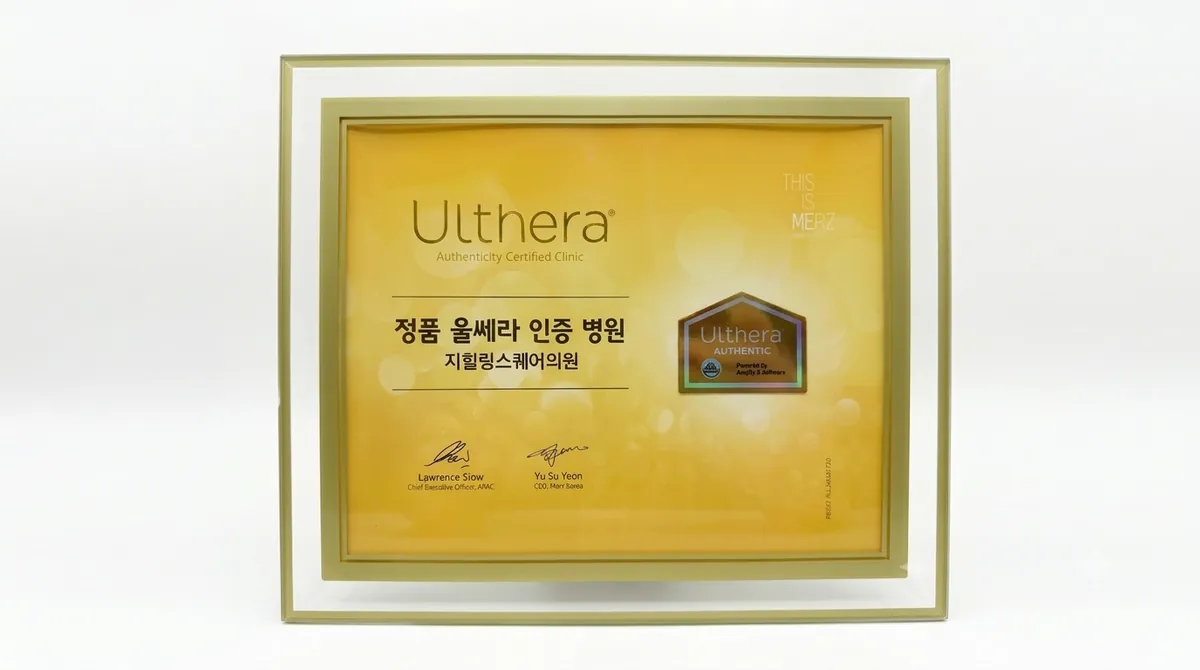
Prime pairs a treatment transducer with real-time ultrasound imaging, so the director sees the layers of your own face on a monitor while working. Energy is deposited at the superficial musculoaponeurotic system, the fibrous sheet the surgeon lifts in an operation, and the tightening that follows is built by your tissue over the weeks afterwards. G Clinic is registered with the manufacturer as an Ulthera Authenticity Certified Clinic, which confirms the equipment is genuine. The full device page is Ultherapy Prime.

Shurink: focused ultrasound aimed by hand

Shurink concentrates high-intensity focused ultrasound into small thermal coagulation points inside the skin, and the tissue around those points contracts as it heals. There is no live picture of your layers during the pass, so depth is chosen from the director’s examination and from cartridge selection, and the zones are marked on the skin first. Its Universe handpiece is used where a plan needs to cover ground broadly within the same block. That page is Shurink HIFU.

What the two share

They belong to the same technique family and target the same list of concerns the clinic publishes for its lifting programme: skin density, texture, pores, elasticity, a dropped line, general signs of ageing, lost volume and fine lines. Both are performed with numbing cream, both send you home the same day, and both build their result through a collagen response you cannot see on the way out of the building.

Shot Planning

Counting on a screen, and dividing a block by hand.

The word patients repeat most in these consultations is shots, and the two platforms treat that word differently. On Prime the count is a tier you select: the published structure runs from one hundred shots up through four hundred, and the tier you take decides how much face the session can cover with confirmed depth on every line. A small brief around a jaw line is a different tier from a full lower face carried through to the neck, and the imaging is what lets a director defend the count as reasonable for your anatomy.

On Shurink the count is fixed at a block of three hundred shots and the planning happens inside it. The director divides that block among the zones your face needs, weighting the areas where the slack is worst and thinning coverage where it is not. Two patients booking the identical block can therefore receive very different maps, and what yours looks like is drawn in front of you before you agree to it.

Neither model is generous with promises about numbers. Shot counts describe how much energy a session can distribute; they do not forecast how far a line will travel. Individual results vary, and a director who attaches a millimetre figure to a shot count at consultation is telling you something the equipment cannot support.

Assignment And Refusal

Who is sent to which platform, and the requests a director turns down.

Assignment usually follows how specific the problem is. A defined descent along the jaw or under the chin, on a face where knowing the depth of every pass matters, is the imaging argument, and Prime tends to win it. Broad, even softening across the cheeks in someone who wants a maintenance appointment on a familiar face is the coverage argument, and Shurink tends to win that. First-time patients who want to learn how their skin answers energy before committing to a larger plan are commonly started on the block, and patients whose skin has been read as thin over a wide field are frequently moved toward Volnewmer radiofrequency in place of either ultrasound route.

Some requests are declined, and publishing them is fairer than letting somebody book a flight around a treatment they will be refused. A director declines to treat laxity that has already descended past what a collagen response can carry; the correct answer there is a surgical opinion, and no block or tier is offered as a consolation. Pregnancy and breastfeeding stop the booking. So do active infection, broken or inflamed skin inside the mapped field, and any systemic condition that is not currently stable. Metal fixation plates and implanted electronic devices in or near the field take that zone out of the plan until it has been assessed properly, so declare them at the first appointment.

The refusal patients argue with most concerns diagnosis. When the heaviness under the jaw is fat volume, energy aimed at slack tissue is the wrong instrument, and the consultation moves to the body side of this clinic through G-fat fat dissolving injection or, where a surgical route is what you are weighing, to liposuction in Korea. A director will also decline to book you for a specific device simply because you named it before he examined you.

Realistic Return

What each gives back, and how long the clinic says it holds.

Almost nothing is visible on the day of either treatment. A faint tightness on the way home is a sensation, and it is not yet the result. What both platforms actually produce is a remodelling response through the treated depth that accumulates for weeks, and it is judged at review with a director rather than in a bathroom mirror on the second evening.

The clinic publishes a hold of six months to a year or more for Prime, and about three to six months for Shurink. Those two figures are the clearest practical difference between them and the reason the tiers and the block are not the same purchase. A shorter published hold suits someone who prefers a lighter, more frequent maintenance rhythm; a longer one suits someone who would rather plan a single appointment around a trip and leave it alone.

Neither platform reverses a structural descent, and neither replaces volume that has been lost. Where a line has dropped beyond what a collagen response will hold, the discussion turns to mechanical support and Thread Lift covers that route. Any case photograph published elsewhere on this site belongs to a G Clinic patient who consented to it, individual results may vary, and no published image forecasts an outcome for a face it does not show.

Comfort

Numbing cream, sensation and how long you sit still.

Comfort is the axis patients research least and remember longest, and here the two platforms genuinely differ. Both are performed under numbing cream with you awake and able to speak to the team, and both produce a sensation described as brief heat or a deep prickle arriving line by line as the shots are laid. The difference is duration and density. A Shurink block is finished in roughly fifteen to twenty minutes, which is a short time to hold still. A Prime session sits in the chair for thirty to forty minutes according to the tier, delivering energy deeper, and patients who have had both usually describe the deeper platform as the more demanding of the two.

Sedation is available for patients who would prefer it and carries an additional cost that a director names before you decide. The agent used is discussed with you in the consultation room and is never named in published material, which is a rule of Korean medical advertising rather than a clinic preference. Tell your director early if you have found energy treatments hard to tolerate previously, because the pass can be planned around that.

Named Risks

The risks both share, and the ones weighted differently.

Focused ultrasound puts real energy into living tissue, and the same list is read aloud before consent on either platform. In the first days: redness, swelling, bruising and skin that is sore to the touch. Less commonly: raised welts tracking along a treated line, patches of temporary numbness, tingling or a heavy pulling sensation from nerve irritation, pigment change inside the treated field, and visible asymmetry between the two sides while everything settles. Rarely, a fat pad beneath a treated area loses a little of its volume, and that is the specific risk a director weighs on a thin face.

Where the weighting differs is in what compensates for the risk. Prime confirms depth on a monitor before each line, which is the argument for using it over bone, near the orbital rim or on a face whose layers are unusually thin. Shurink is aimed from examination and cartridge choice, so the pre-treatment assessment is carrying more of the load, and a rushed examination is a poor trade on either platform.

Your history is what shortens the list. Declare medication and supplements, any bleeding tendency, filler, threads or previous energy work in the same field, implanted electrical devices, metal in the treatment area, and any record of keloid scarring or pigment trouble. Afterwards, contact the clinic promptly if pain climbs after the first days, if redness spreads outward, if a numb patch shows no sign of receding, or if one side of the face begins to move differently from the other. A medical director is on site through clinic hours, so a worried patient is examined in person.
Afterwards

The same evening, and fitting either around a flight.

There is no dressing and no recovery room after either treatment. Most patients reapply makeup, keep whatever was already in the diary, and watch the flush and puffiness fade within days. Tenderness when chewing, pressing along the jaw or sleeping on one side can outlast the redness a little, and that is ordinary. Saunas, hot yoga and hard training wait for the window your director specifies.

For visitors, the sequencing advice is the same for both and worth following. Book early in your stay so a director can look at the face before you fly, which also means the puffiest window has passed by the time anybody photographs you at home. Coordinators arrange that in English once your dates arrive, including for patients fitting a lifting appointment around other treatment in the same trip. The wider line-up, including the routes neither of these platforms covers, sits on the Face Lifting hub.

One Grid

Ultherapy Prime and Shurink on a single table.

The two ultrasound platforms this clinic owns, set against each other on the points patients actually raise. No third device and no other provider appears here.

What you are really asking Ultherapy Prime Shurink (+Universe)
How the aim is setLive ultrasound image of your own layersExamination, landmarks and cartridge choice
Target depth talked aboutEnergy placed at the SMAS sheetThermal coagulation points through the treated depth
How the plan is packagedFour published shot tiersOne published block of shots
Time in the chairRoughly thirty to forty minutes by tierRoughly fifteen to twenty minutes
Anaesthesia on the dayNumbing cream, awake; sedation optional at added costNumbing cream, awake; sedation optional at added cost
Hold published by the clinicSix months to a year or moreAbout three to six months
Return to your daySame day, redness settling over daysSame day, redness settling over days
Manufacturer certification on fileUlthera Authenticity Certified Clinic—
Commonly assigned toFaces where confirming depth drives the planA first ultrasound lift, or a maintenance appointment

This grid frames a conversation and settles nothing by itself. Which platform suits you depends on anatomy, health history and the change you are asking for, and a resident director works through that at the free consultation.

Sequencing

When both platforms appear in the same treatment plan.

Patients often assume the two are alternatives that cancel each other out, and in practice a director sequences them more often than he picks one forever. A common pattern is a Prime session to address the defined descent, then a lighter maintenance appointment later once the first response has matured, with the review deciding the timing. Another is the reverse for somebody testing the water: a block first, an honest look at how that face answered energy, and a move to the imaging platform if the answer was good but the depth needed confirming.

What a director will not do is fire both platforms into the same field on the same day. Two overlapping thermal insults in one sitting increase swelling without adding anything you can attribute afterwards, and nobody can then tell which pass did the work. Where a plan genuinely needs two mechanisms, the second is usually a different family altogether, and the clinic’s radiofrequency and suspension routes exist for exactly that reason.

Combination also has a limit worth stating plainly. Stacking treatments does not buy a surgical result, and a plan that keeps growing at every visit is usually a plan that started with the wrong diagnosis. If your director thinks that is happening, expect him to say so before he sells you a further appointment.

Published Sources

Three papers standing behind the ultrasound vocabulary here.

The references below are listed so a reader can reach the sources without taking a summary on trust, and each sentence here states only what the paper is about. The first reports an evaluation of a microfocused ultrasound system for improving skin laxity and tightening in the lower face (Oni, 2014). The second is a retrospective evaluation of micro-focused ultrasound for lifting and tightening the face and neck (Fabi, 2014). The third is a review chapter on ultrasound skin tightening (Minkis, 2014).

None of these papers studies G Clinic, none reports a result obtained at this address, and none supports a prediction about what either platform would do for an individual reader. They establish that the technique family described on this page has been examined in the peer-reviewed literature. What your own face is likely to do is a conversation with a director who can see it, and individual results may vary.

  1. Oni G et al. Evaluation of a Microfocused Ultrasound System for Improving Skin Laxity and Tightening in the Lower Face. Aesthetic Surgery Journal. 2014. doi:10.1177/1090820x14541956
  2. Fabi S. Retrospective Evaluation of Micro-focused Ultrasound for Lifting and Tightening the Face and Neck. Dermatologic Surgery. 2014. doi:10.1111/dsu.12471
  3. Minkis K. Ultrasound Skin Tightening. Dermatologic Clinics. 2014. doi:10.1016/j.det.2013.09.001
Cost

How the two are quoted, published side by side.

The clinic publishes the same rates for every patient who books, visitors included, and the two platforms are quoted on different units. Prime is listed by shot tier, so the figure moves with the count your face is mapped for. Shurink is listed as one block, so the figure sits still and the planning happens inside it. Reading them next to each other is the only way the comparison makes arithmetic sense.

TreatmentOptionPrice (KRW)
Ultherapy Prime100 shots₩429,000
Ultherapy Prime300 shots₩1,210,000
Shurink HIFU300 shots₩330,000

All prices in KRW, VAT included. Quoted at consultation; final cost depends on treatment plan. Published rates as of 2026-09-08.

Set out separately, the imaging platform’s published tiers are these:

TreatmentOptionPrice (KRW)
Ultherapy Prime100 shots₩429,000
Ultherapy Prime200 shots₩825,000
Ultherapy Prime300 shots₩1,210,000
Ultherapy Prime400 shots₩1,595,000

All prices in KRW, VAT included. Quoted at consultation; final cost depends on treatment plan. Published rates as of 2026-09-08.

And the hand-mapped platform’s published block is this:

TreatmentOptionPrice (KRW)
Shurink HIFU300 shots₩330,000

All prices in KRW, VAT included. Quoted at consultation; final cost depends on treatment plan. Published rates as of 2026-09-08.

Sedation, where a patient genuinely wants it, is a separate line with its own charge that a director names before you decide. Nothing is reserved until the platform, the count and the total have been confirmed with you in the room.

FAQ

Ultherapy Prime and Shurink — reader questions.

In one sentence, what actually separates Ultherapy Prime from Shurink?

One works with a live picture of your layers and the other works from the director’s examination. Everything else follows from that: Prime confirms depth on a monitor before each line and is quoted by shot tier, while Shurink is mapped by hand and quoted as a single block. The published hold differs too, at six months to a year or more against about three to six months. Both are performed here by the same three directors.

Does the imaging screen make a practical difference to me as a patient?

It matters most where anatomy is unforgiving. Seeing skin thickness on a monitor helps a director avoid depositing energy where it should not go, which counts near bone, around the orbital rim and on faces whose layers are thin. On a broad, even area of mild looseness the picture adds less, because the plan is about covering surface. That is why this clinic keeps both platforms and does not treat every face with the same one.

Is one of the two more uncomfortable than the other?

Patients who have had both usually report the deeper platform as the more demanding, and the session is longer as well, at thirty to forty minutes against fifteen to twenty. Both run under numbing cream with you awake and talking to the team, and the sensation is described as brief heat arriving line by line. Sedation is available at an additional cost, named by your director before you decide, and the agent is never printed in published material.

Which one should I book if this is my first ultrasound lift?

Many first-timers are started on the block, because it is shorter in the chair and gives everyone a reading on how your skin answers energy before a larger plan is proposed. That is a tendency and not a rule. If your complaint is one defined dropped line on a thin face, a director may send you straight to the imaging platform, and the free consultation exists to settle exactly that. See Shurink HIFU for the block in detail.

Why is one quoted in tiers and the other as a single block?

Because the planning happens at different moments. On the imaging platform the count is chosen with you in advance, so the published structure runs across four shot tiers and you select the one that covers your zones. On the hand-mapped platform the count is fixed and the director distributes it across your face afterwards. The published figures for both sit in the pricing section above, quoted identically for every patient who books.

Can I have both platforms in the same appointment?

No, and a director will refuse the request. Two overlapping thermal treatments in one field on one day stack swelling without adding anything anyone can attribute afterwards, so nobody can tell which pass produced the change. Sequencing them across months is a normal plan; firing both into the same cheek in an afternoon is not. Where a plan really needs a second mechanism, it usually comes from a different family entirely.

How soon after either treatment will I see anything?

Almost nothing shows on the day. Any tightness you feel walking out is sensation and is not the outcome. Both platforms work by prompting a remodelling response through the treated depth, and that accumulates over weeks before it is worth judging. The review appointment with your director is where the change is actually assessed, and individual results vary between faces of similar age and similar skin.

Will either of them fix a heavy double chin?

It depends entirely on what is under your jaw. Where the heaviness is loose tissue, energy is a reasonable tool and either platform may be offered. Where it is fat volume, no number of shots is the right instrument, and the consultation moves to the body side of the clinic through G-fat fat dissolving injection. A director settles which of the two you have by examining you, and being told the wrong one wastes a trip.

What can go wrong after either treatment?

The list is read aloud before consent and is the same for both. Expect redness, swelling, bruising and sore skin in the first days. Less commonly there are raised welts along a treated line, temporary numb or tingling patches from nerve irritation, pigment change in the field, and visible asymmetry while things settle. Rarely a fat pad under a treated area loses a little volume, which is the risk weighed most carefully on a thin face.

When would a director refuse to treat me with either one?

Where laxity has descended past what a collagen response can carry, the answer is a surgical opinion and no session is offered as a substitute. Pregnancy and breastfeeding stop the booking, as do active infection, broken or inflamed skin in the field, and an unstable medical condition. Metal fixation plates and implanted electronic devices near the field remove that zone until it is properly assessed, so mention them at the first appointment.

I already have filler and threads in my face. Does that rule either out?

Not automatically, but it changes the map and it has to be declared. Your director needs to know what was placed, roughly when and roughly where, because energy passes are planned around existing material and around a field that has been treated before. Bring dates if you have them. Where suspension material is the thing carrying your jaw line, Thread Lift explains how that route is maintained.

Is radiofrequency a better answer than either ultrasound platform?

It is a different tool for a different reading, and neither family outranks the other. Directors here tend to raise radiofrequency where skin reads thin and crepey across a broad field and the goal is density more than a lift, and Volnewmer is the platform used for that. Where a defined line needs carrying upward, an ultrasound route is usually the argument. The whole line-up is compared on the Face Lifting hub.

Who performs the treatment, and can the appointment run in English?

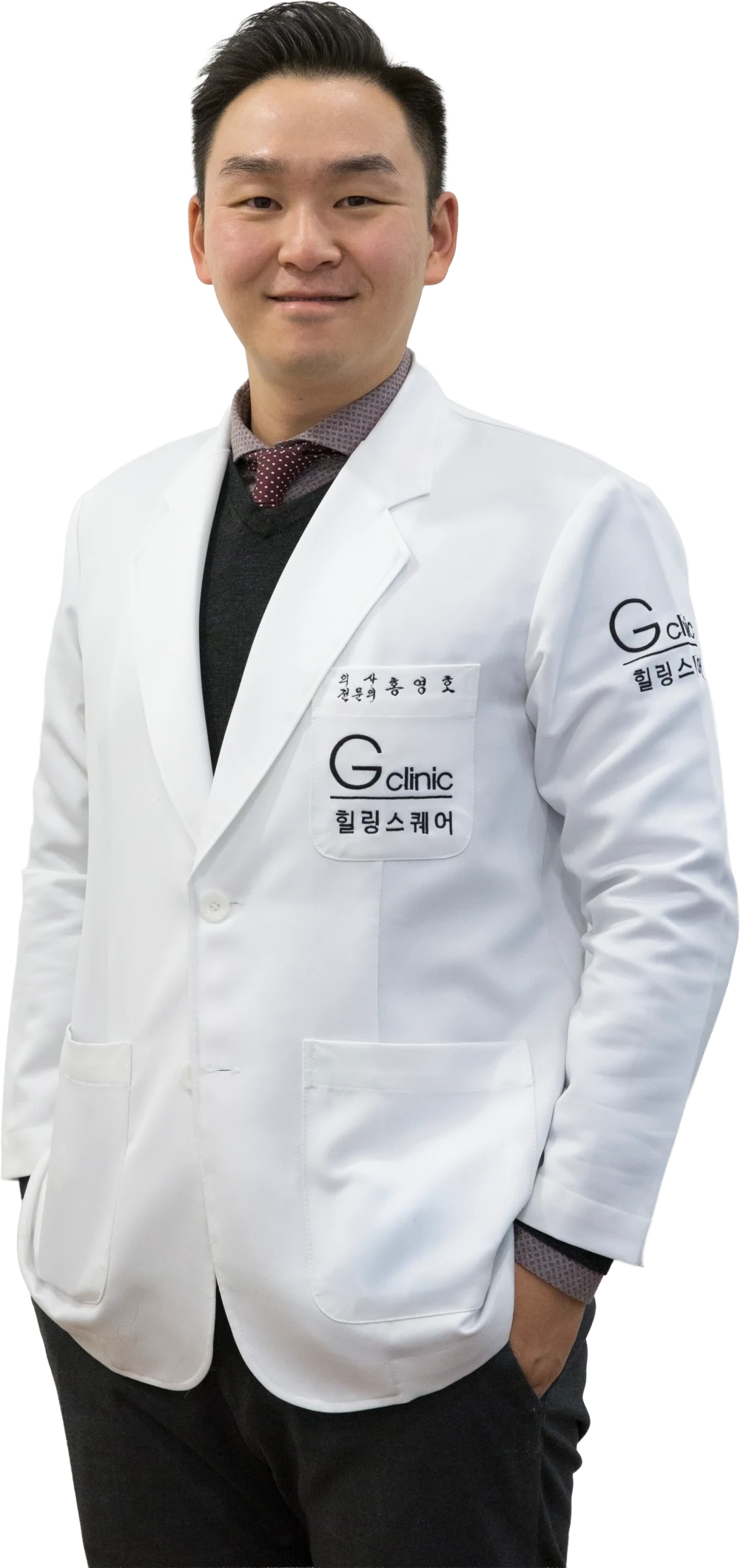
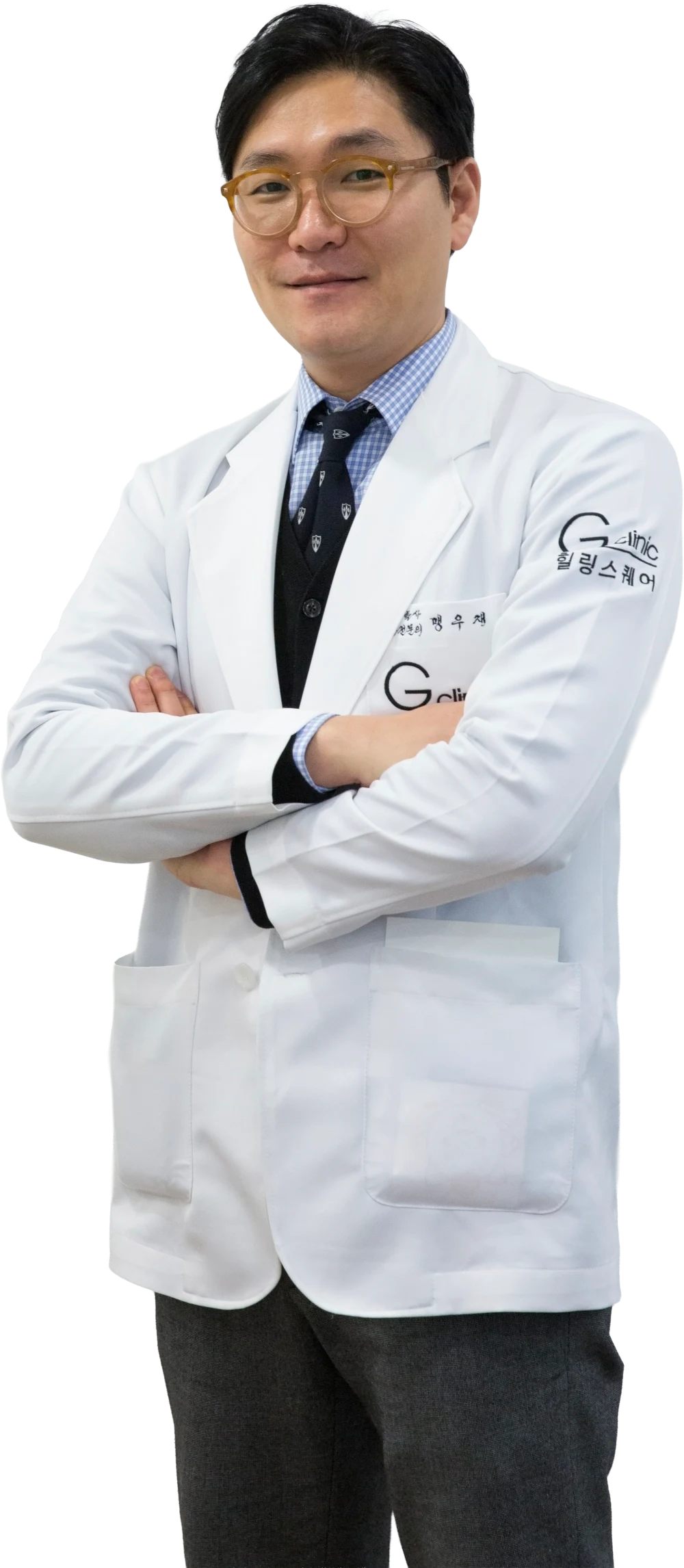
Dr. Hong Seung-hyuk, Dr. Maeng Woo-jae and Dr. Hong Yeong-ho deliver every session themselves. All three are board-certified Family Medicine specialists, all three are on site during clinic hours, and the clinic has treated international patients since 2006 without putting an interpreter in the room. Send your dates and a description of the line you want moved through the consultation form and a coordinator replies through your preferred messenger. The imaging platform is detailed on Ultherapy Prime.

Start Here

Let a director decide which of the two your face needs.

Book a free consultation in Gangnam, Seoul and one of the three resident medical directors will grade your skin, name the risks that apply to your history, and put the platform and the count in writing. If the answer is neither of them, you will be told that in the room.

Book Consultation
Three Resident Medical Directors

Your director sees you, and performs your treatment.

Every consultation and procedure at G Clinic is conducted on site by one of three resident medical directors — never handed to a substitute practitioner. All three are Family Medicine specialists who have cared for international patients for years.

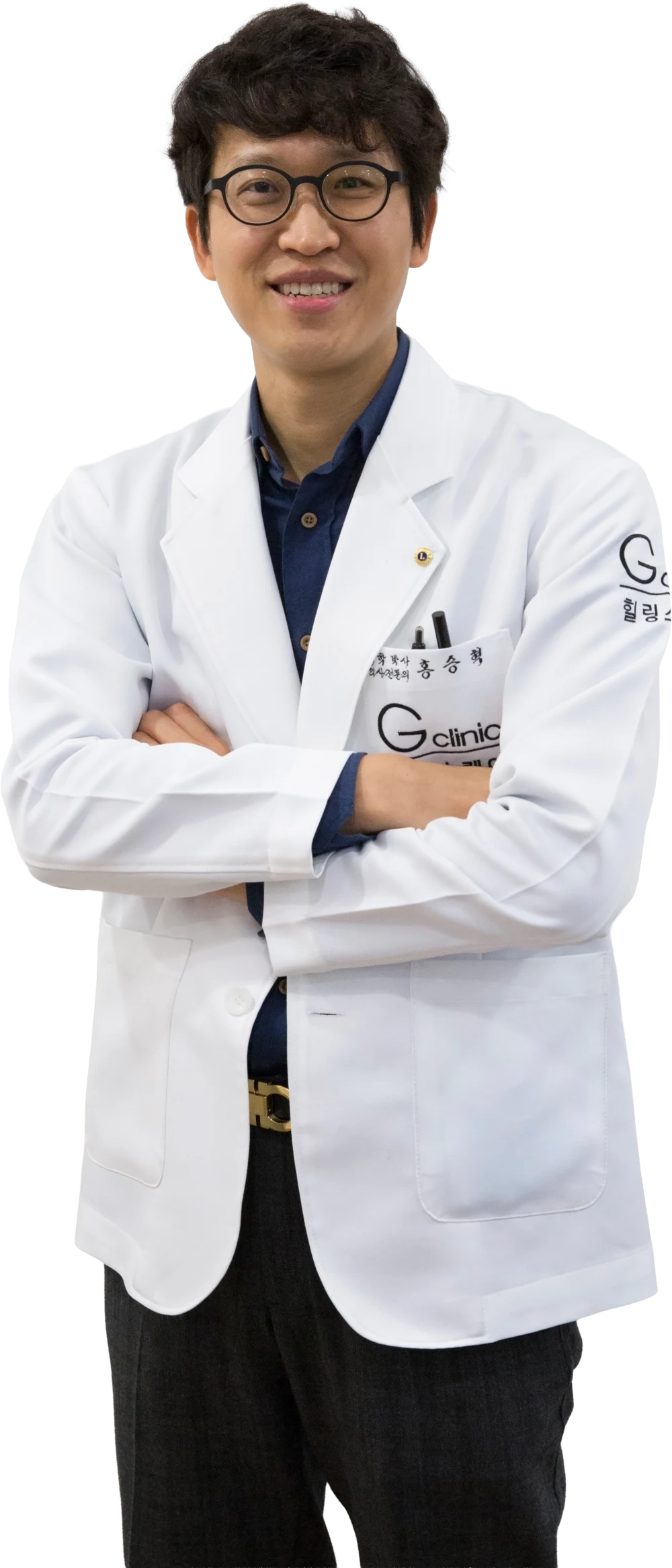
Dr. Hong Seung-hyuk, Medical Director at G Clinic, Gangnam, Seoul

Dr. Hong Seung-hyuk

Kyung Hee Univ. College of Medicine · MD, PhD
Board-certified Family Medicine Specialist · Aesthetic Dermatology
President, Korean Rejuvenation & Obesity Aesthetic Medicine Association (KORA). Co-translator, Body Shaping: Skin · Fat · Cellulite (2016).
Dr. Maeng Woo-jae, Medical Director at G Clinic, Gangnam, Seoul

Dr. Maeng Woo-jae

Kyung Hee Univ. College of Medicine · MD, PhD
Board-certified Family Medicine Specialist · Aesthetic Dermatology
President, Korean Association of Obesity Treatment (KAOT); Vice-President, Korean Anti-Aging Association. Co-author, Clinical Obesity Pharmacology (2017).
Dr. Hong Yeong-ho, Medical Director at G Clinic, Gangnam, Seoul

Dr. Hong Yeong-ho

Kyung Hee Univ. College of Medicine · MD, MS
Board-certified Family Medicine Specialist · Aesthetic Dermatology
Former KOICA international cooperation physician. Full member, Korean society for aesthetic and rejuvenation medicine.
Current Programs

Body contouring & lifting programs.

G Clinic's core programs centre on G-fat body contouring and non-surgical lifting — clinic-reported 20,000+ G-fat cases since 2018. Pricing is shared during your free consultation — the same figures are quoted to every patient, with no separate visitor markup.

G-fat · Body

G-fat body contouring course

Targeted fat dissolving injections for the abdomen, arms and thighs — planned and performed by a resident medical director. Course length is decided at your free consultation.

Explore G-fat
Lifting

Non-surgical face lifting program

Director-performed lifting treatments for jawline and facial contour, matched to your skin at consultation.

Explore Lifting
Petit

Botox & filler refinement

Precise contour refinement to complete a body or lifting course, personally administered by your director.

Explore Petit
Programs are reviewed with your director at your free consultation
Certifications & Partner Recognition

A decade of recognized clinical partnerships.

The G Clinic name dates to a 2012 device-maker advisory appointment. Each recognition below is stated as issued by its organisation.

Ulthera
Ulthera Authenticity Certified Clinic
Certified by Merz Aesthetics for authentic Ulthera equipment.
2018
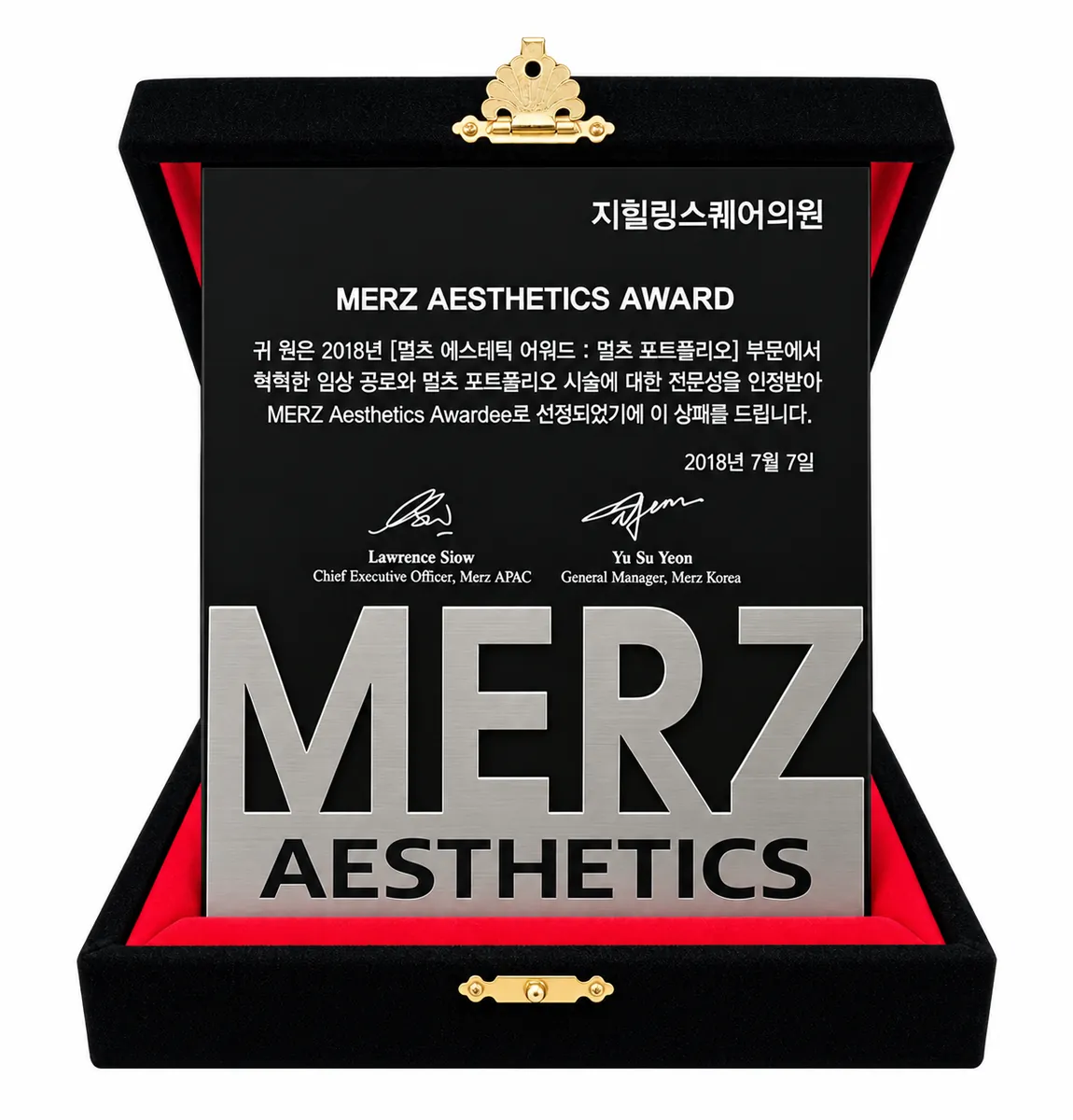
Merz Aesthetics Award
Portfolio category, Merz Aesthetics, July 2018.
2018
Merz Serendipity Journey Symposium
Attendance certificate, Dr. Maeng Woo-jae, Seoul 2018.
2018
Health Chosun — Best Clinic listing
Recommended clinic feature, Chosun Media, 2018.
2013
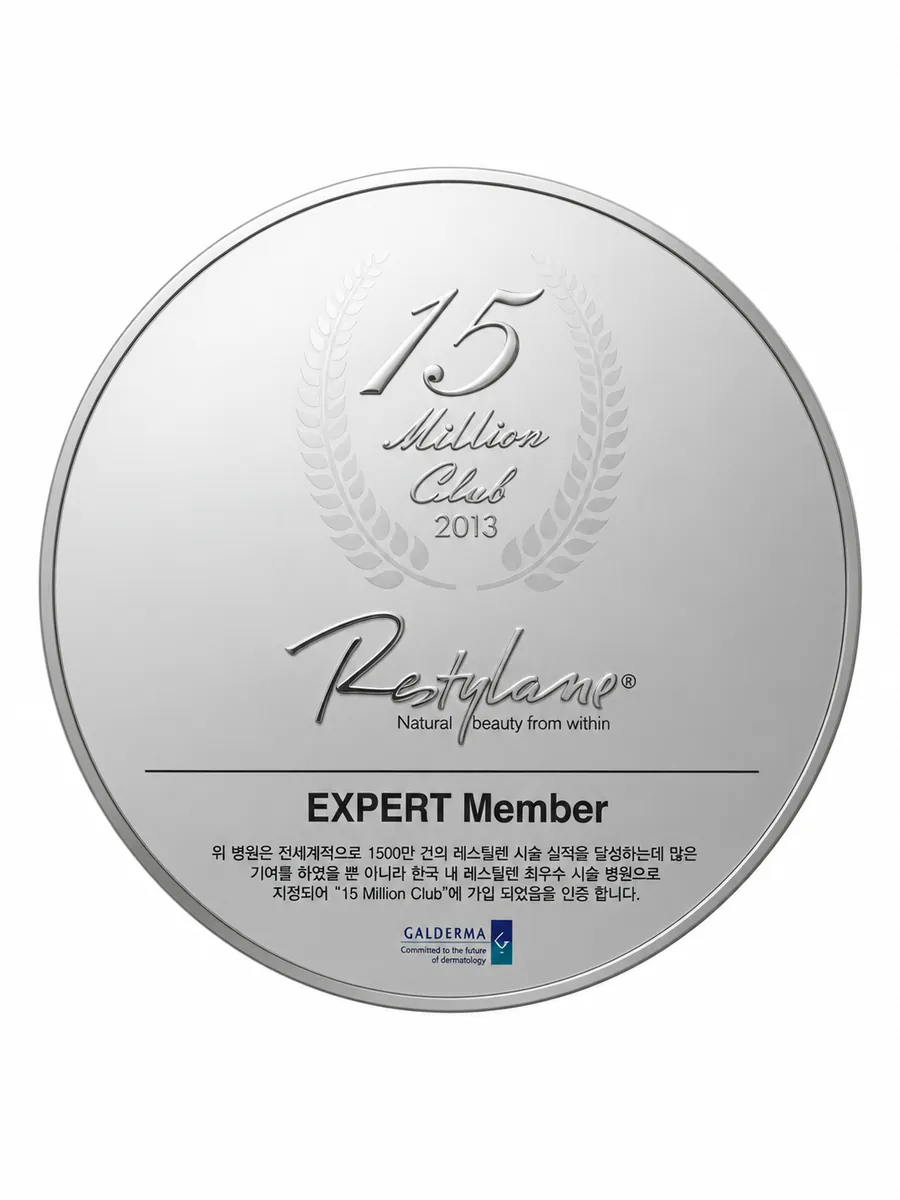
Restylane 15 Million Club — Expert Member
Expert member recognition issued by Galderma.
2012 · 2016–2019
Hironic Advisory Appointments
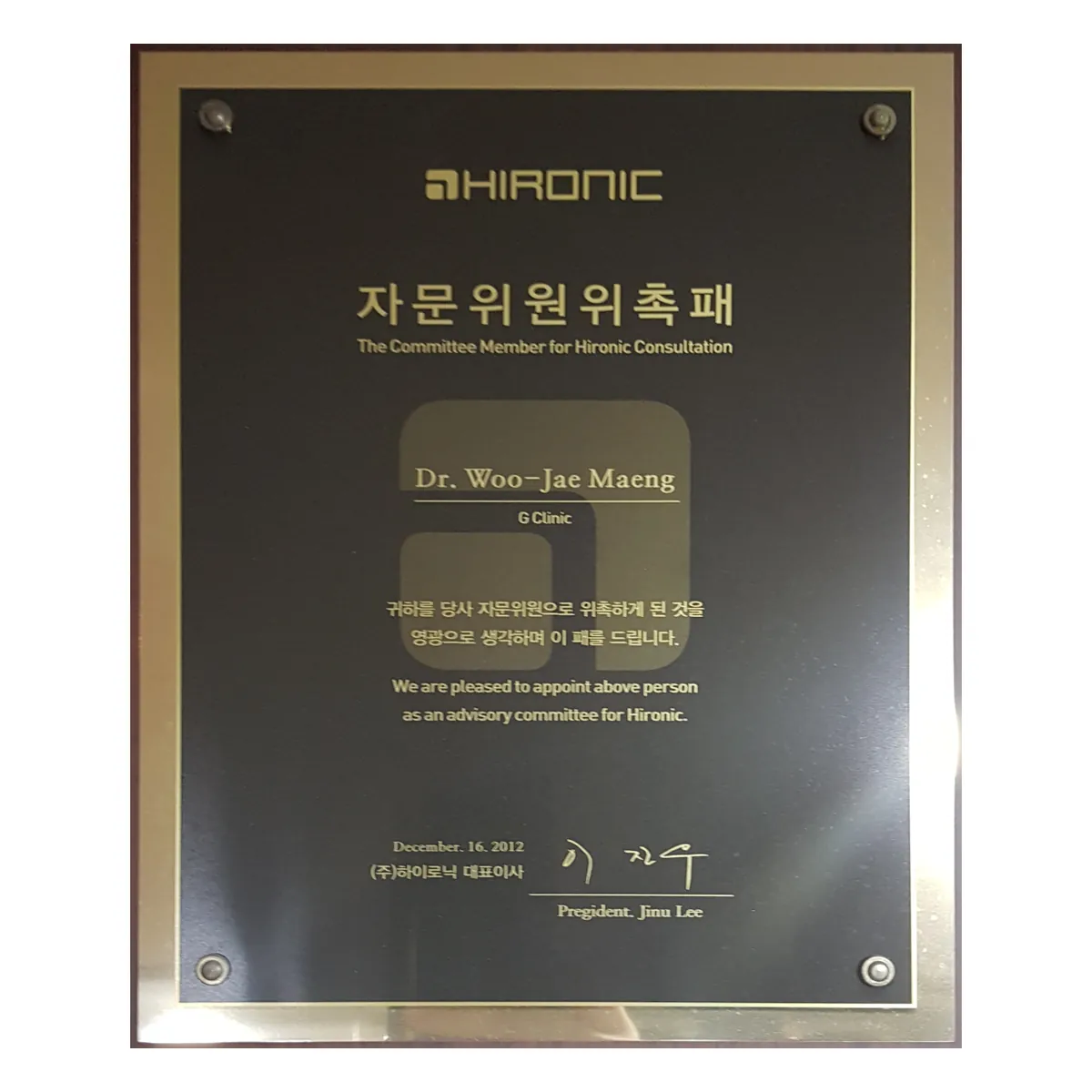
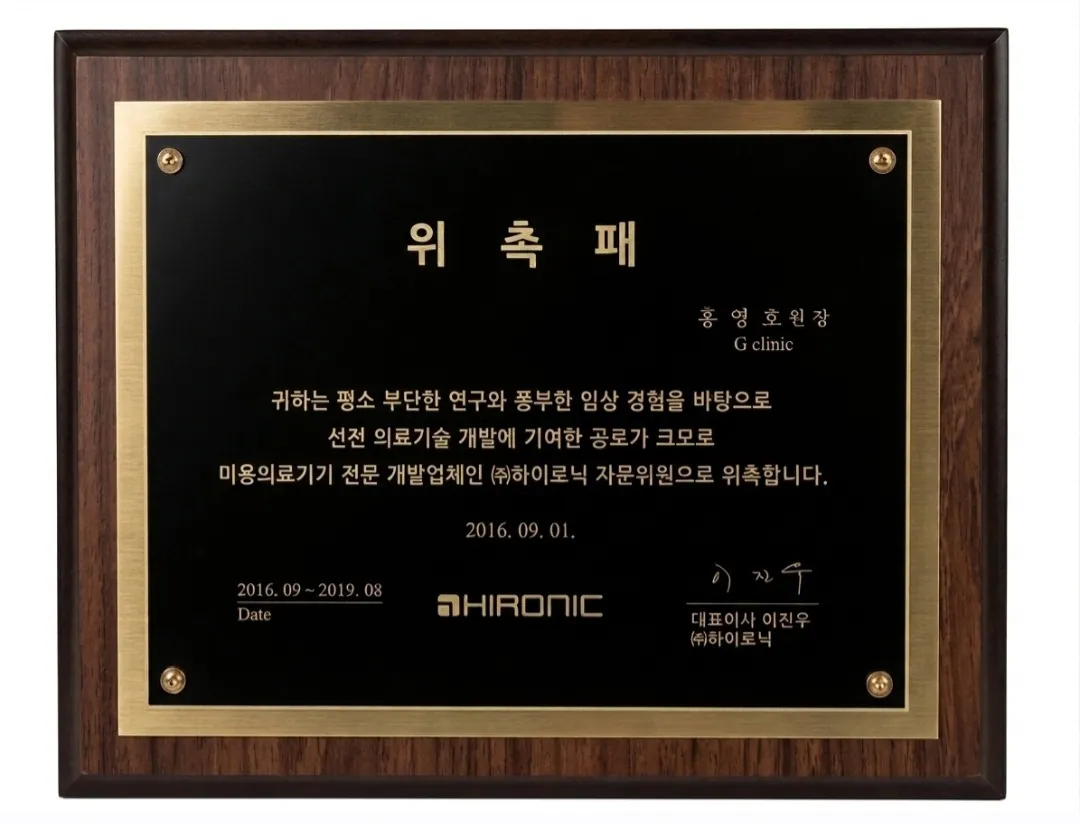
Advisory committee: Dr. Maeng (2012, certificate bears the G Clinic name), Dr. Hong Yeong-ho (2016–2019).
Doublo
Doublo HIFU Designated Clinic
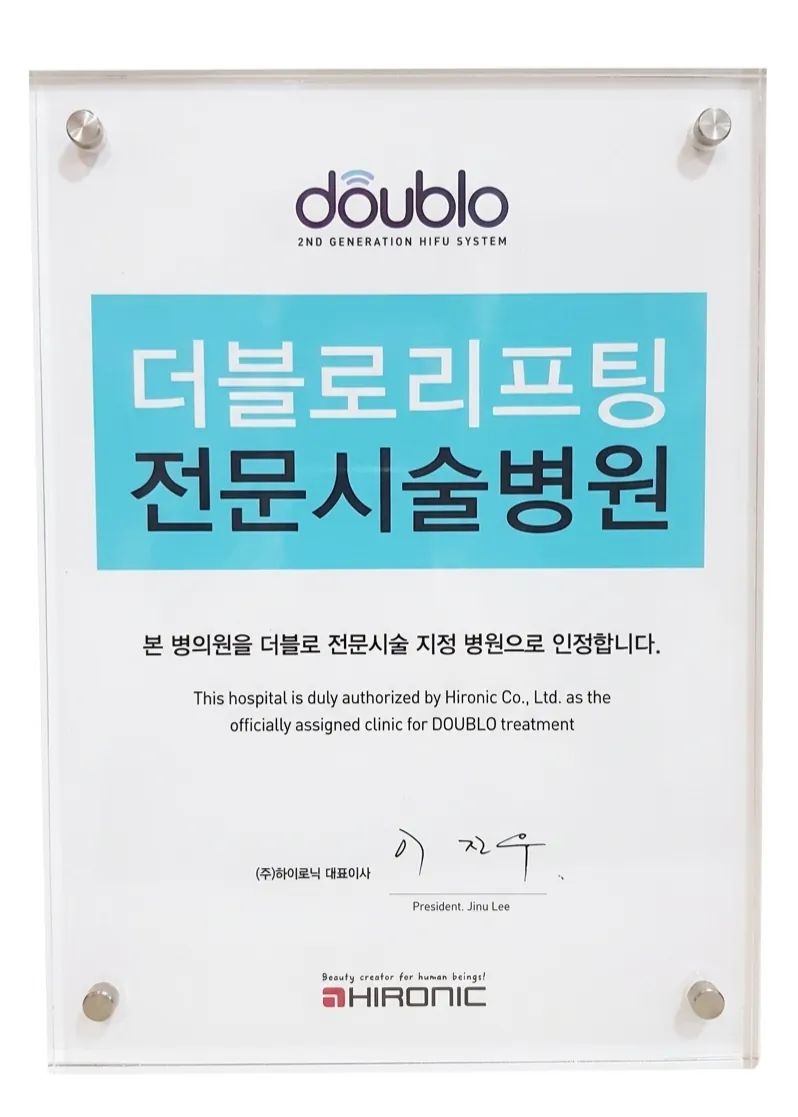
Officially assigned Doublo clinic, Hironic Co., Ltd.
Volnewmer
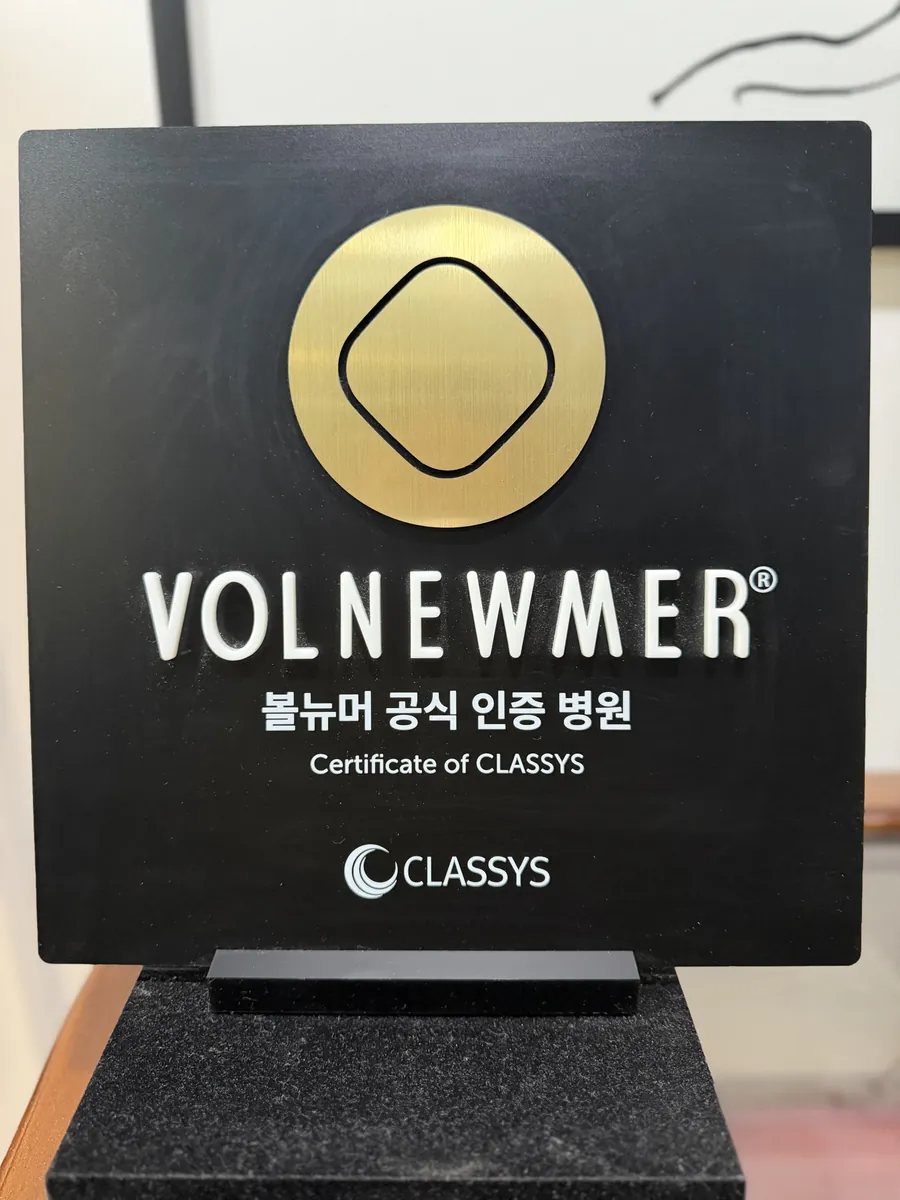
Volnewmer Official Certified Clinic
Certificate of Classys.
Juvelook
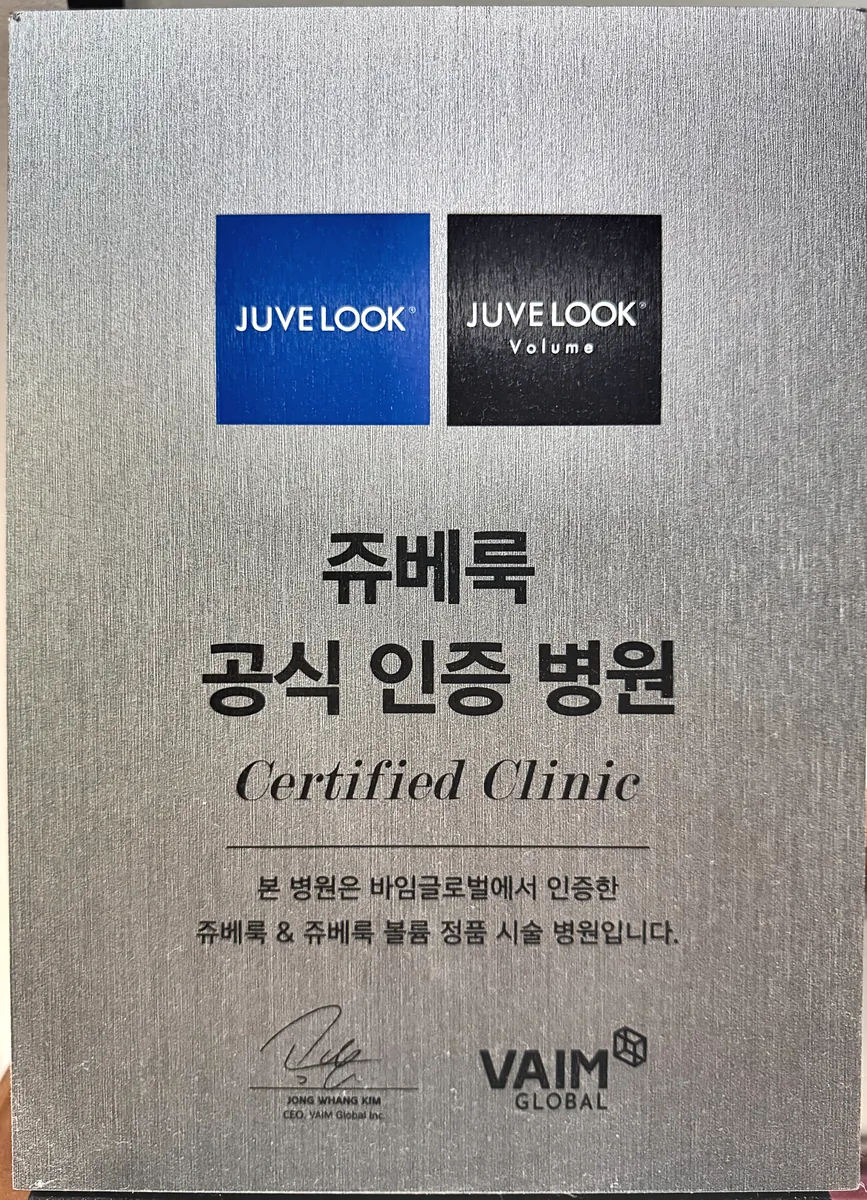
Juvelook Official Certified Clinic
Certified by VAIM Global for authentic Juvelook treatment.
Silhouette Soft
Silhouette Soft Certified Clinic
Recognized by Sinclair for authentic Silhouette Soft thread lifting.
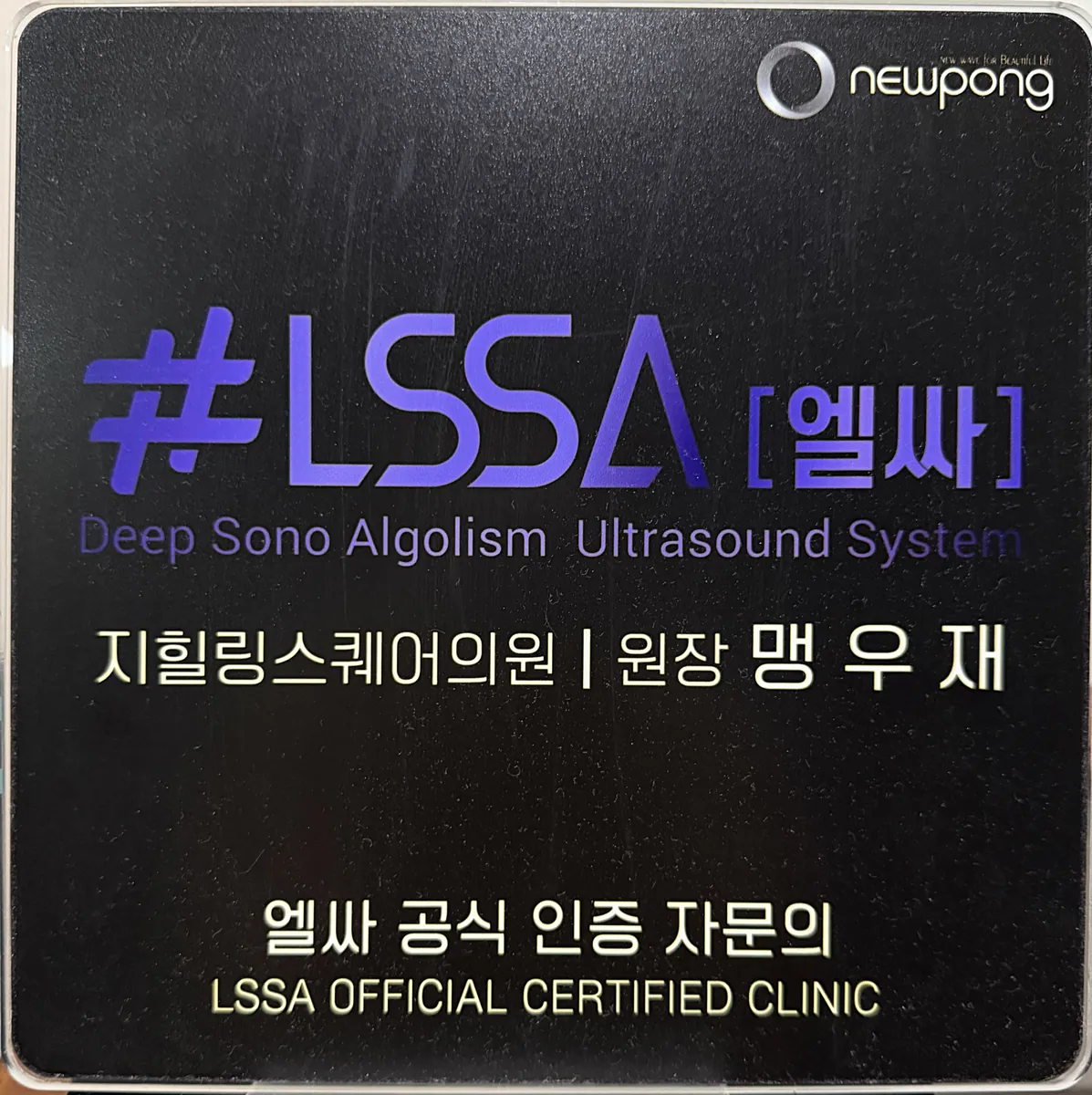
LSSA
LSSA Official Certified Clinic
Deep Sono Algolism Ultrasound System; certified advisory physician Dr. Maeng Woo-jae.
2010–2017
Academic & Society Roles
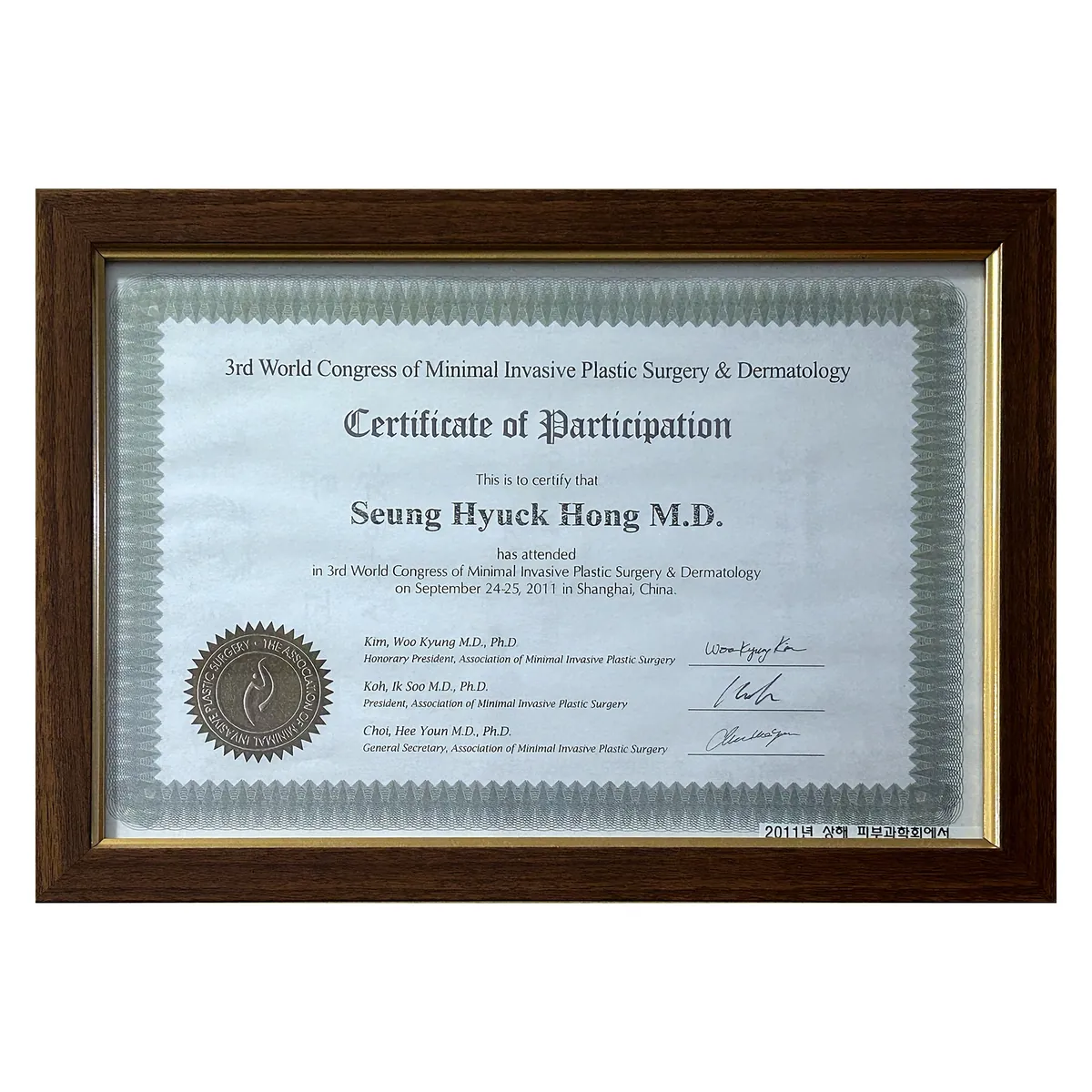
Dr. Maeng: KAOT chair, appreciation plaque 2014. Dr. Hong Yeong-ho: adjunct assistant professor, Konkuk Univ. (2013–2017). Dr. Hong Seung-hyuk: KSLMS member 2010; World Congress MIPS&D 2011.
Ulthera authenticity certified clinic certificate
Merz Aesthetics Award 2018 plaque
Merz Serendipity Journey Symposium 2018 attendance certificate, Dr. Maeng Woo-jae
Health Chosun 2018 Best Clinic plaque
Restylane 15 Million Club expert member plaque
Hironic advisory committee appointment plaque, Dr. Maeng Woo-jae, 2012
Hironic advisory appointment plaque, Dr. Hong Yeong-ho, 2016–2019
Doublo HIFU designated clinic certificate
Volnewmer official certified clinic plaque, Classys
Juvelook official certified clinic plaque
Silhouette Soft certified clinic certificate
LSSA official certified clinic plaque
KAOT appreciation plaque, Dr. Maeng Woo-jae, 2014
Konkuk University School of Medicine adjunct appointment, Dr. Hong Yeong-ho
KAOT 2013 workshop attendance certificate, Dr. Hong Yeong-ho
Korean Society for Laser Medicine and Surgery membership certificate, Dr. Hong Seung-hyuk
3rd World Congress of Minimal Invasive Plastic Surgery and Dermatology participation certificate, Dr. Hong Seung-hyuk
Patient Reviews

What our patients say.

Verified reviews from our Google Business Profile.

★★★★★

Yesterday, I had a fat extraction procedure from Dr. Hong Young-ho. The staff, especially the doctor, were so kind that it was very comfortable. Right after the procedure, it was just a little uncomfortable yesterday because of swelling, but today there is almost no pain and I'm waiting for the swelling to go away to see the beautiful res…

Ka year ago
★★★★★

Recommendations are made based on actual circumstances. The attitude is very good. Highly recommended.

Ya year ago
★★★★★

I cannot recommend G-clinic highly enough. From the moment I walked in, my experience was nothing short of exceptional. The clinic itself is modern, clean, and welcoming. The front desk staff were incredibly warm and efficient. Checking in was a breeze, and they were very helpful with my new patient paperwork. The waiting time was minimal…

ma year ago
★★★★★

Process was perfect! I got some liposuction done, the doctor and staff were very nice and very professional. 100% would recommend anyone to get there procedures done here! They took out A LOT of fat! The doctor speaks perfect English as well!

K3 years ago
Free Consultation

Get your personalized quote.

Share your details and our team will reply through your preferred messenger. Consultation is free and pricing is quoted at your free consultation.

  • ✓Free consultation reviewed by one of three resident directors
  • ✓Personalized quote at your free consultation — same figures for every patient
  • ✓Care performed on site by your director in Gangnam, Seoul
  • ✓10-language support via messenger

Book a Free Consultation

⚠ Please select a country code for WhatsApp

Your details are protected under our privacy policy and are never shared with third parties.

Chat with us
Visit Gangnam · Dosan-daero

Emerald Tower, 5F–7F.

Address
5F–7F Emerald Tower122 Dosan-daero, Gangnam-gu, Seoul, South Korea
Hours
Mon–Fri · 11:00–19:00Sat · 10:30–14:00 · Sun & holidays closed
Languages
English consultation10-language messenger support
Reach
International patient deskContact us through the consultation form