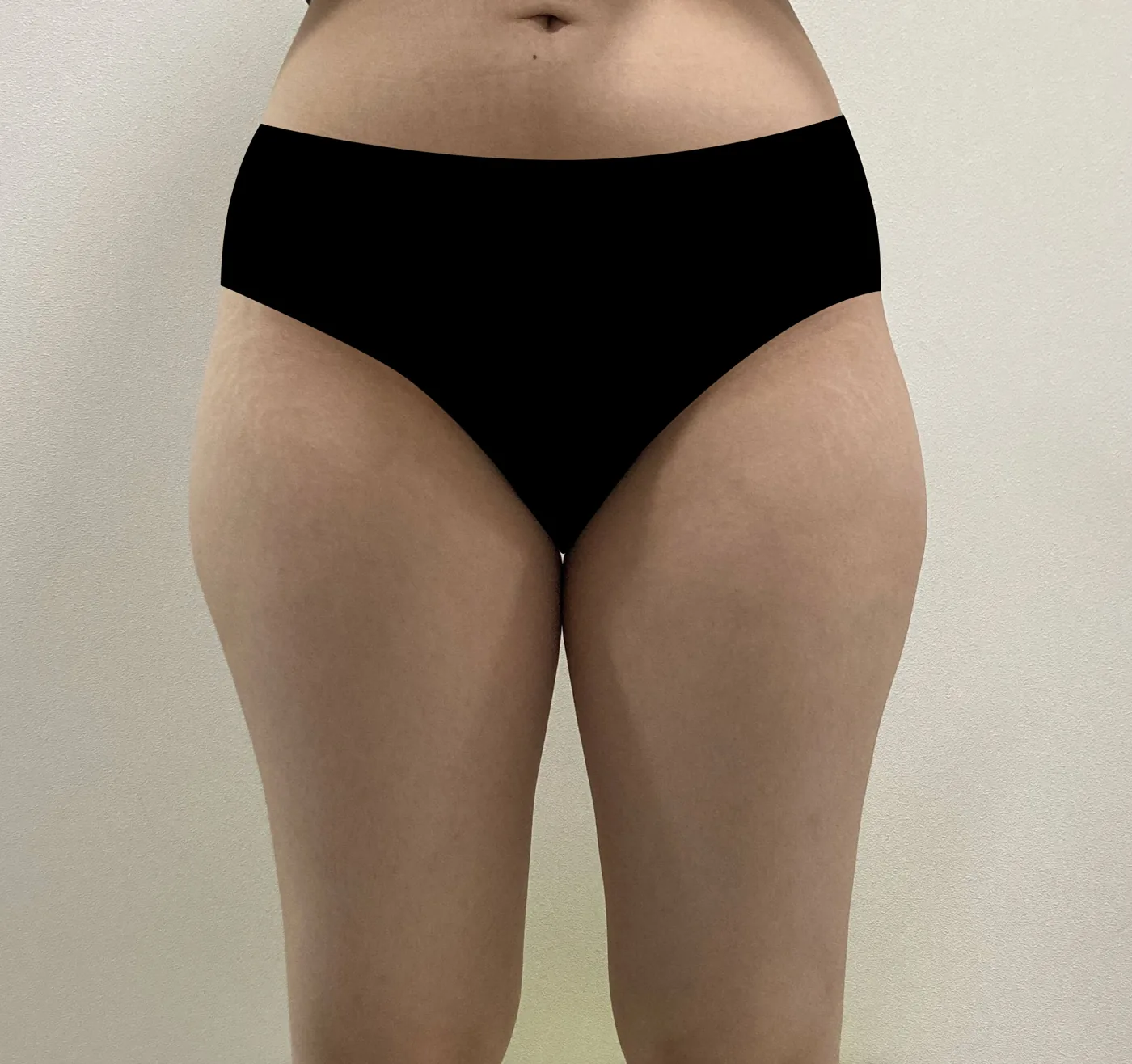
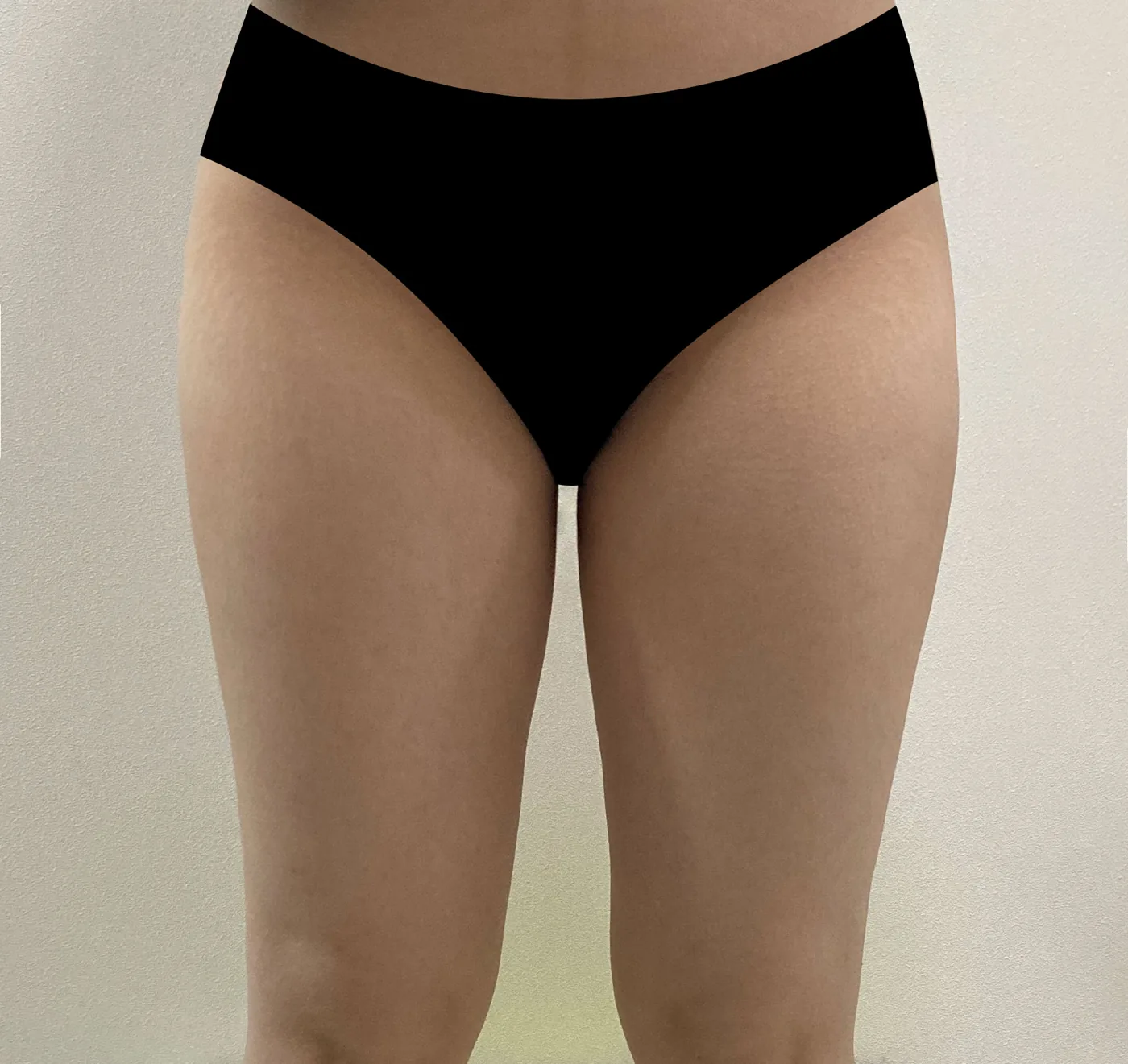
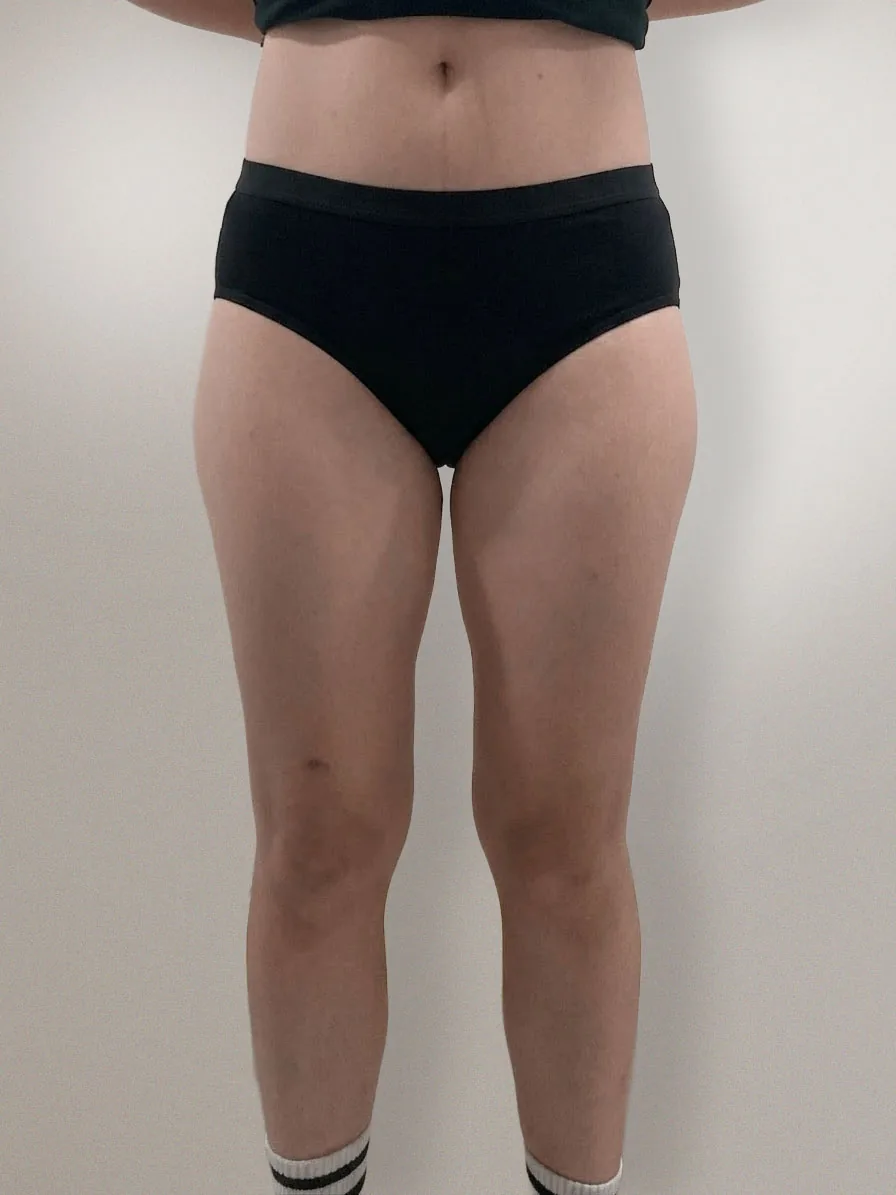
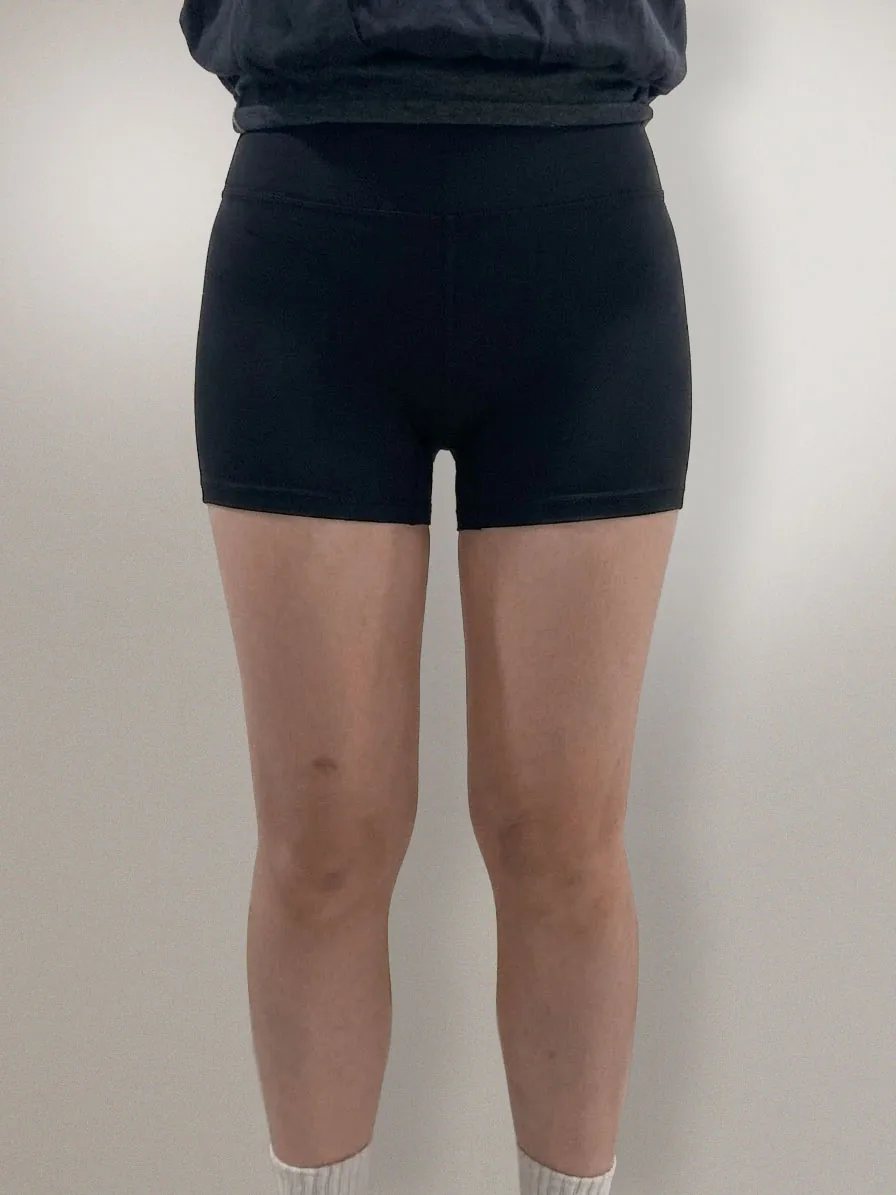
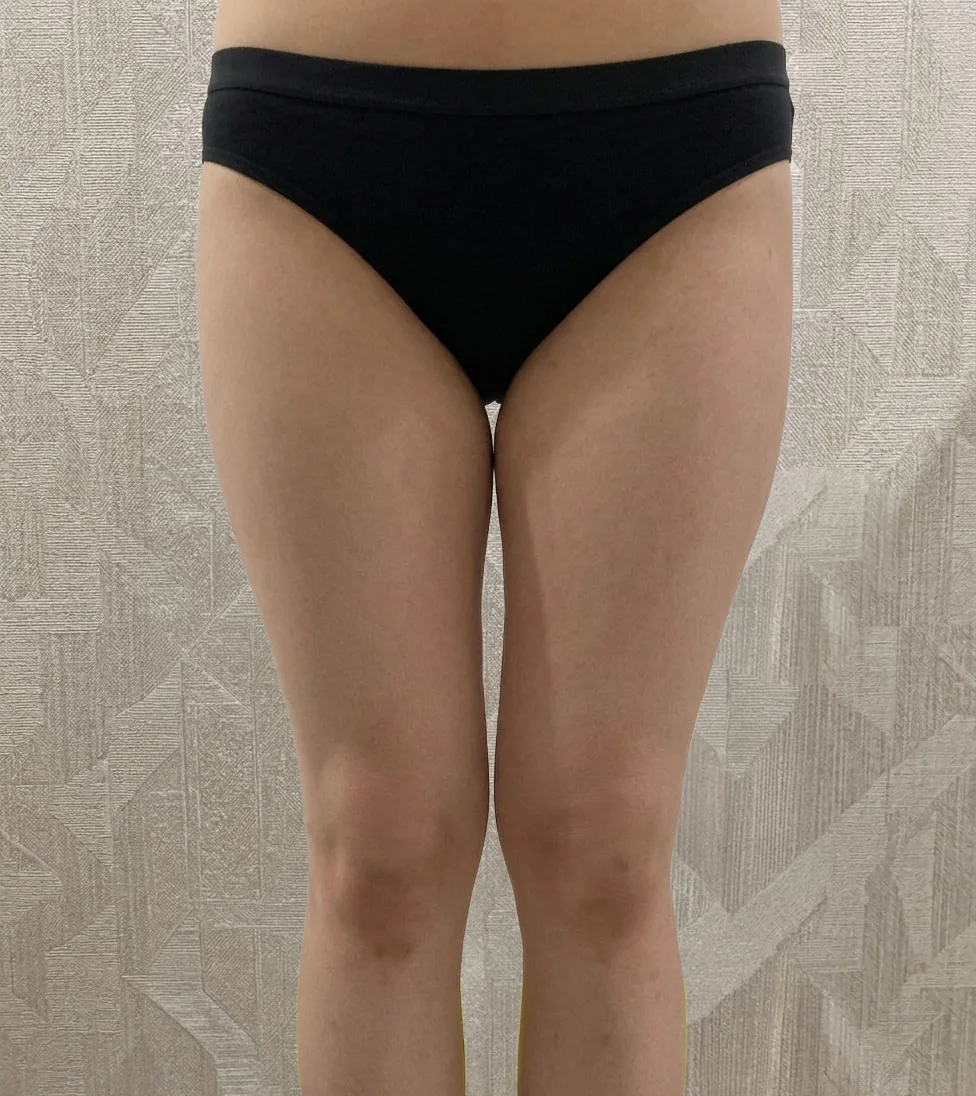
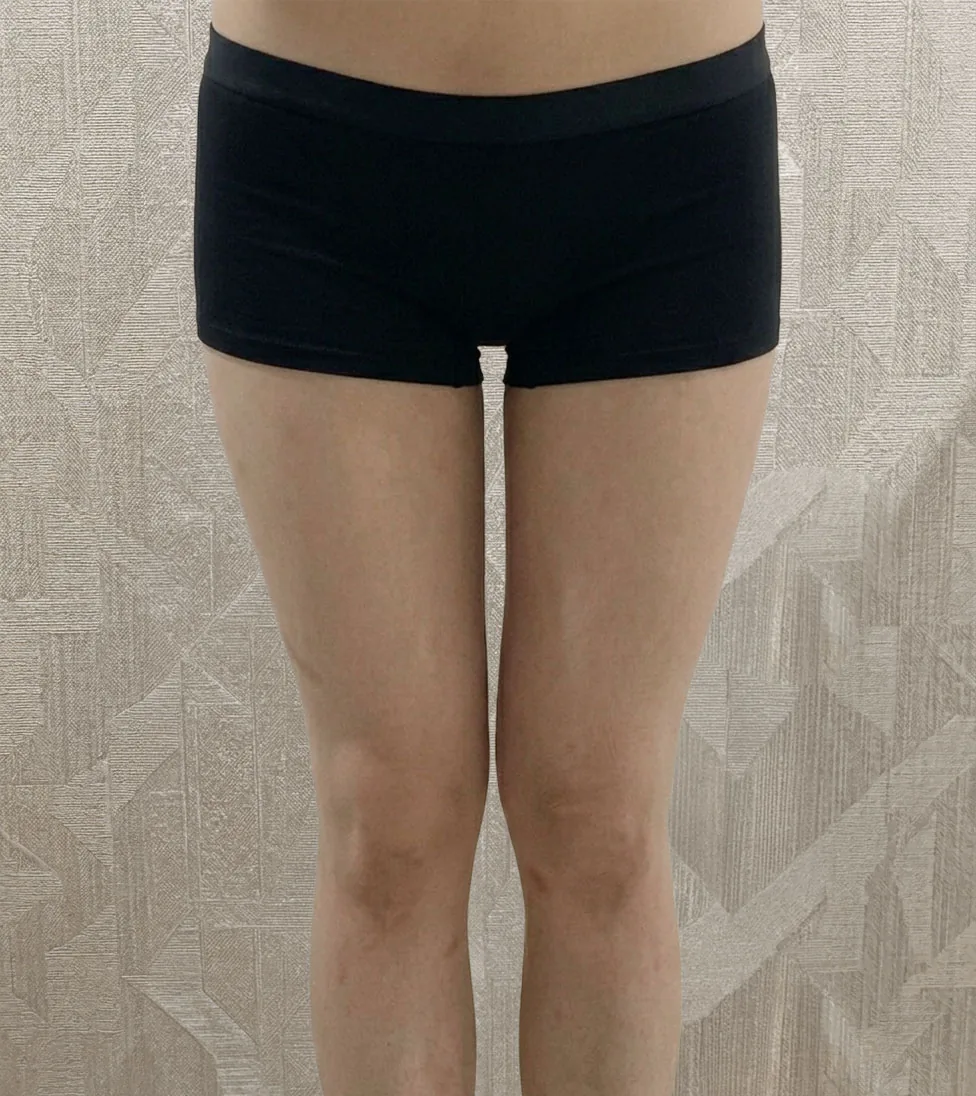
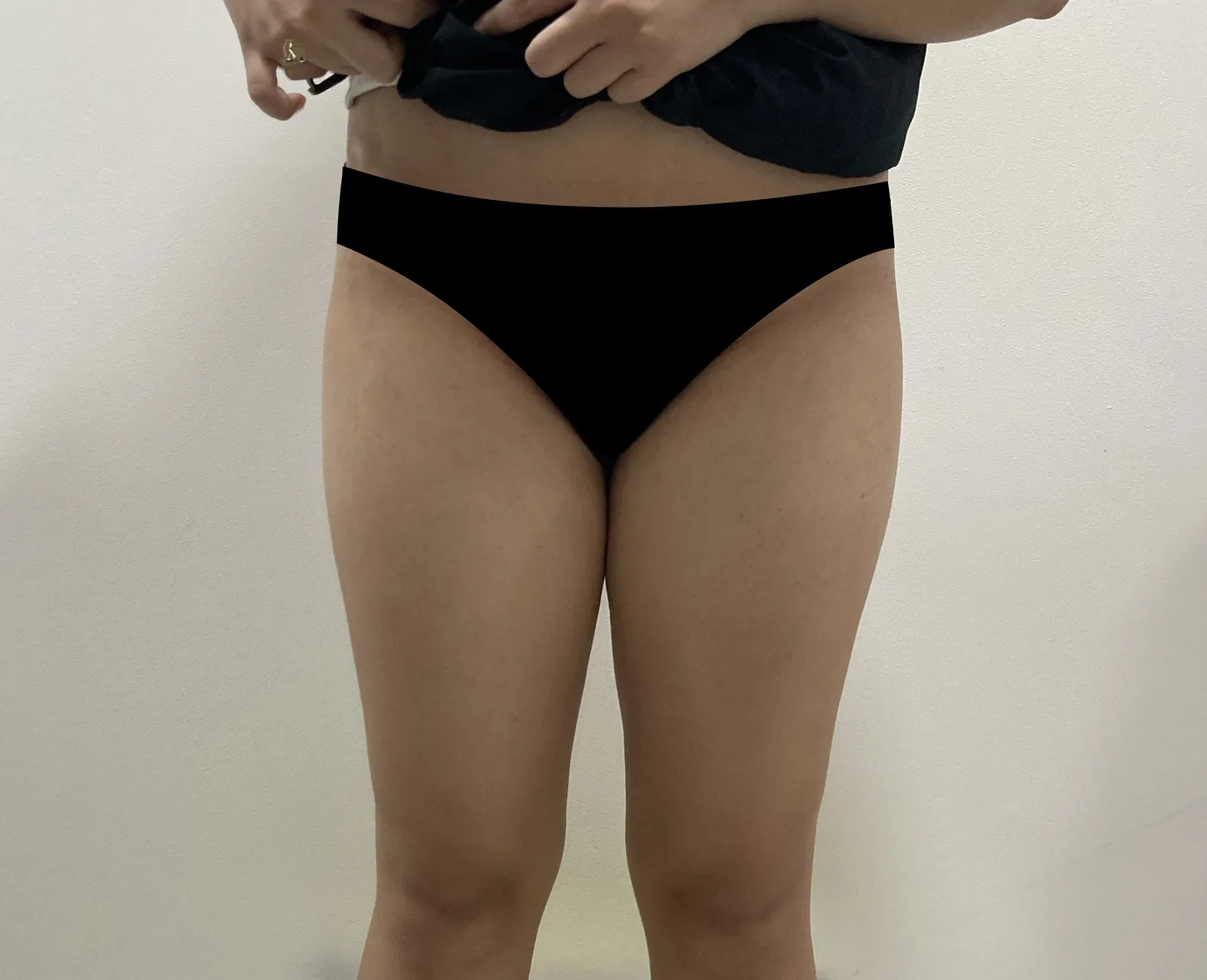
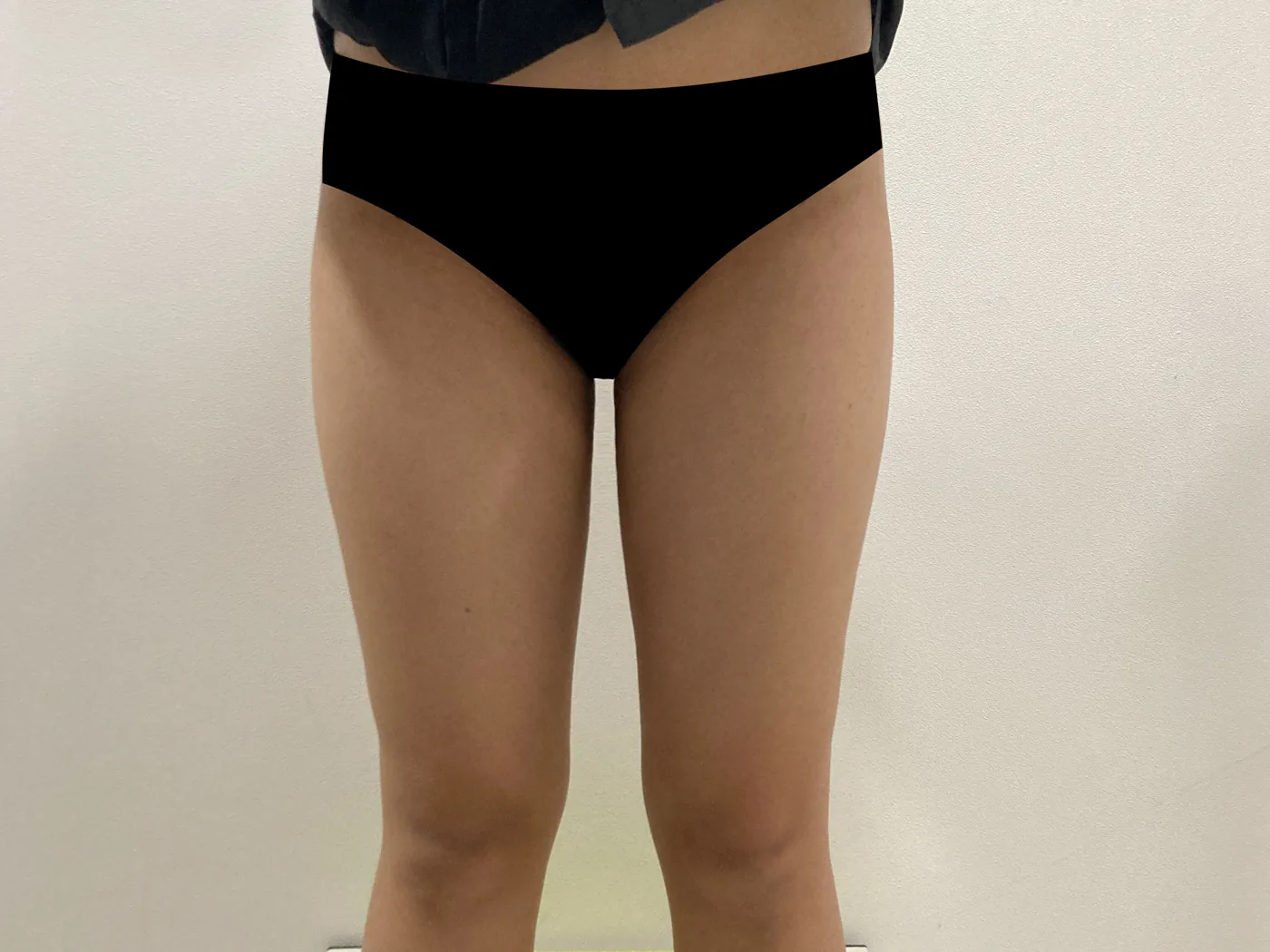
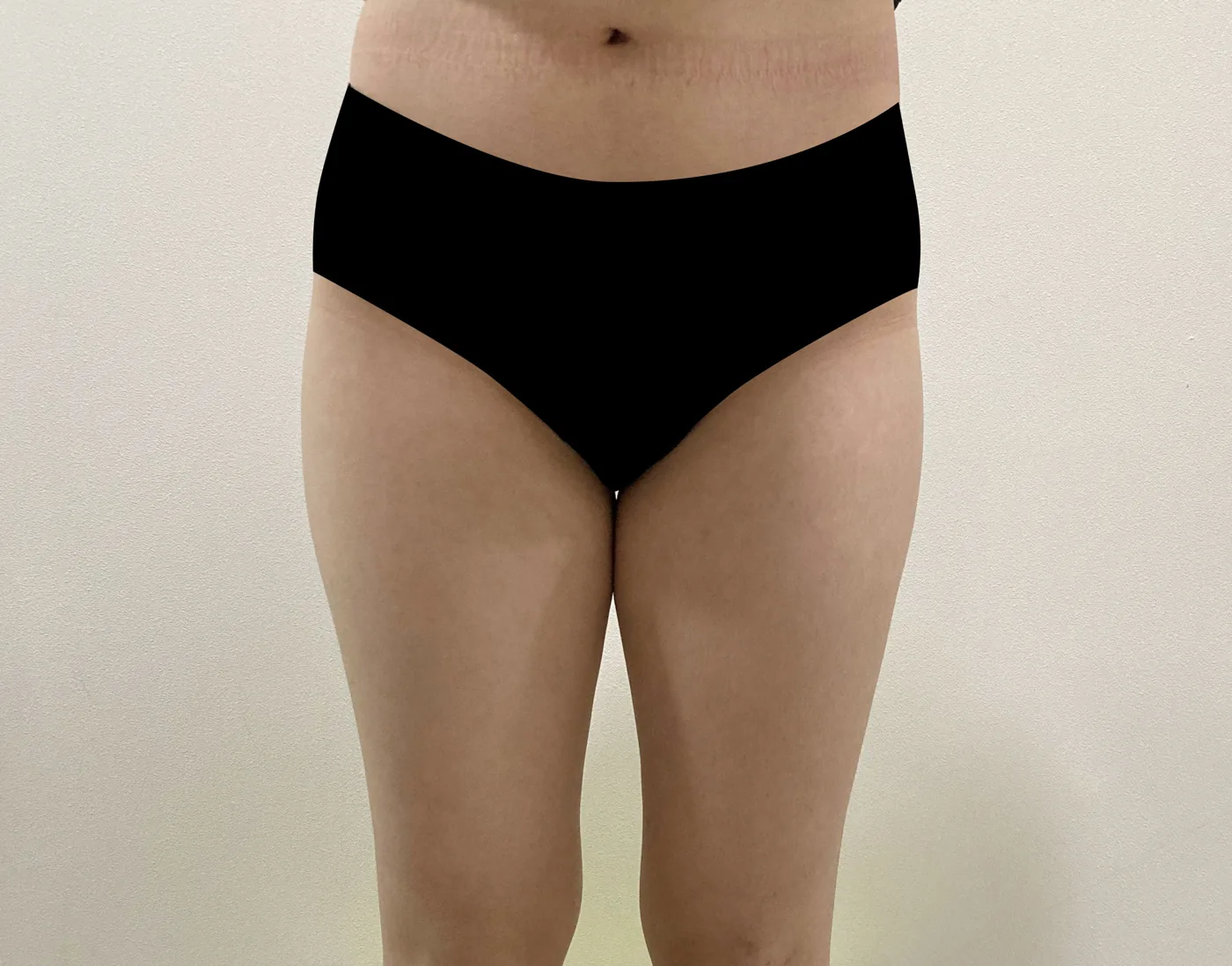
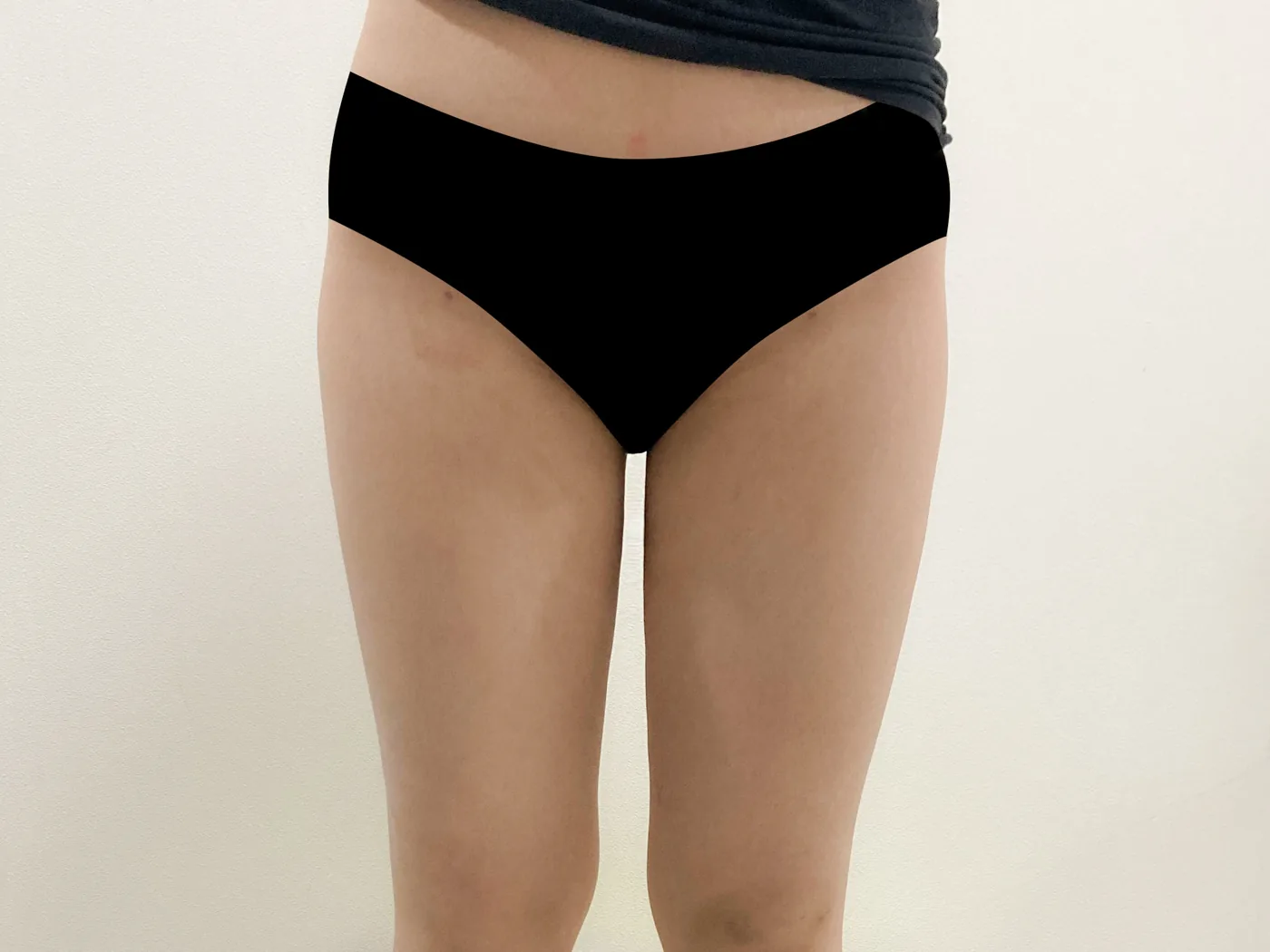
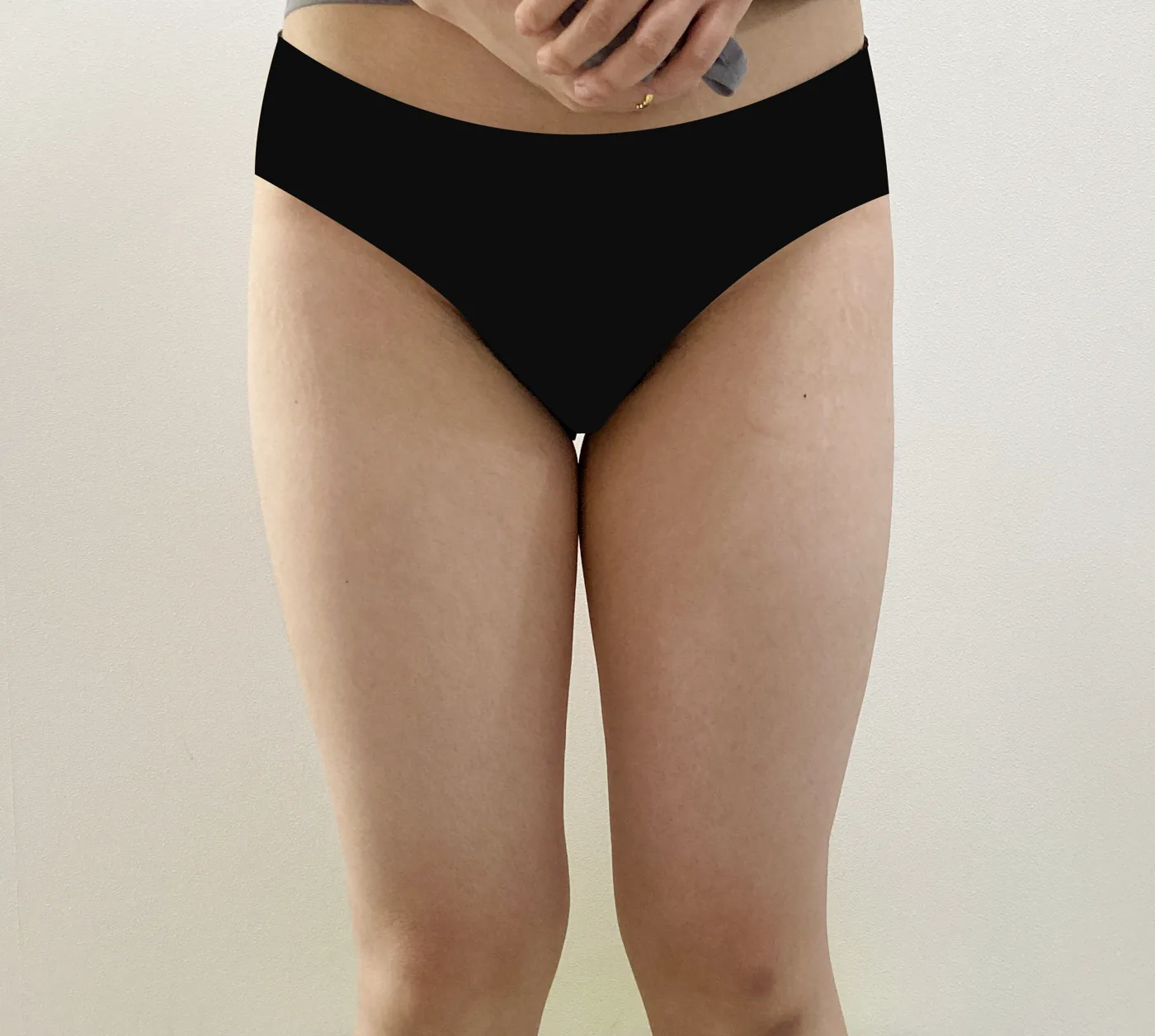
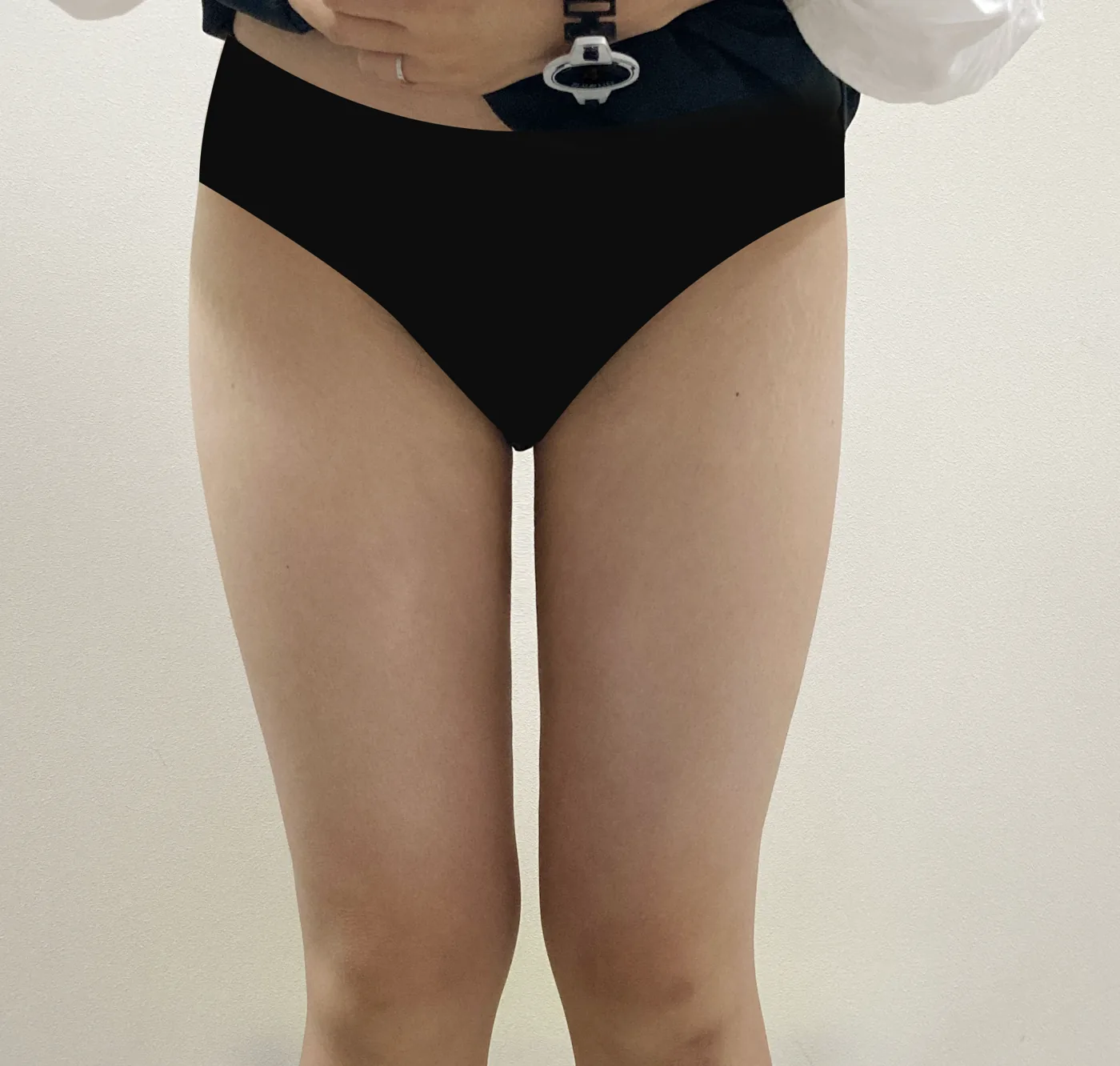
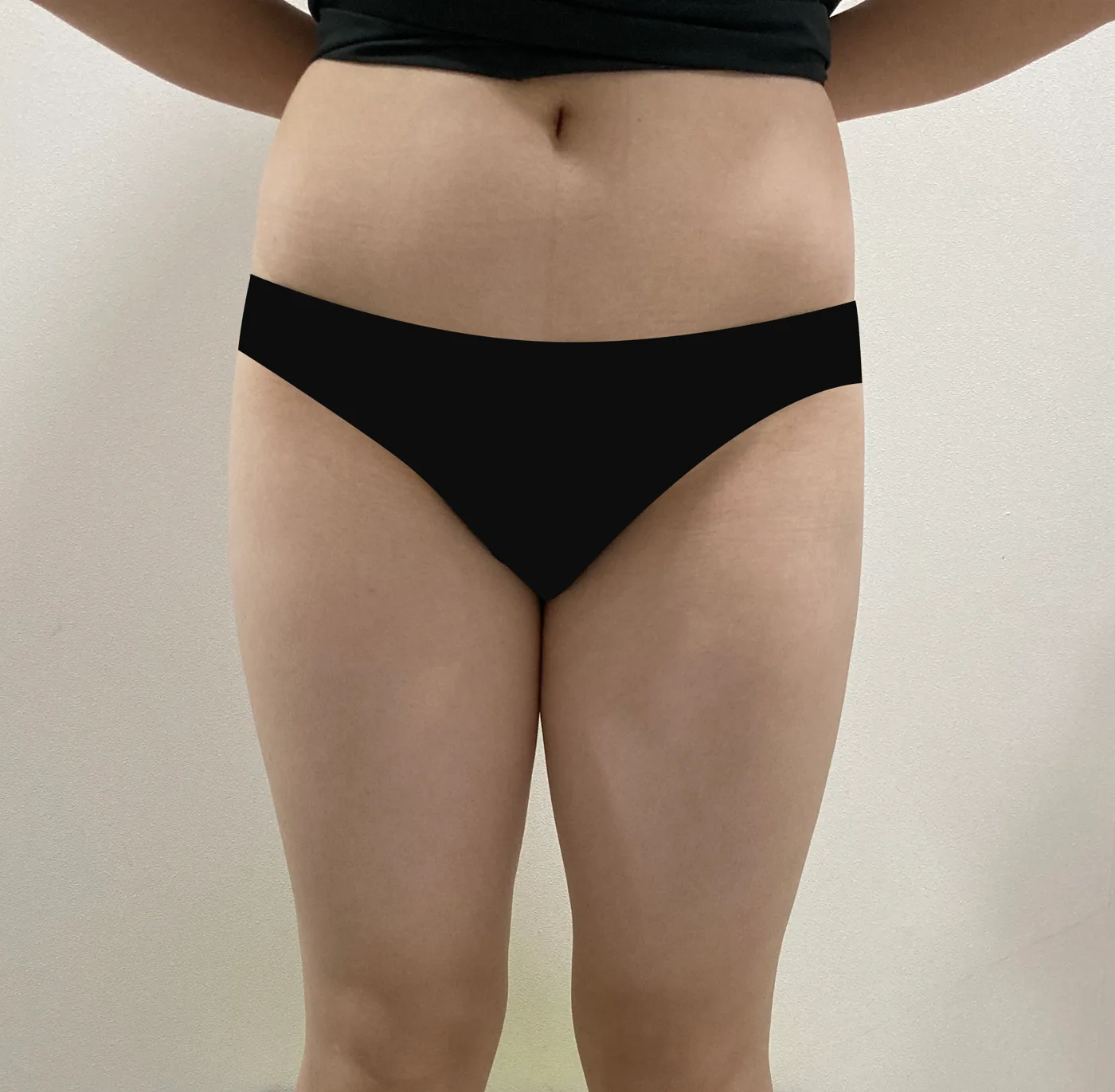
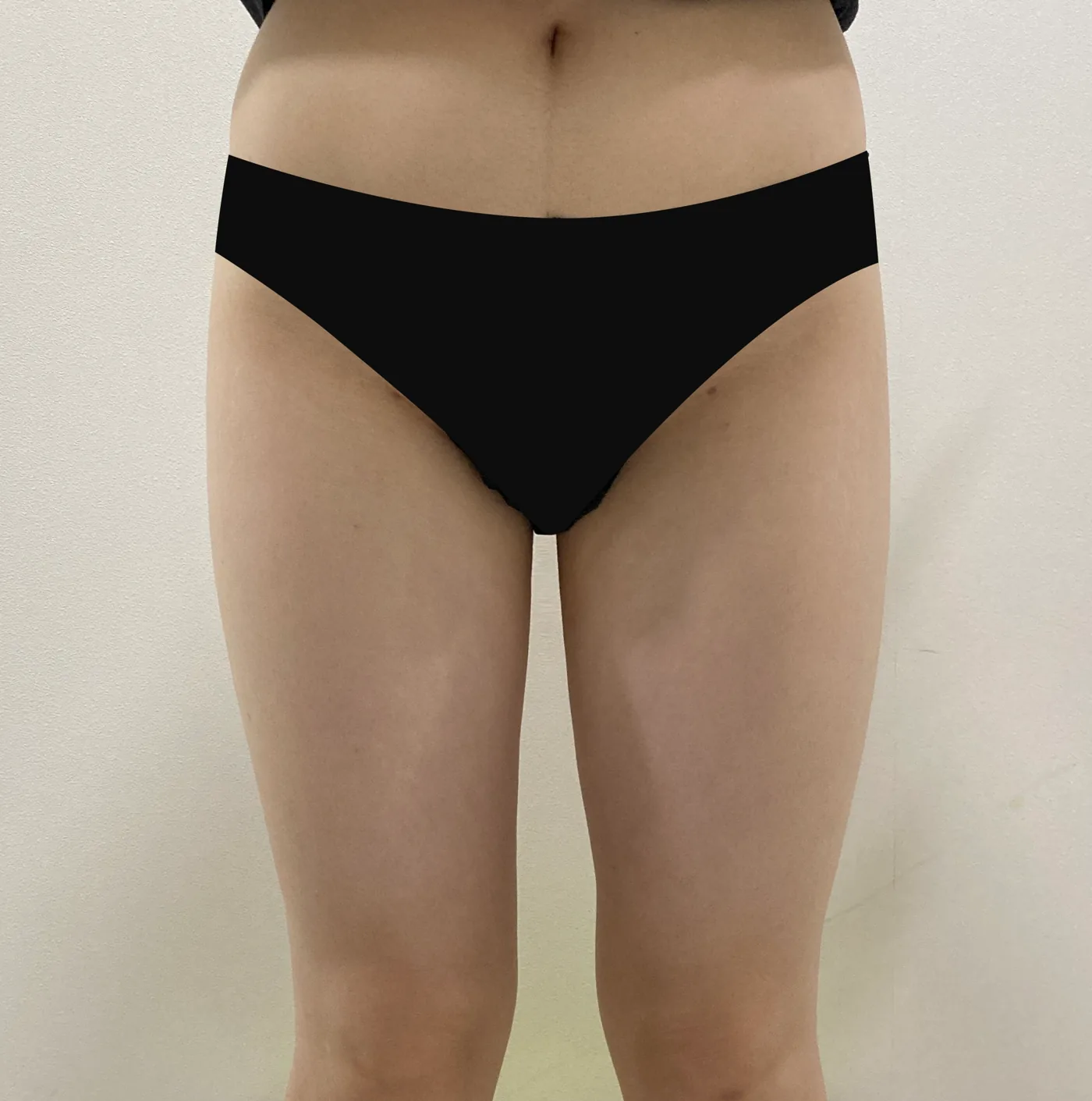
This is a minimally invasive procedure that carries genuine risks, and your director goes through them with you before you agree to anything. Bruising, swelling and tenderness along the inner leg are expected for the first days, together with patches of altered sensation that take time to normalise. Less frequently, patients see surface irregularity, a seroma, firm nodules under the skin, slackening, or infection at the micro-entry point.
Asymmetry between the two legs is the risk worth naming twice on this zone. Legs are looked at side by side all day long, many people carry a little more fat on one than the other before anything is touched, and a difference that would pass unnoticed on an arm is visible when the feet come together. The director judges both legs against each other while you are standing for exactly that reason, and a garment worn loosely on one side lets fluid gather where it is least welcome.
Tell the clinic your full medical history, every medication and supplement, any vein treatment you have had, and any past trouble with anaesthetic. Afterwards, wear the compression as instructed, keep the entry points clean and dry, and contact the clinic quickly if pain, redness, discharge or swelling grows after the first few days. A resident director is on site during opening hours, so a doctor can always look at the leg.