Free English consultation · Three medical directors on-site · Gangnam, Seoul
Regenerative Medicine · Information Page

Stem Cell Therapy in Korea: Reading Regenerative Aesthetic Medicine in Gangnam, Seoul

This page is background reading, and nothing on it is an offer. G Clinic publishes it because international patients arrive in Gangnam, Seoul with the phrase already in their heads and want to know what Korean law puts behind it, who is permitted to do what, and which questions are worth asking out loud in a consultation room.

  • ✦Written as a regulatory and vocabulary guide, with no outcome claim attached
  • ✦Three resident medical directors, all board-certified Family Medicine specialists
  • ✦English-speaking consultation at the clinic address on Dosan-daero, Gangnam-gu
2006
International patients
cared for since
3
Resident Directors
Family Medicine specialists · aesthetic dermatology
10
Languages
messenger support

What does stem cell therapy in Korea actually refer to?

The phrase covers several different things, and Korean law treats them differently. Work that uses living human cells sits under the Act on the Safety of and Support for Advanced Regenerative Medicine and Advanced Biological Products, which reserves that work for institutions designated by the Ministry of Health and Welfare and requires a plan to be reviewed by a national committee before anyone is enrolled. A large share of what the aesthetic market labels regenerative contains no living cells at all: it is cell-derived or synthetic material handled under cosmetic, device, or pharmaceutical rules. This page separates those categories for readers who land in Gangnam, Seoul holding a brochure. It states no designation status for G Clinic, describes no procedure as available here, and promises nothing about what any regenerative product would do for a given person.

The Conversation

How a regenerative medicine question is handled at this clinic.

There is no booking funnel on this page. What follows is simply the sequence a question about cell-based or cell-derived care goes through when someone raises it with one of the resident directors.

  1. 01

    You put the question in writing

    Send the exact wording you were given, including the product name, the country it was quoted in, and any document you were shown. Written wording matters here, because two brochures can use the same English word for two legally different things, and the difference is invisible in conversation.

  2. 02

    A director places it in a category

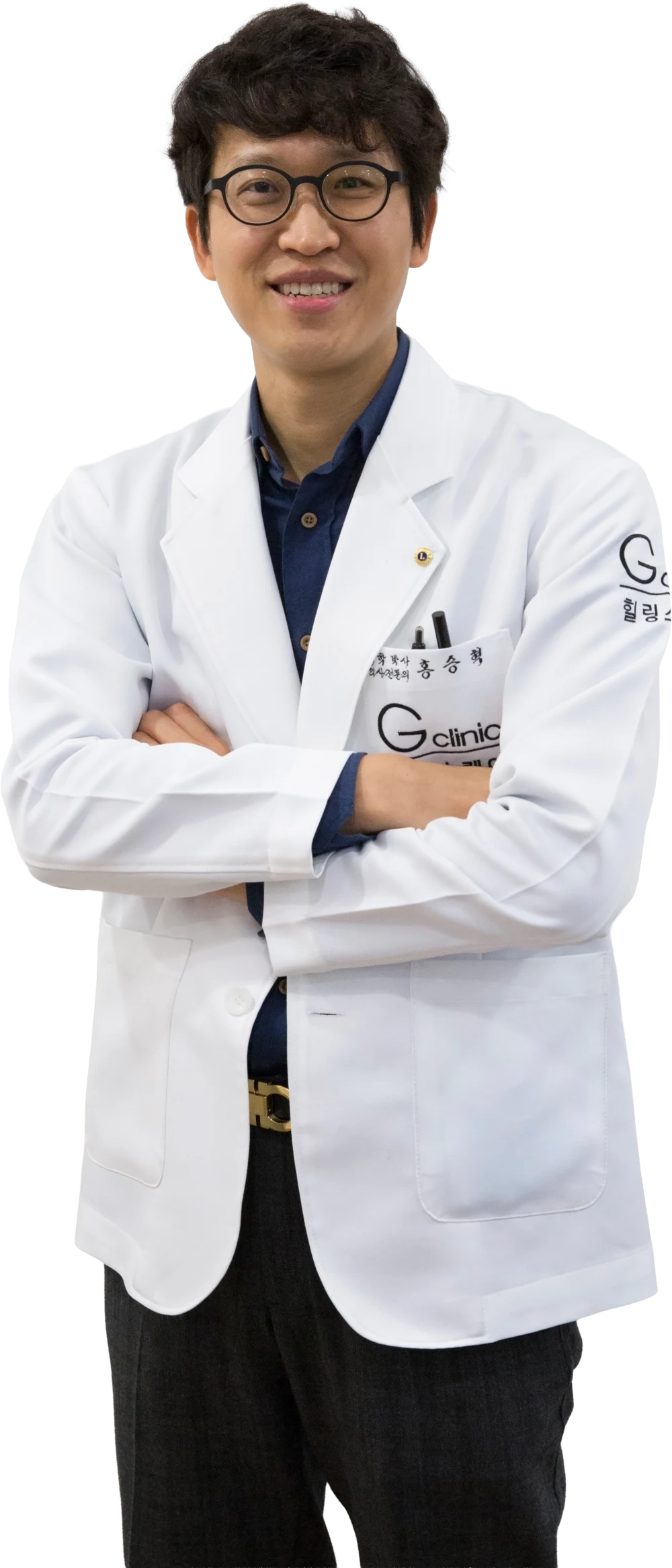
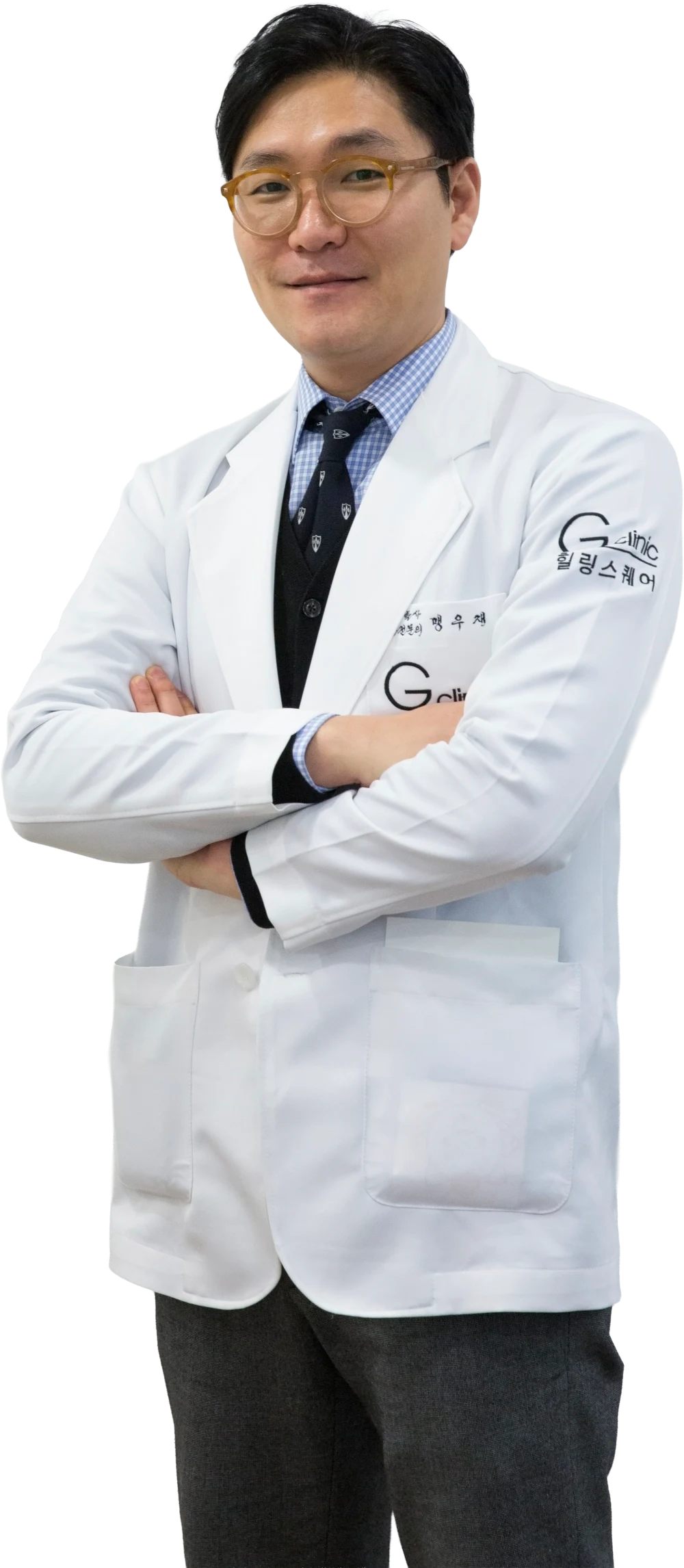
    Dr. Hong Seung-hyuk, Dr. Maeng Woo-jae, and Dr. Hong Yeong-ho are board-certified Family Medicine specialists, and the first job in the room is classification: living cells, cell-derived material, a cosmetic preparation, or a device-assisted step. Everything downstream depends on which of those you are actually being offered.

  3. 03

    The legal position is stated plainly

    If what you describe falls inside the designated-institution framework, you are told what documentation an institution would have to hold. If a designation cannot be evidenced on paper, the director says so and stops there. No conditional wording, no phrasing that leaves a door open for a later upsell.

  4. 04

    You leave with a record, not a booking

    You go home with a written note of the category discussed, the risks named aloud, and the questions still unanswered. Nothing is scheduled off the back of this conversation, and no deposit is taken. If your original plan was elsewhere, the note travels with you and is yours to use.

Vocabulary

Four things the words “stem cell” get attached to.

Living cells

The strict meaning is a preparation containing living human cells, whether taken from the person receiving it or from a donor, and whether or not those cells were expanded in a laboratory first. This is the version the Korean statute is written around, and it is the version that carries the heaviest paperwork, because a living-cell preparation cannot be inspected, standardised, and shelved the way a manufactured product can.

Cell-derived material

Conditioned media, lysates, and similar preparations are made from cells but do not contain living cells by the time they reach a vial. In marketing they are frequently described with the same shorthand as the category above, which is the single most common source of confusion among patients who write to us from abroad.

Exosome-labelled preparations

Exosomes are small vesicles released by cells. Products carrying that label appear widely in aesthetic price lists across Asia, Europe, and North America, and the regulatory classification they sit under varies by country and by how the product is applied. The scientific literature summarised further down this page is about this category, and it is cited as background, without any inference to a clinical service.

Regenerative as an adjective

The loosest use of all. Injectables such as polynucleotide skin boosters, and body procedures such as the clinic’s G-fat fat dissolving injection alternative, are sometimes marketed with regenerative language although they contain no cellular material whatsoever. When a price list uses the adjective, ask what is physically in the syringe.
The Korean Framework

Designated institutions under the Advanced Regenerative Medicine Act.

Korea governs work with living human cells through the Act on the Safety of and Support for Advanced Regenerative Medicine and Advanced Biological Products. The structure has three load-bearing parts. First, an institution must be designated by the Ministry of Health and Welfare before it may carry out advanced regenerative medicine at all; designation is granted against facility, personnel, and record-keeping standards, and it attaches to the institution itself, never to a doctor personally. Second, a plan has to be submitted and reviewed by a national committee, with the depth of review scaled to how much manipulation the cells undergo and how they are administered. Third, adverse events and long-term follow-up are reportable, so the paperwork burden is real and the number of designated institutions stays small.

Two practical consequences follow for an international reader. A clinic that is not designated cannot lawfully move into that category by rewording a brochure, and a designated institution still cannot act outside the specific plan that was reviewed. So the question that separates a serious conversation from a sales pitch is narrow and answerable: which institution holds the designation, and which reviewed plan does the proposal you were shown fall under?

Where G Clinic stands on this page

G Clinic does not publish a designation status here. This page asserts no designation, quotes no designation number, and should not be read as evidence that the clinic holds one or does not hold one. Stem cell care is listed in the clinic’s 2026 planning documents as a new area under review, and until documentation exists that can be shown to a patient, the position published to the public is silence on status and openness to questions. If that changes, this page changes with it.

Where A Director Stops

The requests our directors turn down outright.

Some of the enquiries that reach the clinic in this category are declined on the spot, and it is fairer to publish the list than to let someone book a flight first. A director will decline to administer a cell or cell-derived preparation that a patient has carried in personally, whatever the invoice says, because the storage history cannot be verified and the legal responsibility cannot be transferred. A director will decline to treat a diagnosed medical condition with an aesthetic preparation; a request framed around joints, neurological symptoms, hair loss with an underlying cause, or an autoimmune diagnosis belongs with the relevant specialist and is referred out.

Requests are also declined when the person asking wants a number attached to an outcome. If the question is how many percent of improvement is expected, or how many years the change lasts, the answer here is that the director cannot honour that question in this category, and a consultation that opens with a demand for fixed figures usually ends without a plan. Pregnancy and breastfeeding, an active infection, an uncontrolled systemic condition, and an ongoing course of medication that has not been disclosed all pause the conversation as well.

Scope

What regenerative aesthetic medicine is not.

It is not a disease treatment. Aesthetic use and medical use are separate legal and clinical questions in Korea, and material marketed for skin appearance carries no standing as therapy for an illness. It is not a substitute for a diagnosis; anybody advising you to postpone investigation of a symptom in favour of a regenerative course is giving advice this clinic would contradict.

It is also not a shortcut around the ordinary constraints of the body. Age, general health, sleep, sun exposure, smoking, and the tissue you start with continue to set the ceiling on any aesthetic result, in this category exactly as in every other. Individual results may vary between two people who receive an identical preparation, and where a claim is unusually specific, the specificity itself is the warning sign. This page carries no patient photographs, because a photograph implies an outcome and this clinic is making no outcome claim in this category.

Named Risks

Risks that get named aloud in the consultation room.

Any injected preparation, cellular or otherwise, carries a shared baseline of local risk: pain during administration, bruising, swelling, redness, and tenderness that can persist for days. Beyond that baseline, the risks discussed for this category include infection at the entry site, abscess formation, allergic and immune reactions, firm nodules or granulomas at the site, discolouration, injury to a vessel or nerve on the path of the needle, and asymmetry when a paired area is treated unevenly.

The category also carries risks that are specific to it. A preparation containing living cells can behave in ways that are not fully predictable after administration, which is the reason follow-up reporting is written into the Korean framework. Long-term safety data across aesthetic indications is limited compared with older injectables, so absence of a reported problem is not the same as evidence of long-term safety. Products acquired outside a regulated supply chain add contamination and mislabelling risk on top of everything above, and there is no way to inspect a vial and tell. Where any procedure is performed at this clinic, it is done under local anaesthesia with the patient awake; sedation is available as an option at additional cost, and the drug used is discussed only in the room, never in advertising.

Your Checklist

Seven questions worth asking at any consultation.

Ask what is physically in the vial, in plain words: living cells, material derived from cells, or a synthetic compound. Ask where it came from, meaning the manufacturer, the country of origin, and the supply route into the clinic. Ask which regulatory category it falls under in Korea, and ask for the answer as a category name you can look up afterwards, not as reassurance.

Ask whether the institution holds a designation for advanced regenerative medicine, and if the answer is yes, ask to see the document itself, not the wall plaque. Ask which reviewed plan your proposed procedure sits under. Ask what the clinic will do, and who pays, if something goes wrong after you fly home. And ask the last question deliberately: what would make you decline to do this for me? A practitioner who cannot answer that one has not thought about your case, and the silence tells you more than the brochure did.

Side By Side

Terms you will meet in a Seoul price list, compared.

A vocabulary table for reading brochures, not a menu. No row below is offered, priced, or recommended on this page.

Term on the brochure What it usually refers to Question it should trigger What this page claims
Autologous cell therapyA preparation of the patient’s own living cellsWhich designated institution, and which reviewed plan?Nothing about outcome or availability
Donor cell preparationLiving cells sourced from another personDonor screening, traceability, and review statusNothing about outcome or availability
Conditioned mediaFluid produced by cells, with no living cells presentIs a living-cell claim being implied in the wording?Nothing about outcome or availability
Exosome preparationVesicle-containing material, applied topically or otherwiseRoute of application and local regulatory classBackground literature is cited, no claim made
Regenerative boosterAn injectable with no cellular content, marketed with the adjectiveWhat compound is actually in the syringe?Nothing about outcome or availability
Product you bring yourselfMaterial bought abroad and carried to the appointmentStorage chain, labelling, and who carries liabilityDeclined at this clinic, as stated above

This table is a reading aid for terminology and nothing more. It does not rank the categories, does not describe any of them as effective, and does not indicate that any of them is available at this address.

Background Science

Three papers, cited so you can read the sources yourself.

The references below are listed as background science and are included so that a reader can go to the sources directly rather than accept a summary on trust. The first is a review of exosome-based advancements for application in medical aesthetics (Zhang, 2022). The second reports six-week results on the efficacy and tolerability of topical platelet exosomes for skin rejuvenation (Proffer, 2022). The third discusses exosome therapy in the context of overcoming the barriers of the skin (Yang, 2021). Those sentences describe what each paper is about and go no further on purpose.

None of these papers is a study of G Clinic, none of them describes a service offered at this address, and none of them supports a prediction about what any product would do for an individual reader. Published literature establishes that a research field exists and is active. It does not transfer to a treatment room, and a citation used as a substitute for a designation document is a red flag worth recognising.

  1. Zhang B et al. Exosomes based advancements for application in medical aesthetics. Frontiers in Bioengineering and Biotechnology. 2022. doi:10.3389/fbioe.2022.1083640
  2. Proffer S et al. Efficacy and Tolerability of Topical Platelet Exosomes for Skin Rejuvenation: Six-Week Results. Aesthetic Surgery Journal. 2022. doi:10.1093/asj/sjac149
  3. Yang G et al. Overcome the barriers of the skin: exosome therapy. Biomaterials Research. 2021. doi:10.1186/s40824-021-00224-8
Cost

Why no figure appears in this section.

There is no published rate on this page, and the omission is deliberate. A price implies an available service, an available service in this category implies a designation and a reviewed plan, and G Clinic publishes neither of those here. Any figure printed in this space would be making a claim the rest of the page has just declined to make.

For the procedures G Clinic does perform, cost is confirmed one to one at a free consultation, and the fee position for anything discussed in this category would be handled the same way, in the room, with the document trail in front of you.

FAQ

Regenerative medicine questions from readers abroad.

Does G Clinic offer stem cell therapy?

This page does not state a service status either way, and that is a deliberate editorial choice. Work with living human cells in Korea requires an institutional designation from the Ministry of Health and Welfare and a reviewed plan, and G Clinic publishes no designation status to the public. If you want the current position, ask a director directly and you will get a direct answer.

Is stem cell therapy legal in Korea for foreign patients?

Advanced regenerative medicine is legal within a defined framework: a designated institution, a reviewed plan, and reporting obligations afterwards. Nationality is not what decides eligibility; the institution and the reviewed plan are. A clinic that answers this question with a simple yes, without naming the institution and the plan, has skipped the part of the answer that actually matters to you.

Are exosome products the same thing as stem cells?

No. Exosomes are vesicles released by cells, and a product carrying that label does not contain living cells. Marketing collapses the two because the words travel together, and that collapse is the single most frequent misunderstanding in the enquiries we receive. Read the ingredient description on the actual product documentation, which is a different document from the brochure.

Why does this page avoid saying that anything works?

Because Korean medical advertising rules restrict outcome claims, and because this clinic holds no evidence of its own in this category that would justify one. Publishing a claim we cannot document would be an advertisement dressed as information. The scientific literature cited above describes an active research field, and describing a research field is a different act from promising a result.

Can I bring a product I bought overseas and have it administered?

The directors decline these requests without exception. Once a vial has left a controlled supply chain there is no way to verify its storage temperature, its handling, or its labelling, and no clinician can accept responsibility for administering it. This applies regardless of the invoice, the country of purchase, or how the product was described to you at the point of sale.

What documents should a clinic be able to show me?

An institutional designation document for advanced regenerative medicine, evidence of the reviewed plan your proposed procedure falls under, and product documentation identifying the manufacturer and the regulatory classification. Ask to see paper, photograph it, and read it later without a consultant beside you. A wall plaque, an award, and a certificate of attendance at a symposium are none of these things.

Who would I be speaking with at G Clinic?

One of three resident medical directors: Dr. Hong Seung-hyuk, Dr. Maeng Woo-jae, or Dr. Hong Yeong-ho. All three are board-certified Family Medicine specialists who have worked with international patients in Gangnam for years, and the clinic has been operating at this address since 2006. Consultations run in English without a third-party interpreter in the room.

What risks would be named to me in a consultation?

Local reactions first: pain, bruising, swelling, redness, and tenderness lasting days. Then infection at the entry site, abscess, allergic and immune reactions, firm nodules or granulomas, discolouration, vessel or nerve injury, and asymmetry. Then the category-specific concerns: unpredictable behaviour of living cells after administration, limited long-term data, and contamination risk in unregulated supply chains.

Is anaesthesia used, and would I be asleep?

Procedures at this clinic are performed under local anaesthesia with the patient awake and able to talk with the team throughout. Sedation is available as an option at an additional cost for people who prefer it. The specific agent used is discussed with your director in the room and is never named in published material, which is a rule of Korean medical advertising.

Is this the same as the skin boosters on your price list?

No, although the marketing vocabulary overlaps heavily. Polynucleotide and similar skin boosters are injectables with no cellular content, sold under ordinary pharmaceutical and device rules, and they are a separate category from anything governed by the advanced regenerative medicine framework. If a price list groups them together under one regenerative heading, that is a marketing decision and not a regulatory one.

I came for body contouring. Is this relevant to me?

Only as background reading. Body work at this clinic is a mechanical procedure with no cellular component, and the G-fat fat dissolving injection pages cover it with cases, method, and published rates. Patients sometimes encounter regenerative language attached to body treatments abroad, which is the reason this vocabulary guide exists at all.

How long does the review process take in Korea?

Review timelines depend on the risk classification of the plan and on the completeness of the submission, and no clinic can promise a date. Any party quoting you a fixed approval schedule for a plan they have not submitted is describing a hope. This page publishes no timeline for that reason, and would rather leave the question open than fill it with a number.

How do I ask a question without booking anything?

Use the enquiry form and write the question as it was put to you, including the product name and the wording you were given. Our team replies through your preferred messenger. Nothing is scheduled from an enquiry of this kind, there is no deposit at any stage, and a question that ends in a referral elsewhere is a satisfactory outcome for us.

Ask, Don’t Book

Bring the brochure and ask what is in it.

If you are weighing a regenerative proposal made to you anywhere in the world, send the wording to one of the resident directors and get a plain classification of what you were offered. There is no appointment attached to this page and no fee for asking.

Send Your Question
Three Resident Medical Directors

Your director sees you, and performs your treatment.

Every consultation and procedure at G Clinic is conducted on site by one of three resident medical directors — never handed to a substitute practitioner. All three are Family Medicine specialists who have cared for international patients for years.

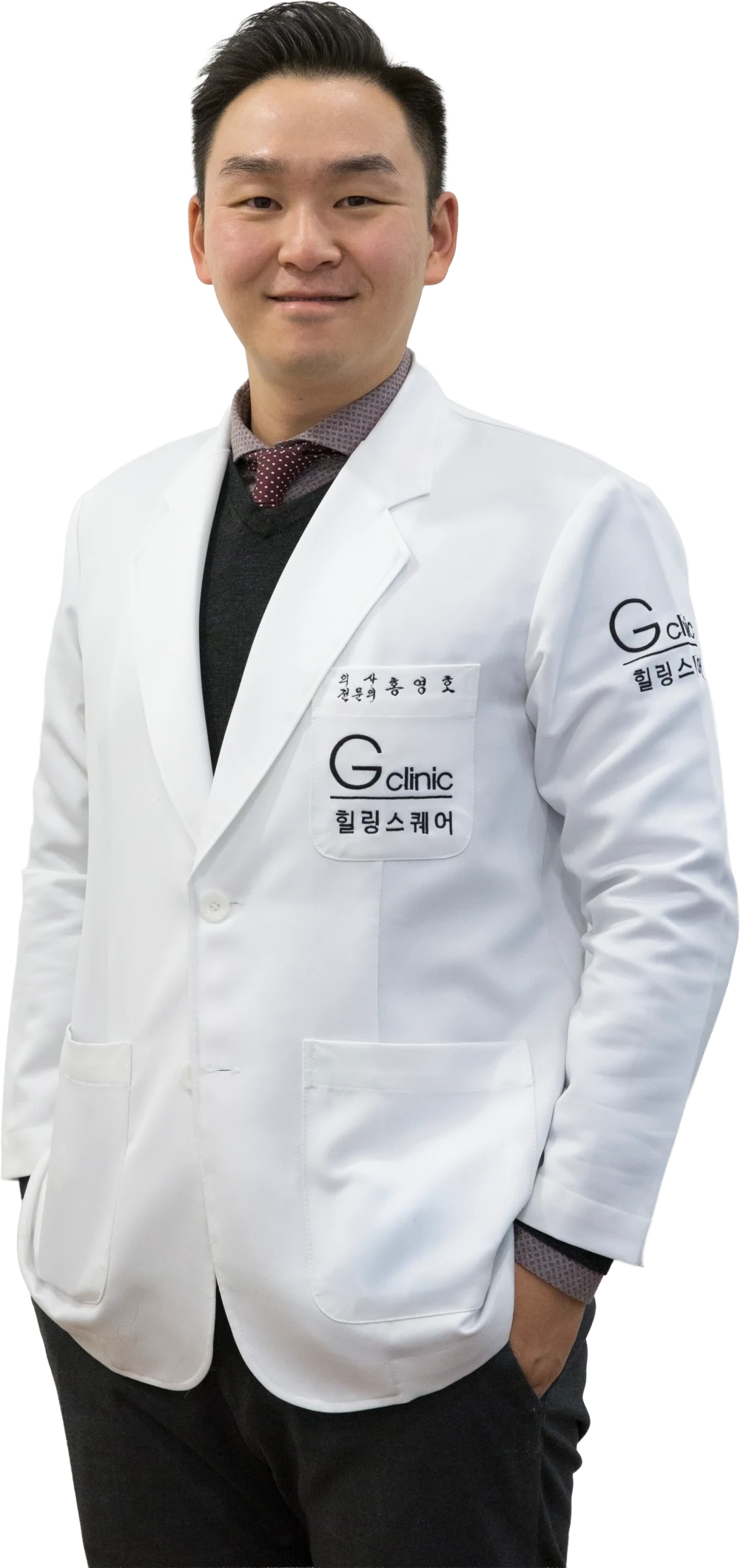
Dr. Hong Seung-hyuk, Medical Director at G Clinic, Gangnam, Seoul

Dr. Hong Seung-hyuk

Kyung Hee Univ. College of Medicine · MD, PhD
Board-certified Family Medicine Specialist · Aesthetic Dermatology
President, Korean Rejuvenation & Obesity Aesthetic Medicine Association (KORA). Co-translator, Body Shaping: Skin · Fat · Cellulite (2016).
Dr. Maeng Woo-jae, Medical Director at G Clinic, Gangnam, Seoul

Dr. Maeng Woo-jae

Kyung Hee Univ. College of Medicine · MD, PhD
Board-certified Family Medicine Specialist · Aesthetic Dermatology
President, Korean Association of Obesity Treatment (KAOT); Vice-President, Korean Anti-Aging Association. Co-author, Clinical Obesity Pharmacology (2017).
Dr. Hong Yeong-ho, Medical Director at G Clinic, Gangnam, Seoul

Dr. Hong Yeong-ho

Kyung Hee Univ. College of Medicine · MD, MS
Board-certified Family Medicine Specialist · Aesthetic Dermatology
Former KOICA international cooperation physician. Full member, Korean society for aesthetic and rejuvenation medicine.
Current Programs

Body contouring & lifting programs.

G Clinic's core programs centre on G-fat body contouring and non-surgical lifting — clinic-reported 20,000+ G-fat cases since 2018. Pricing is shared during your free consultation — the same figures are quoted to every patient, with no separate visitor markup.

G-fat · Body

G-fat body contouring course

Targeted fat dissolving injections for the abdomen, arms and thighs — planned and performed by a resident medical director. Course length is decided at your free consultation.

Explore G-fat
Lifting

Non-surgical face lifting program

Director-performed lifting treatments for jawline and facial contour, matched to your skin at consultation.

Explore Lifting
Petit

Botox & filler refinement

Precise contour refinement to complete a body or lifting course, personally administered by your director.

Explore Petit
Programs are reviewed with your director at your free consultation
Certifications & Partner Recognition

A decade of recognized clinical partnerships.

The G Clinic name dates to a 2012 device-maker advisory appointment. Each recognition below is stated as issued by its organisation.

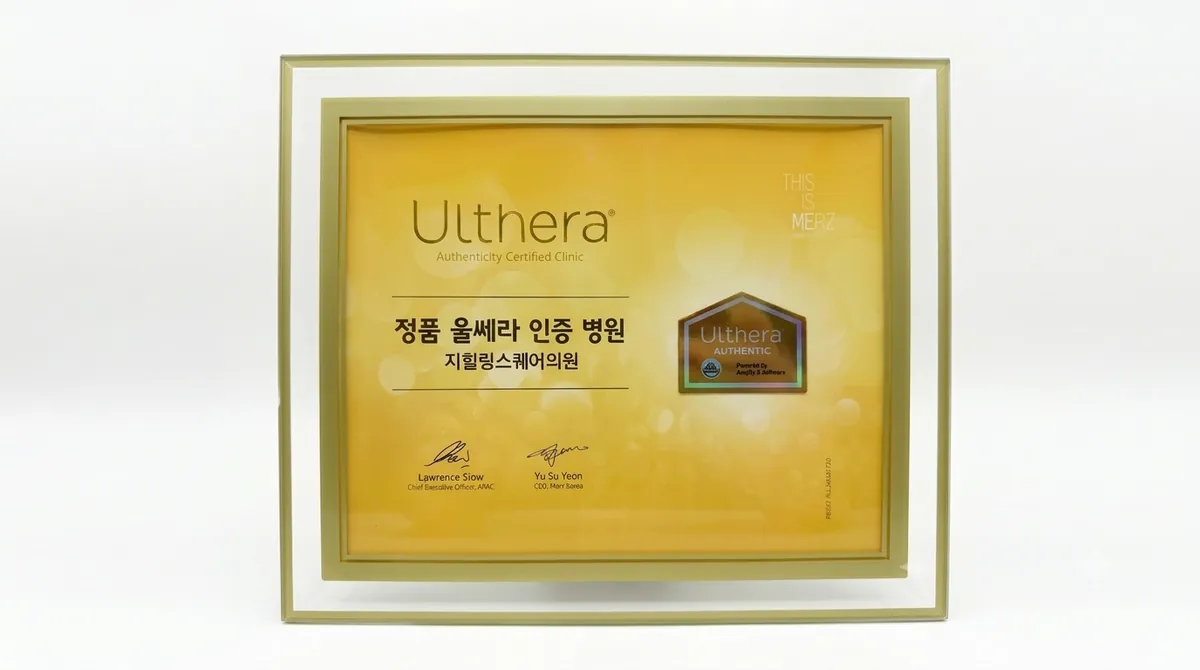
Ulthera
Ulthera Authenticity Certified Clinic
Certified by Merz Aesthetics for authentic Ulthera equipment.
2018
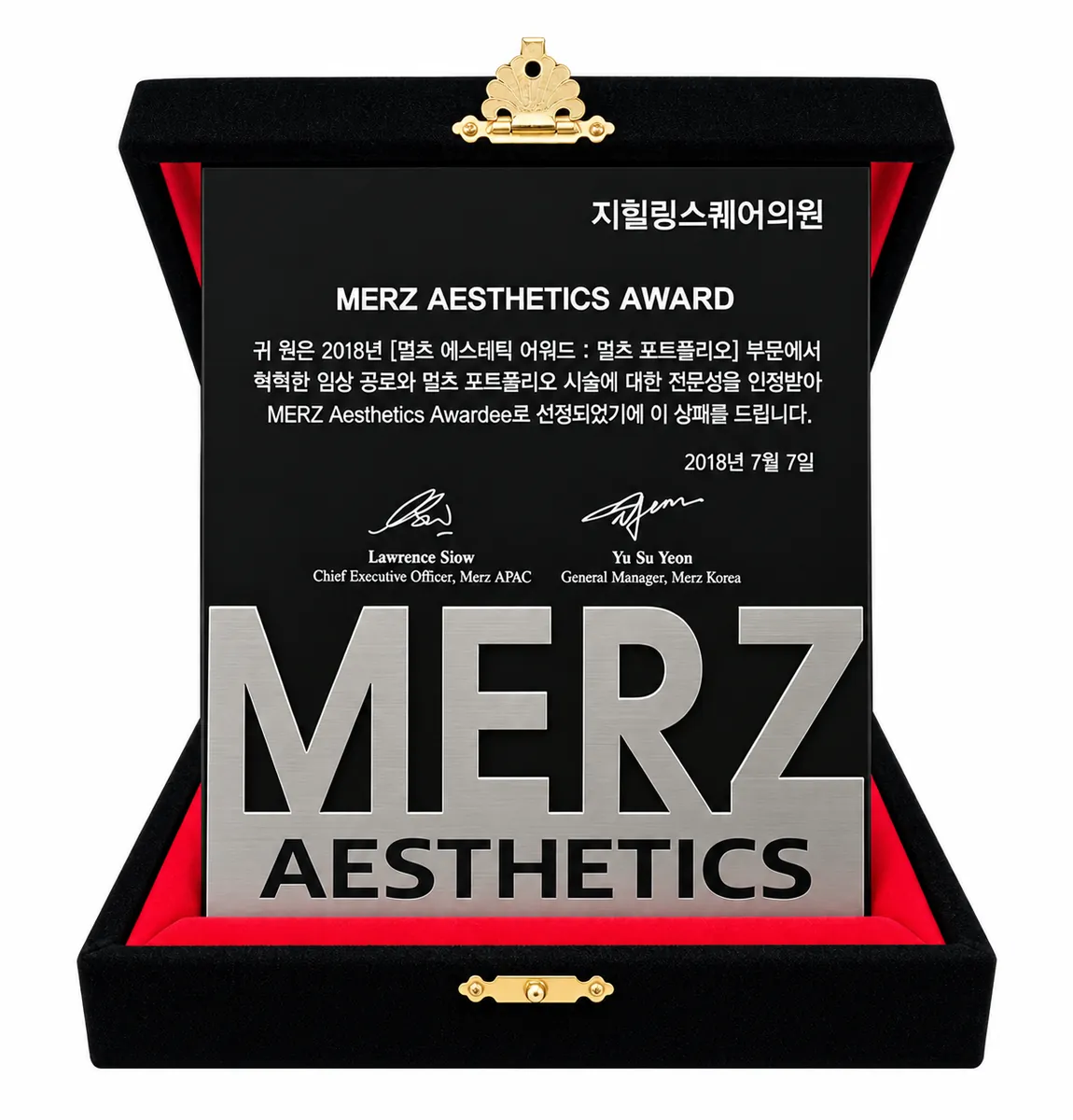
Merz Aesthetics Award
Portfolio category, Merz Aesthetics, July 2018.
2018
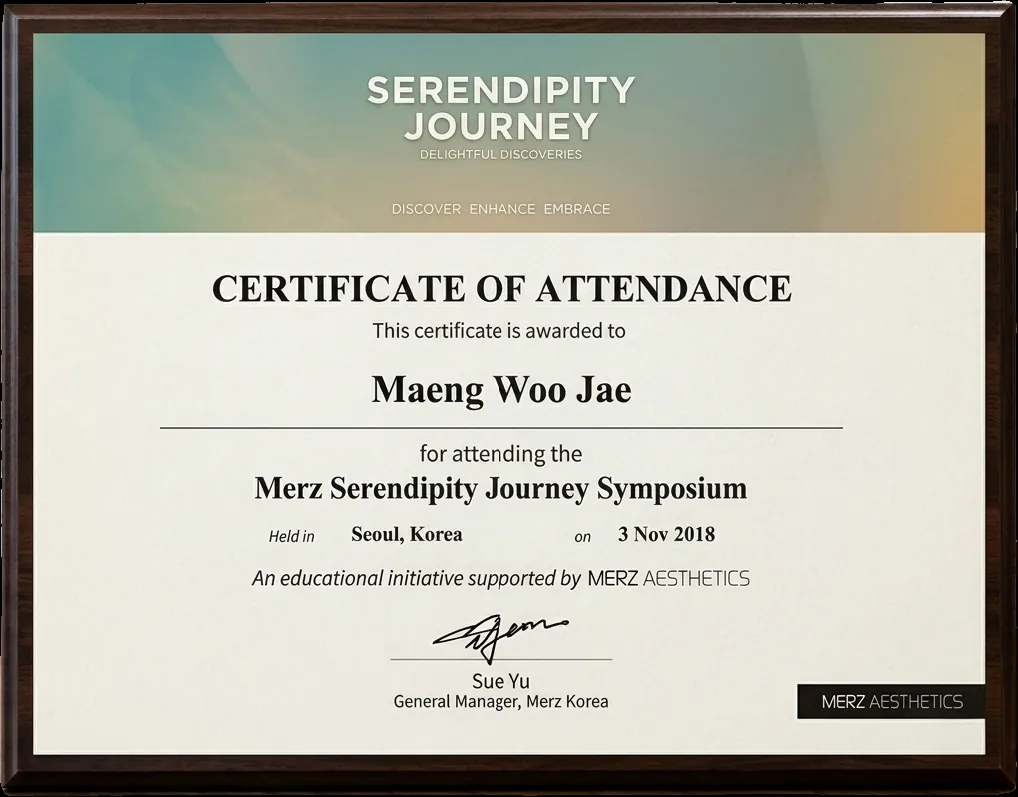
Merz Serendipity Journey Symposium
Attendance certificate, Dr. Maeng Woo-jae, Seoul 2018.
2018
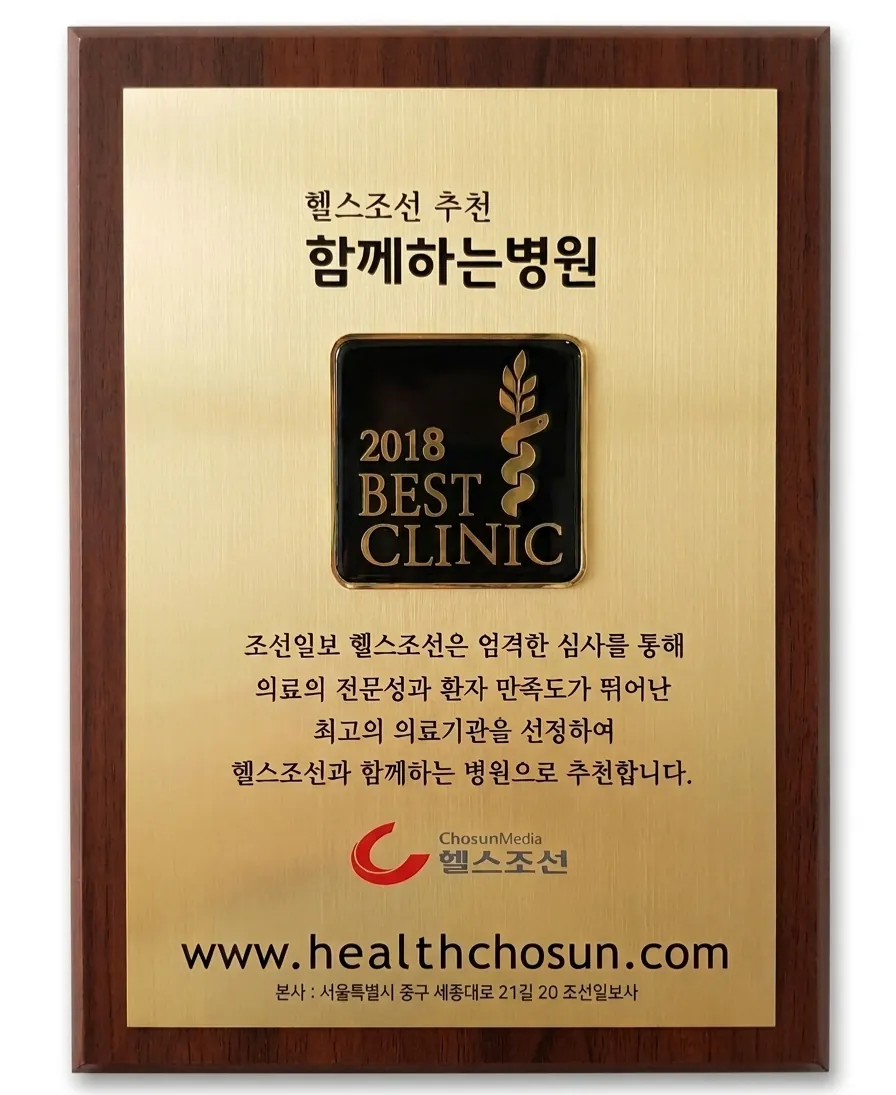
Health Chosun — Best Clinic listing
Recommended clinic feature, Chosun Media, 2018.
2013
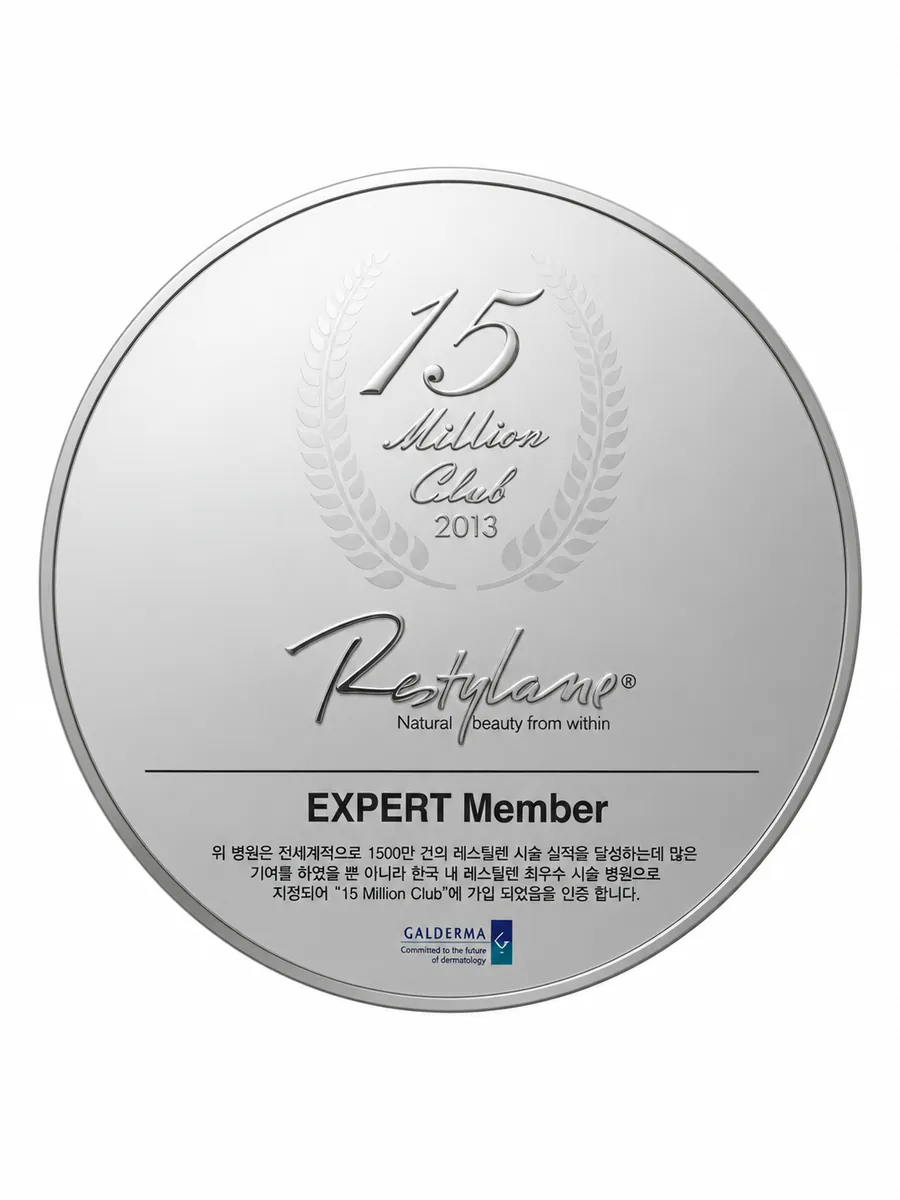
Restylane 15 Million Club — Expert Member
Expert member recognition issued by Galderma.
2012 · 2016–2019
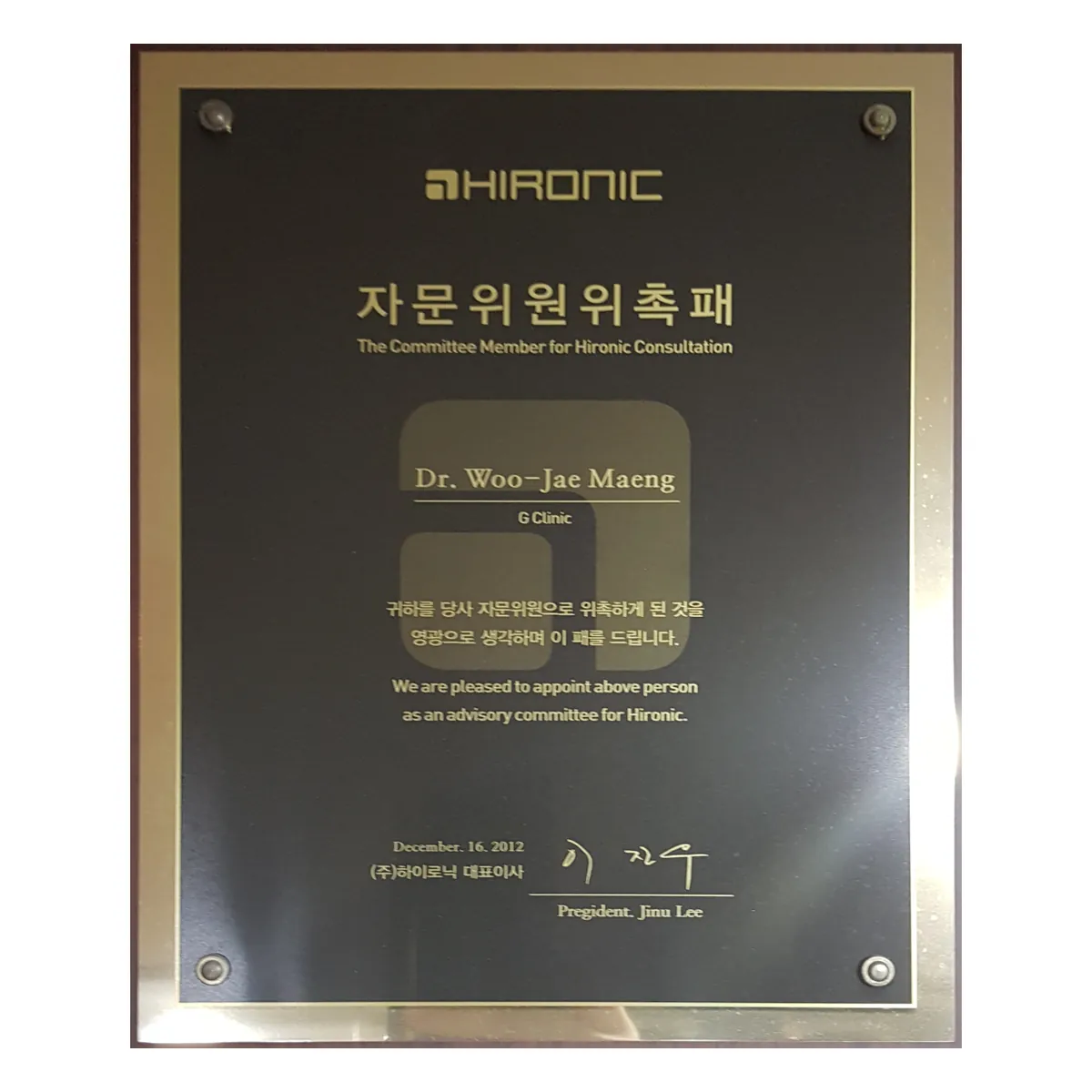
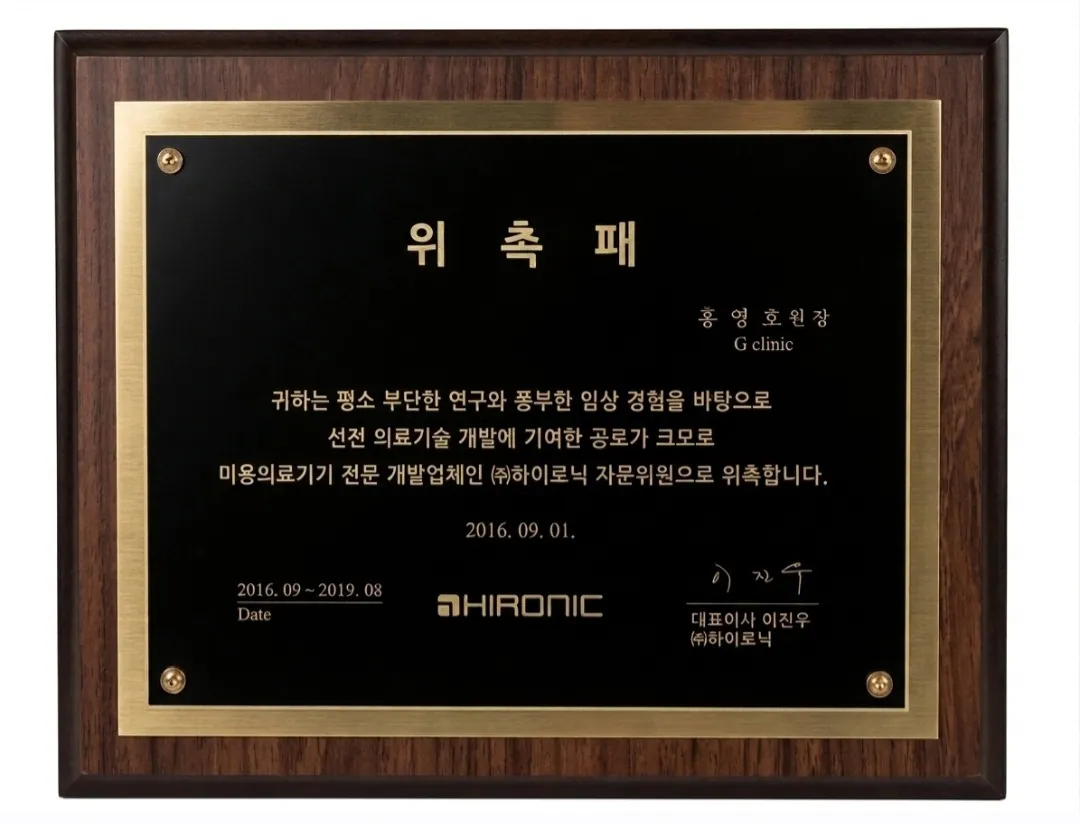
Hironic Advisory Appointments
Advisory committee: Dr. Maeng (2012, certificate bears the G Clinic name), Dr. Hong Yeong-ho (2016–2019).
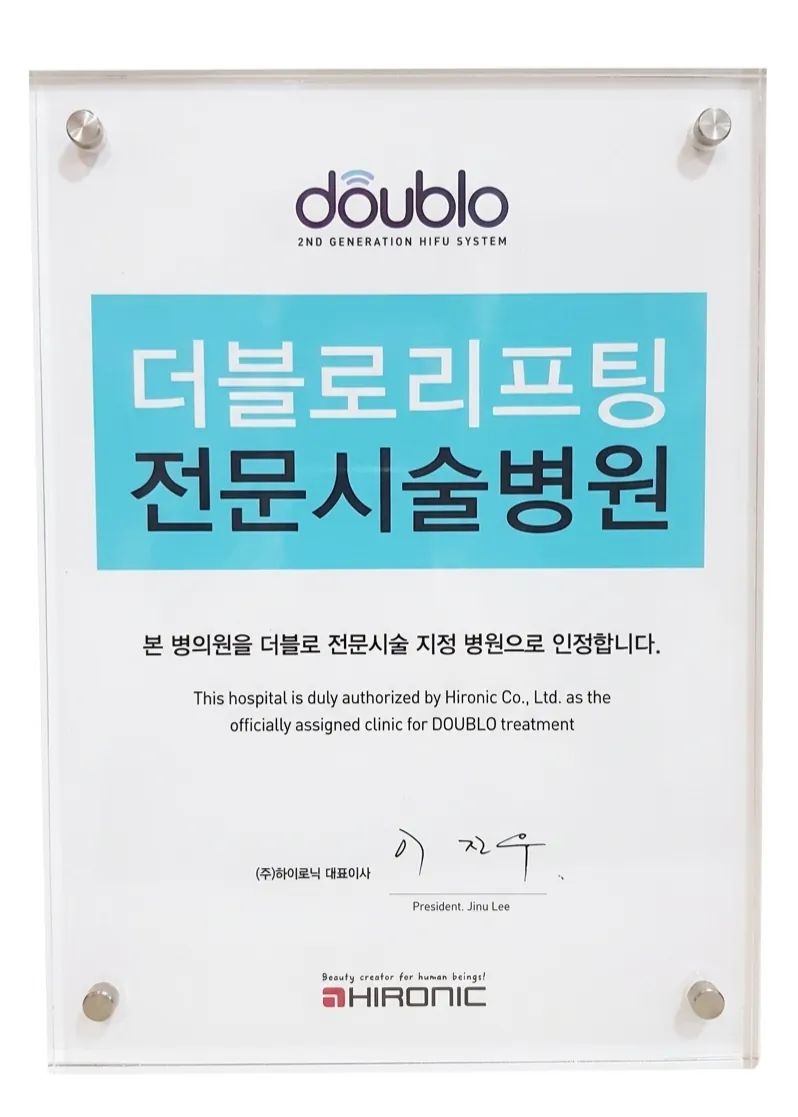
Doublo
Doublo HIFU Designated Clinic
Officially assigned Doublo clinic, Hironic Co., Ltd.
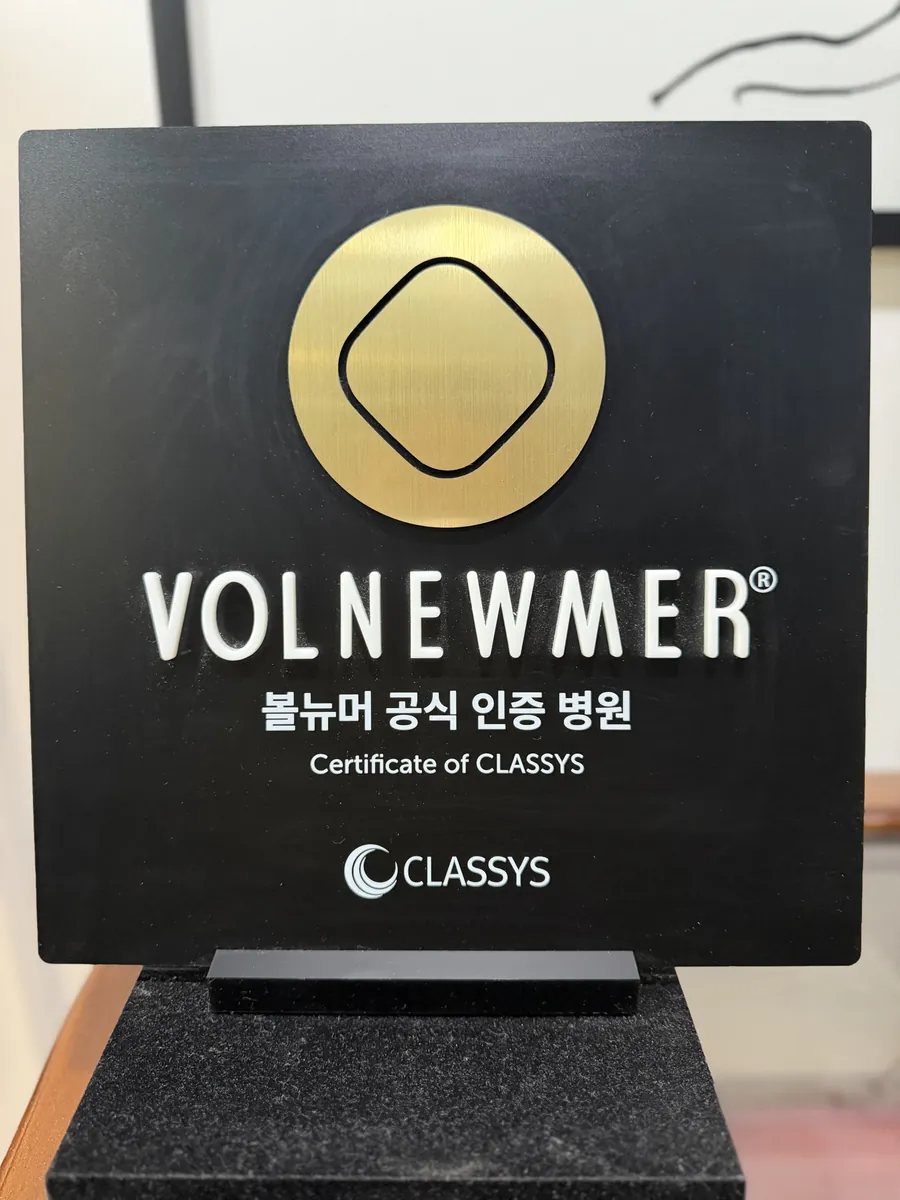
Volnewmer
Volnewmer Official Certified Clinic
Certificate of Classys.
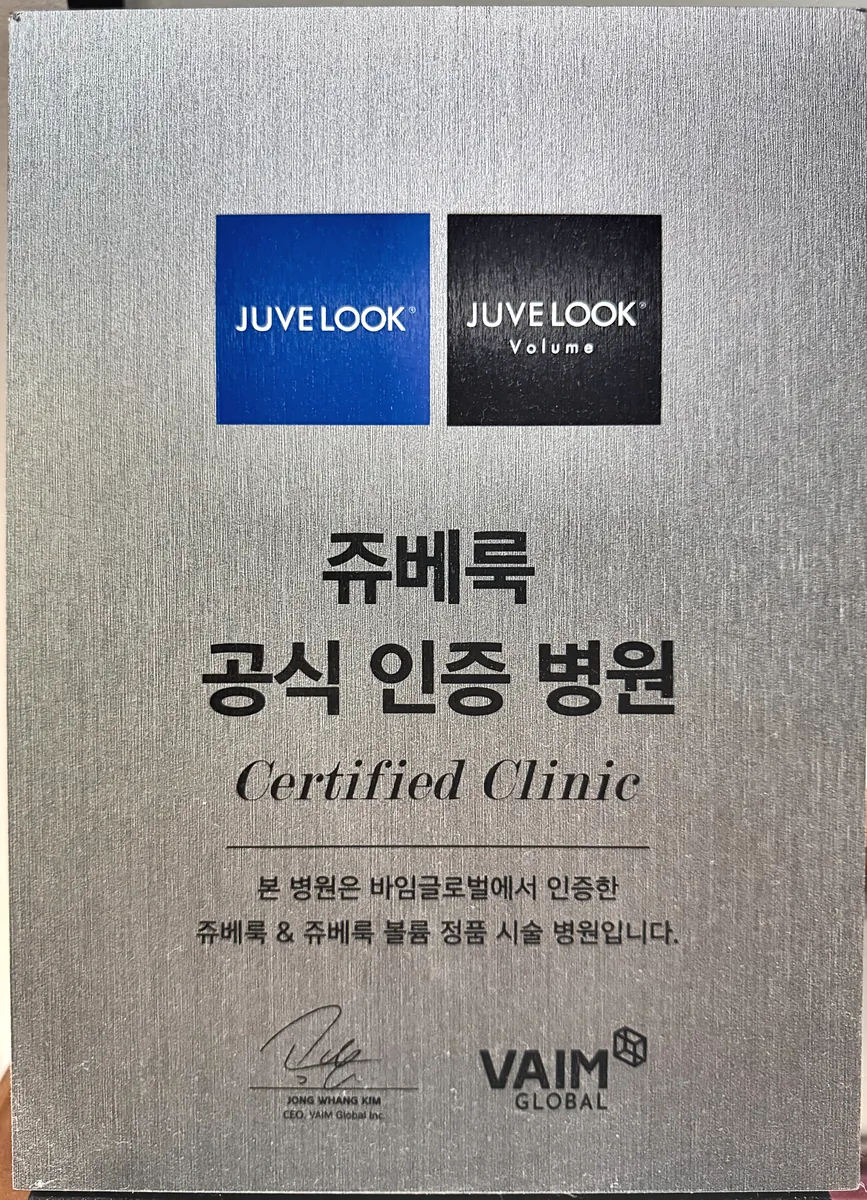
Juvelook
Juvelook Official Certified Clinic
Certified by VAIM Global for authentic Juvelook treatment.
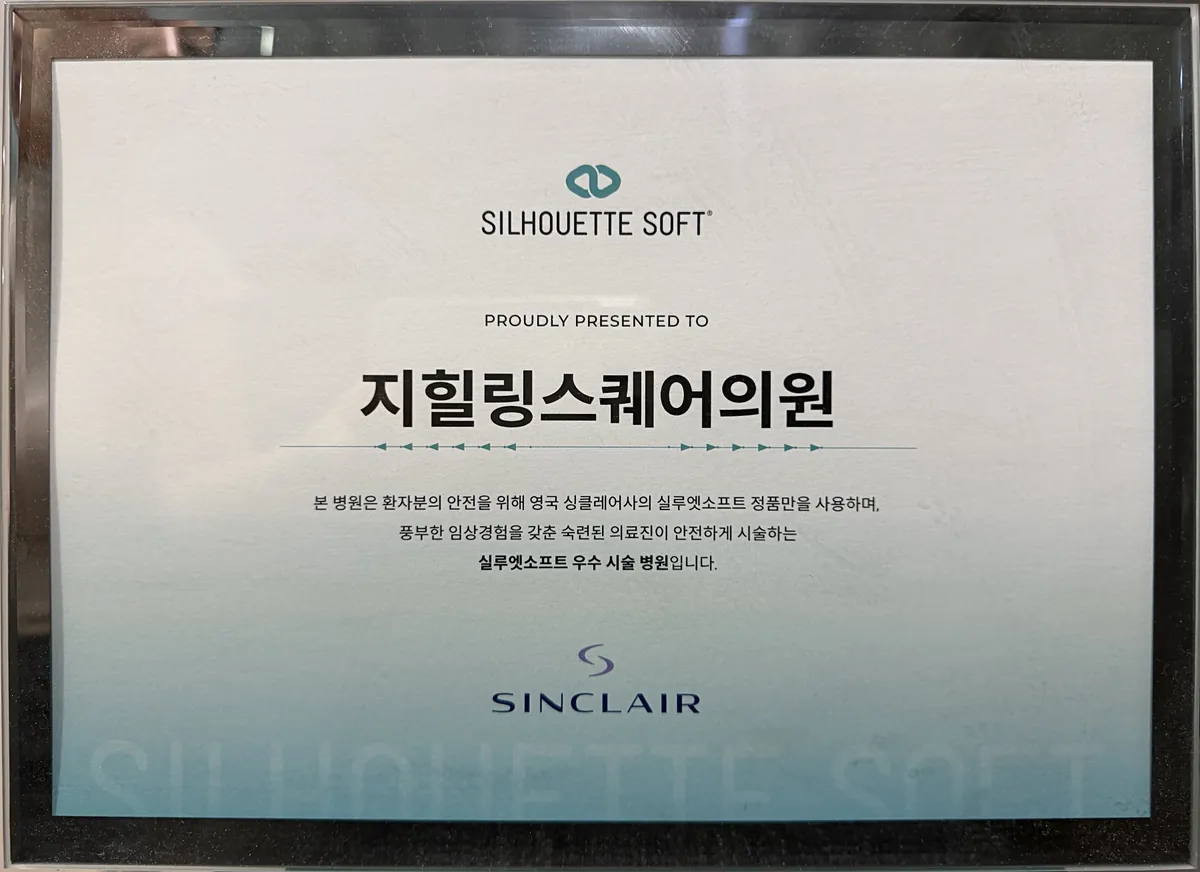
Silhouette Soft
Silhouette Soft Certified Clinic
Recognized by Sinclair for authentic Silhouette Soft thread lifting.
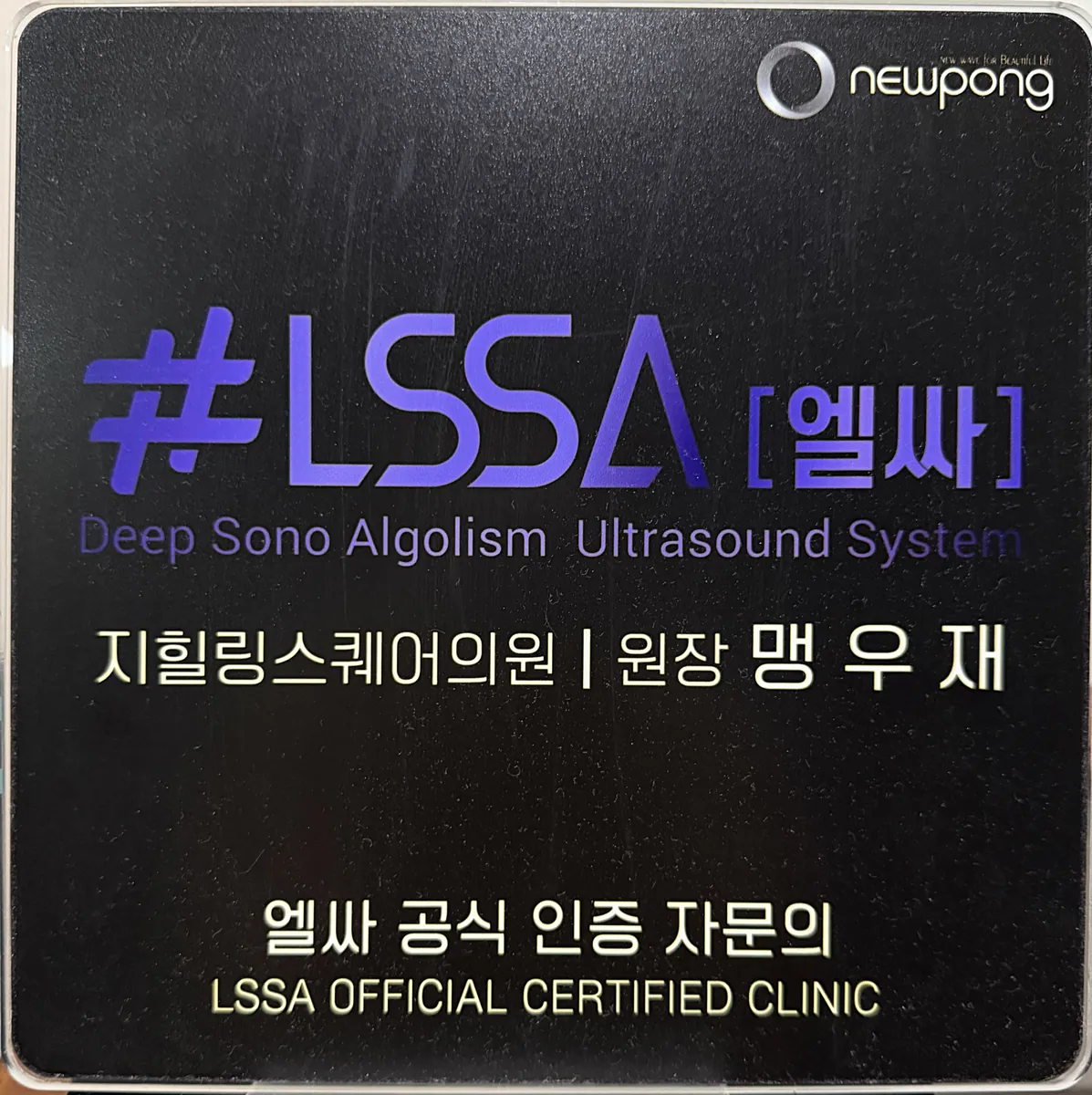
LSSA
LSSA Official Certified Clinic
Deep Sono Algolism Ultrasound System; certified advisory physician Dr. Maeng Woo-jae.
2010–2017
Academic & Society Roles
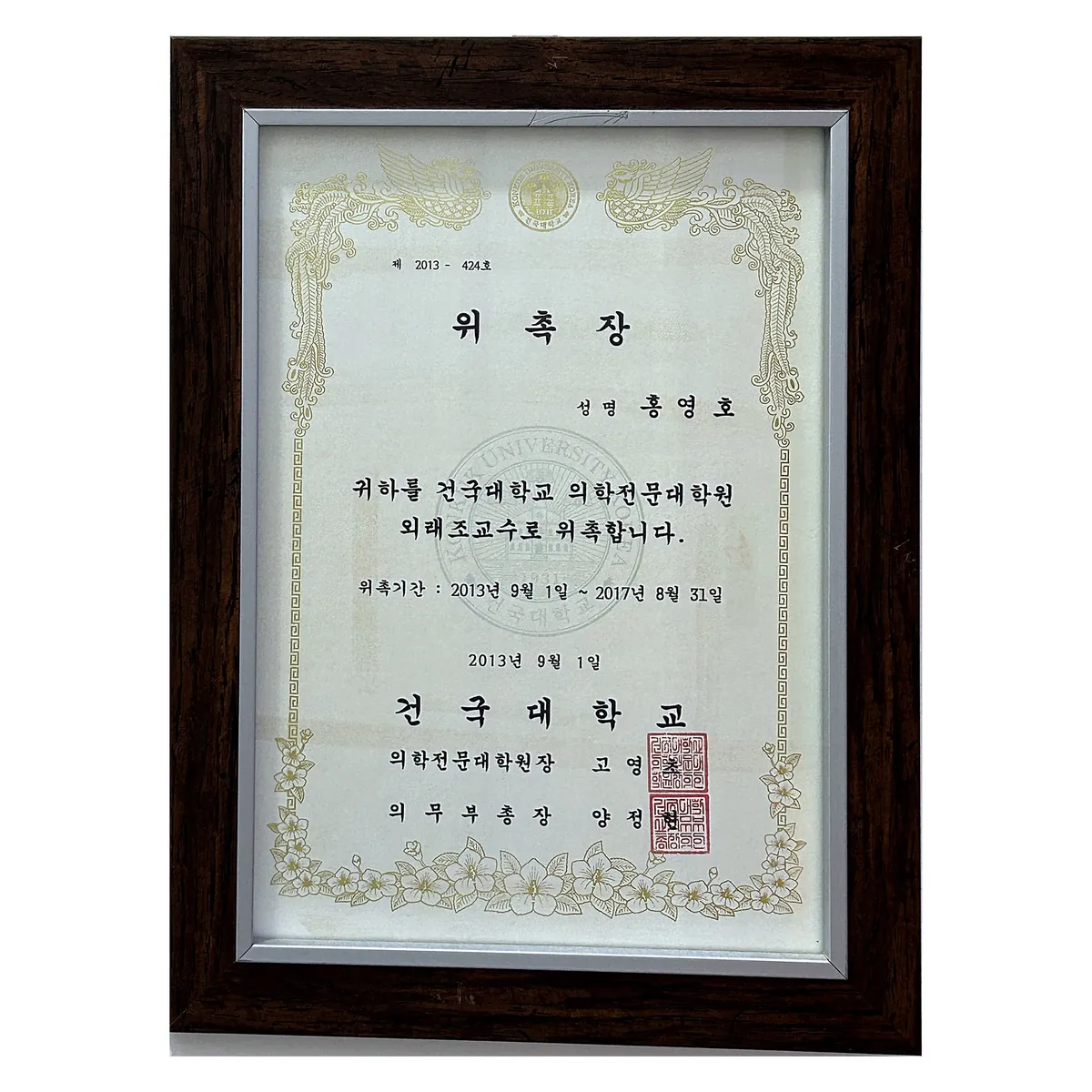
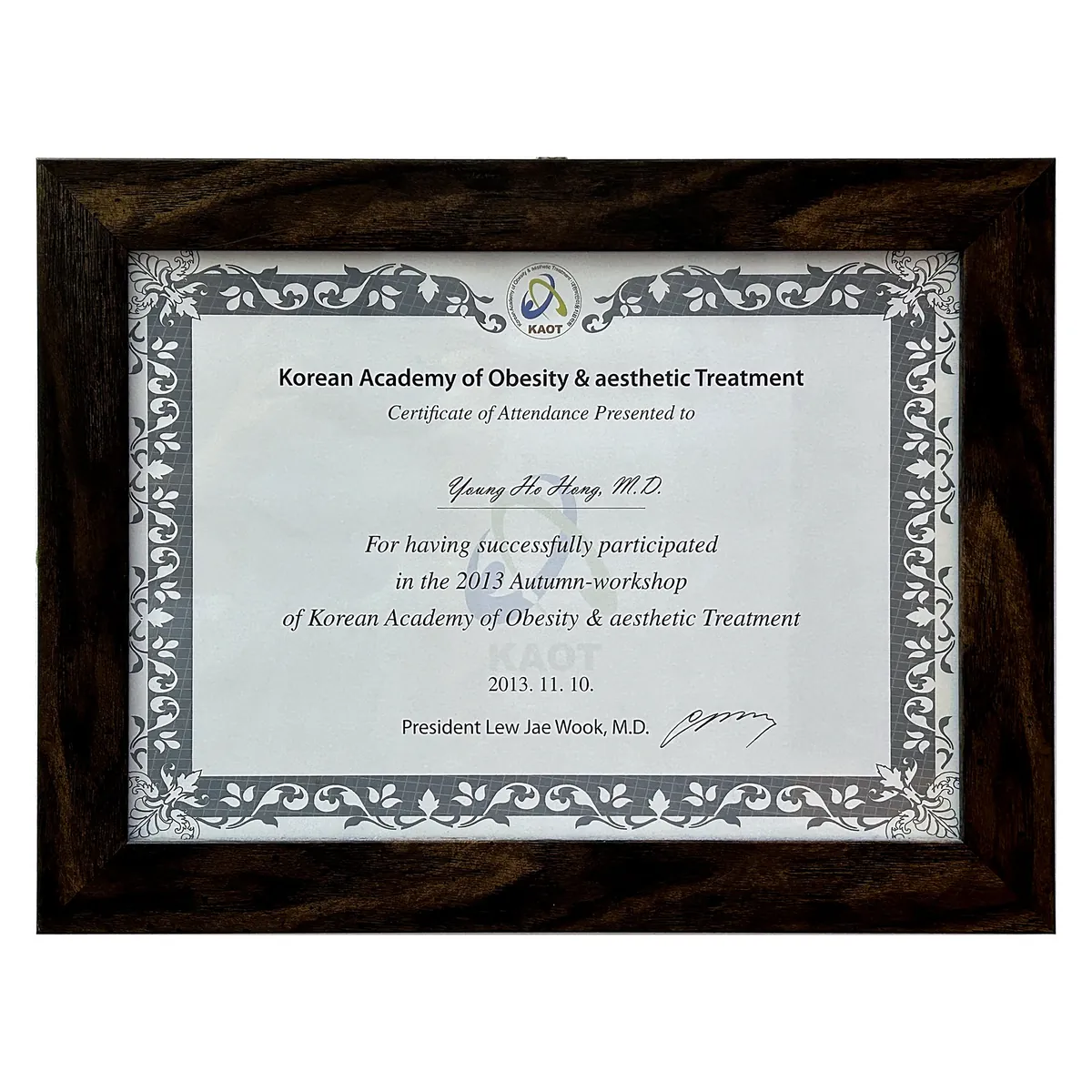
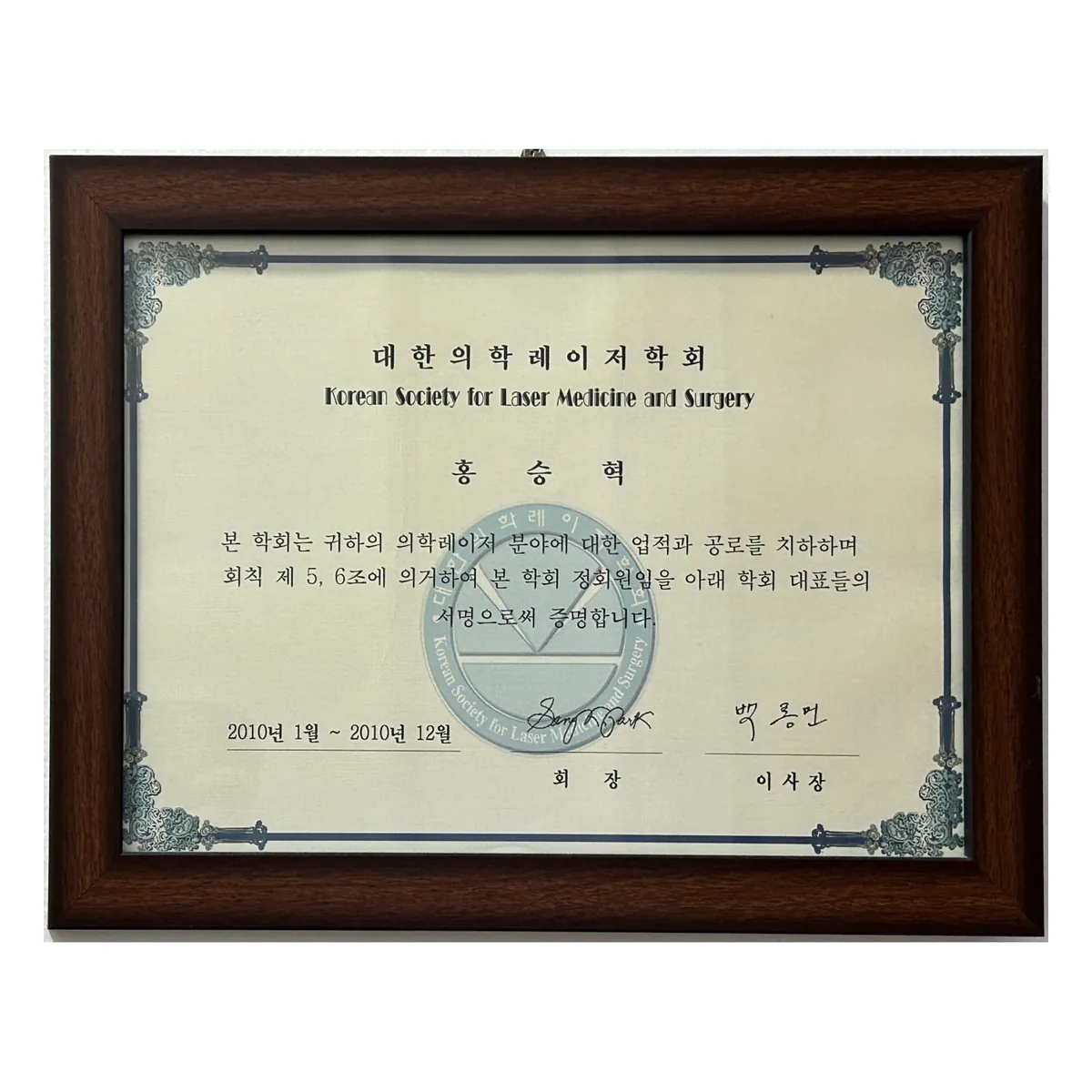
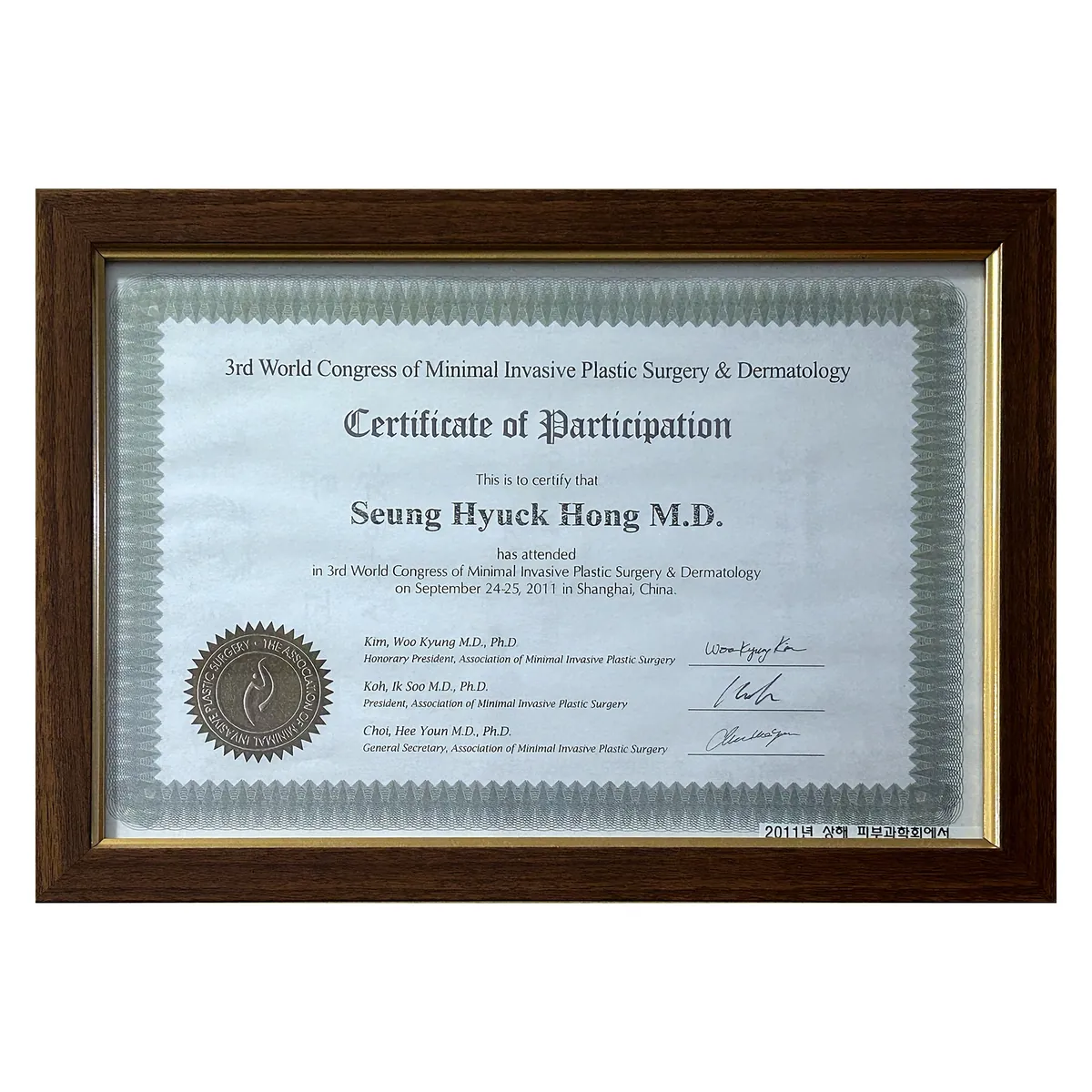
Dr. Maeng: KAOT chair, appreciation plaque 2014. Dr. Hong Yeong-ho: adjunct assistant professor, Konkuk Univ. (2013–2017). Dr. Hong Seung-hyuk: KSLMS member 2010; World Congress MIPS&D 2011.
Ulthera authenticity certified clinic certificate
Merz Aesthetics Award 2018 plaque
Merz Serendipity Journey Symposium 2018 attendance certificate, Dr. Maeng Woo-jae
Health Chosun 2018 Best Clinic plaque
Restylane 15 Million Club expert member plaque
Hironic advisory committee appointment plaque, Dr. Maeng Woo-jae, 2012
Hironic advisory appointment plaque, Dr. Hong Yeong-ho, 2016–2019
Doublo HIFU designated clinic certificate
Volnewmer official certified clinic plaque, Classys
Juvelook official certified clinic plaque
Silhouette Soft certified clinic certificate
LSSA official certified clinic plaque
KAOT appreciation plaque, Dr. Maeng Woo-jae, 2014
Konkuk University School of Medicine adjunct appointment, Dr. Hong Yeong-ho
KAOT 2013 workshop attendance certificate, Dr. Hong Yeong-ho
Korean Society for Laser Medicine and Surgery membership certificate, Dr. Hong Seung-hyuk
3rd World Congress of Minimal Invasive Plastic Surgery and Dermatology participation certificate, Dr. Hong Seung-hyuk
Patient Reviews

What our patients say.

Verified reviews from our Google Business Profile.

★★★★★

Yesterday, I had a fat extraction procedure from Dr. Hong Young-ho. The staff, especially the doctor, were so kind that it was very comfortable. Right after the procedure, it was just a little uncomfortable yesterday because of swelling, but today there is almost no pain and I'm waiting for the swelling to go away to see the beautiful res…

Ka year ago
★★★★★

Recommendations are made based on actual circumstances. The attitude is very good. Highly recommended.

Ya year ago
★★★★★

I cannot recommend G-clinic highly enough. From the moment I walked in, my experience was nothing short of exceptional. The clinic itself is modern, clean, and welcoming. The front desk staff were incredibly warm and efficient. Checking in was a breeze, and they were very helpful with my new patient paperwork. The waiting time was minimal…

ma year ago
★★★★★

Process was perfect! I got some liposuction done, the doctor and staff were very nice and very professional. 100% would recommend anyone to get there procedures done here! They took out A LOT of fat! The doctor speaks perfect English as well!

K3 years ago
Free Consultation

Get your personalized quote.

Share your details and our team will reply through your preferred messenger. Consultation is free and pricing is quoted at your free consultation.

  • ✓Free consultation reviewed by one of three resident directors
  • ✓Personalized quote at your free consultation — same figures for every patient
  • ✓Care performed on site by your director in Gangnam, Seoul
  • ✓10-language support via messenger

Book a Free Consultation

⚠ Please select a country code for WhatsApp

Your details are protected under our privacy policy and are never shared with third parties.

Chat with us
Visit Gangnam · Dosan-daero

Emerald Tower, 5F–7F.

Address
5F–7F Emerald Tower122 Dosan-daero, Gangnam-gu, Seoul, South Korea
Hours
Mon–Fri · 11:00–19:00Sat · 10:30–14:00 · Sun & holidays closed
Languages
English consultation10-language messenger support
Reach
International patient deskContact us through the consultation form