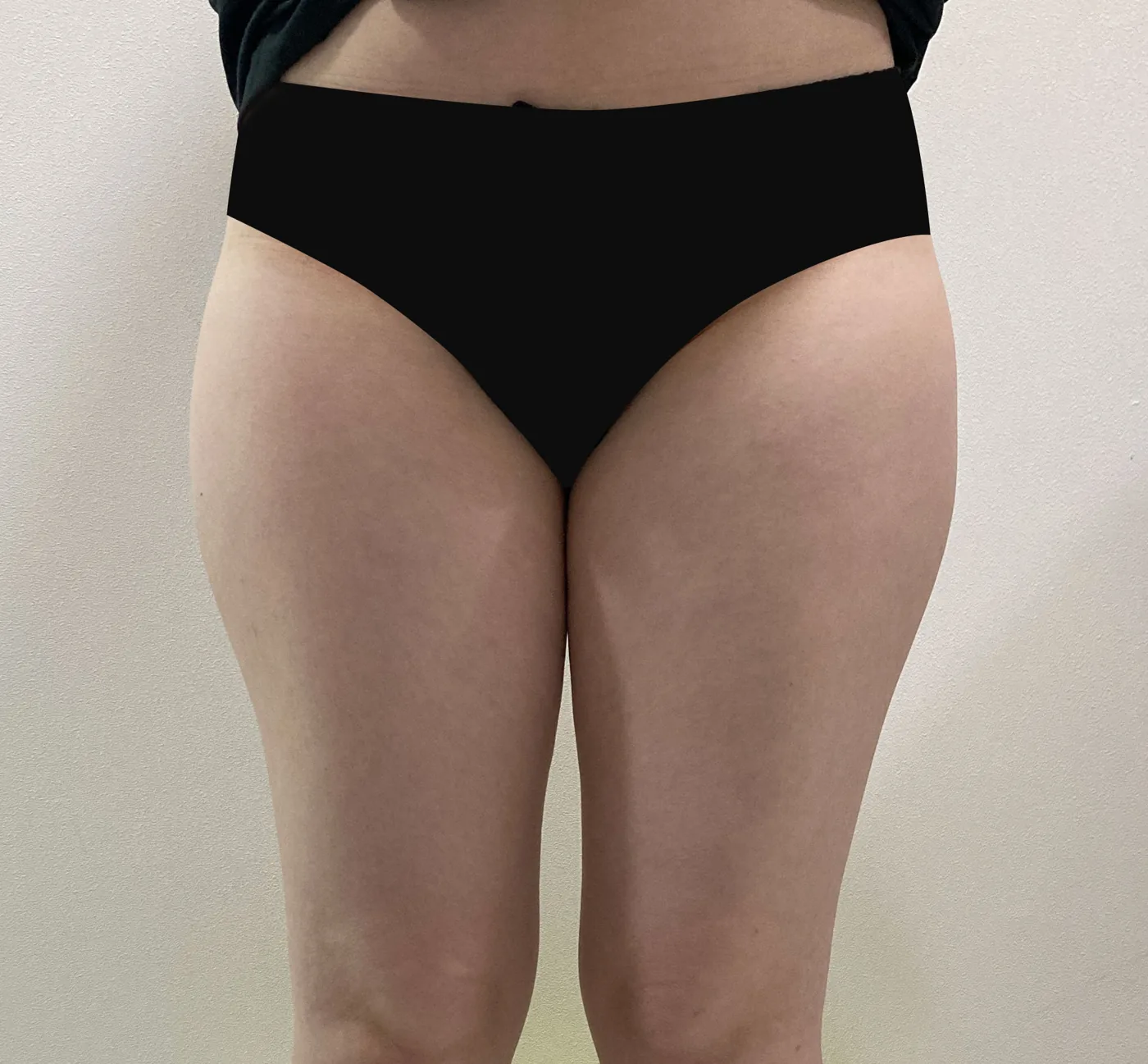
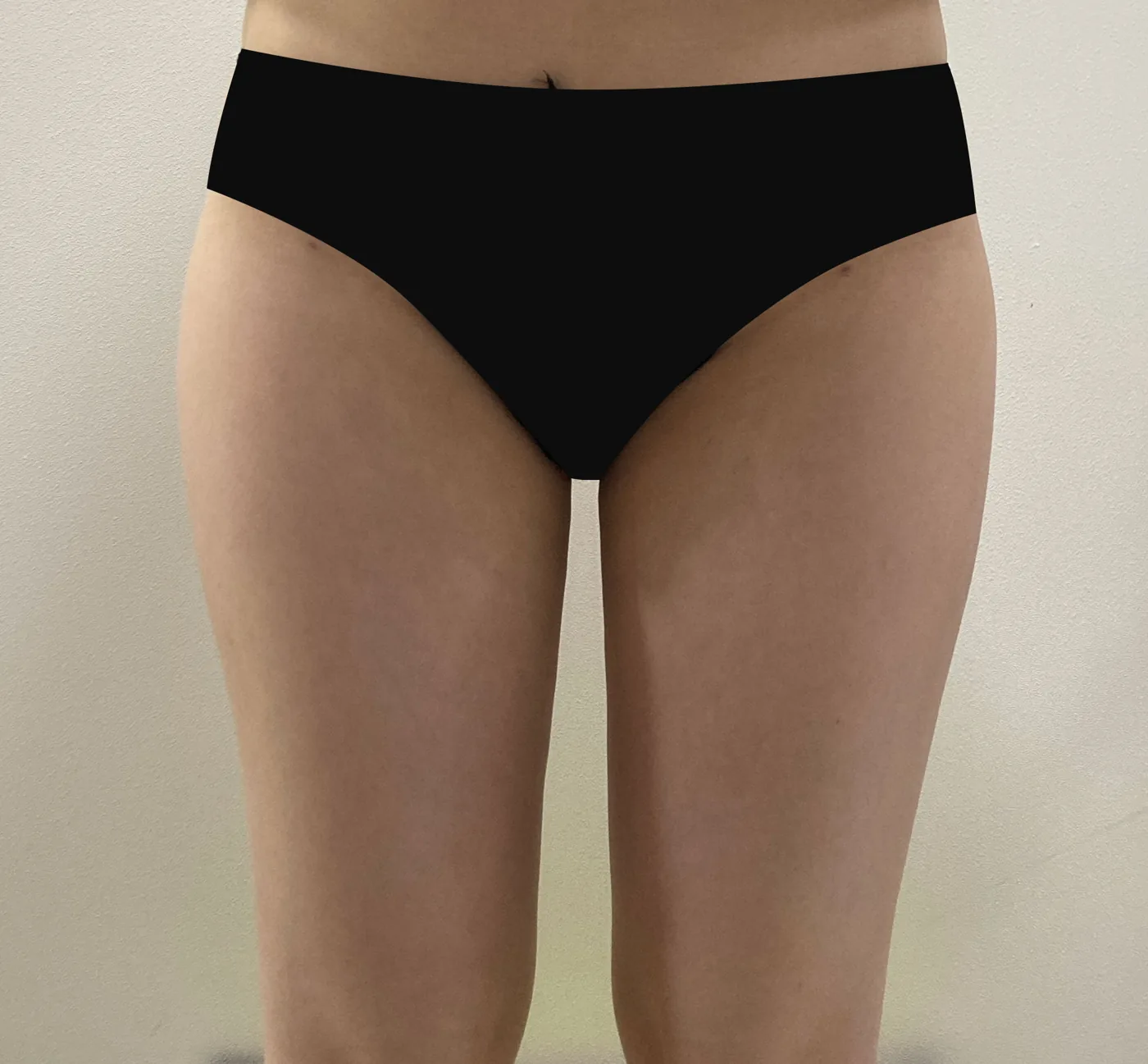
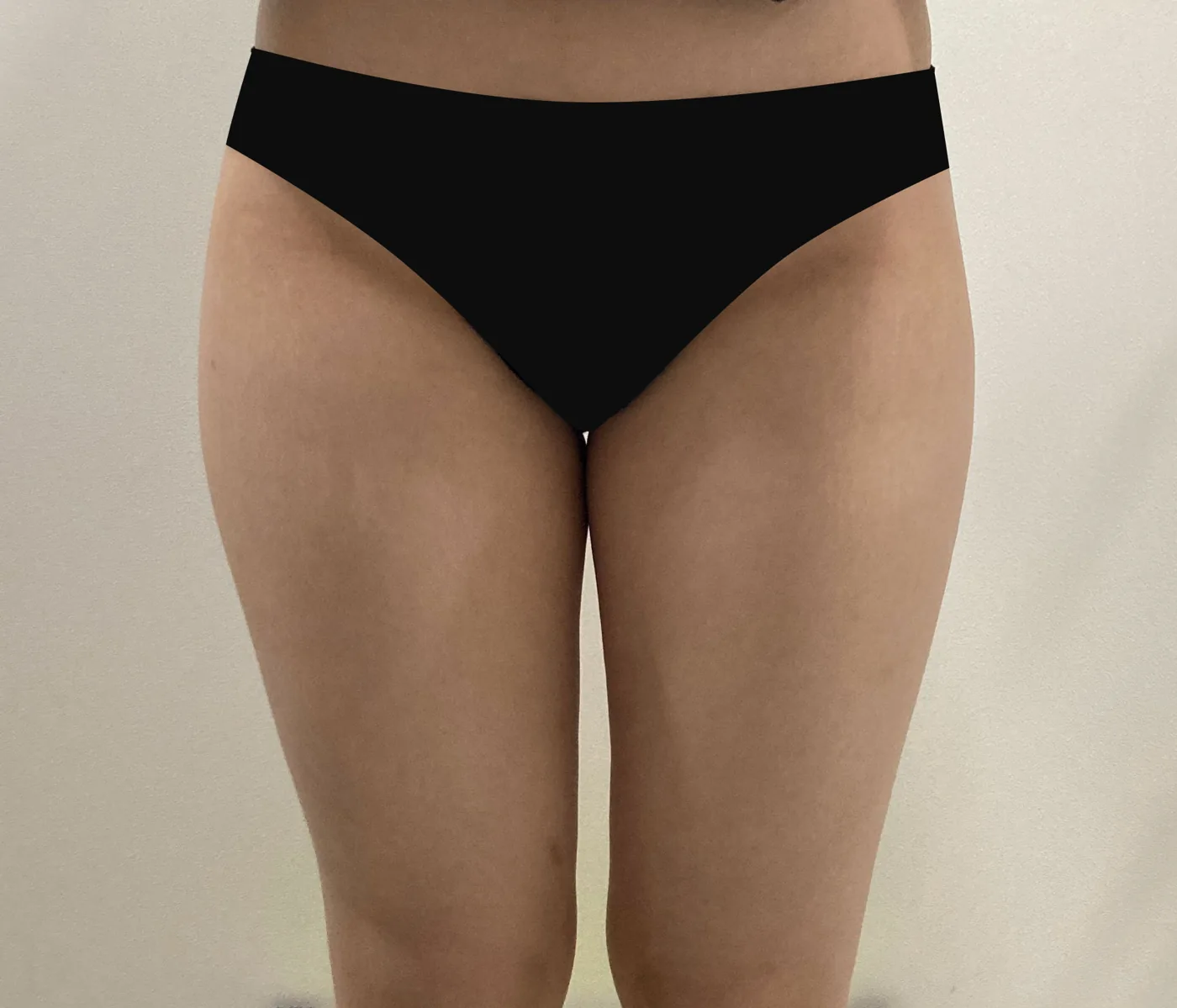
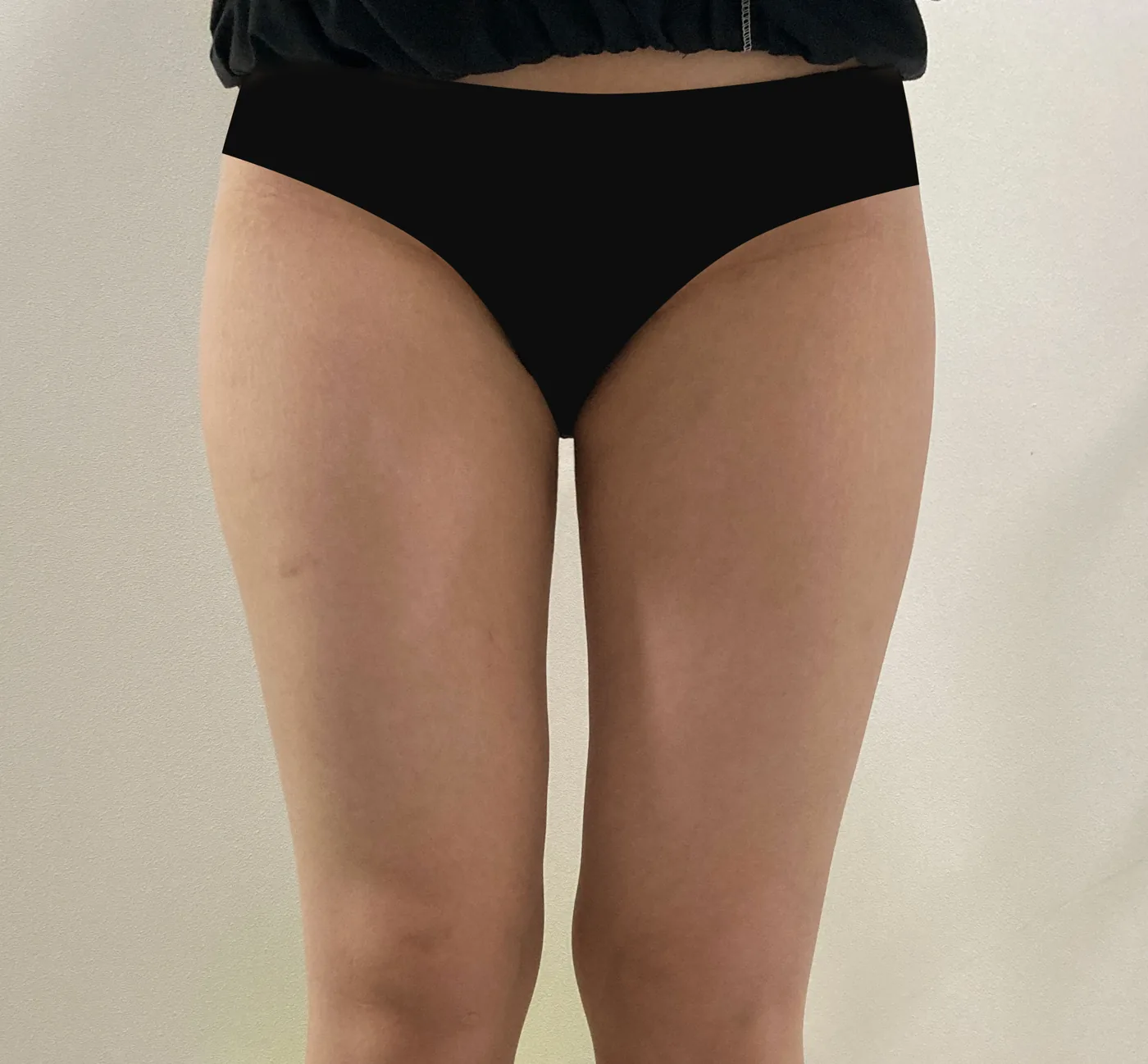
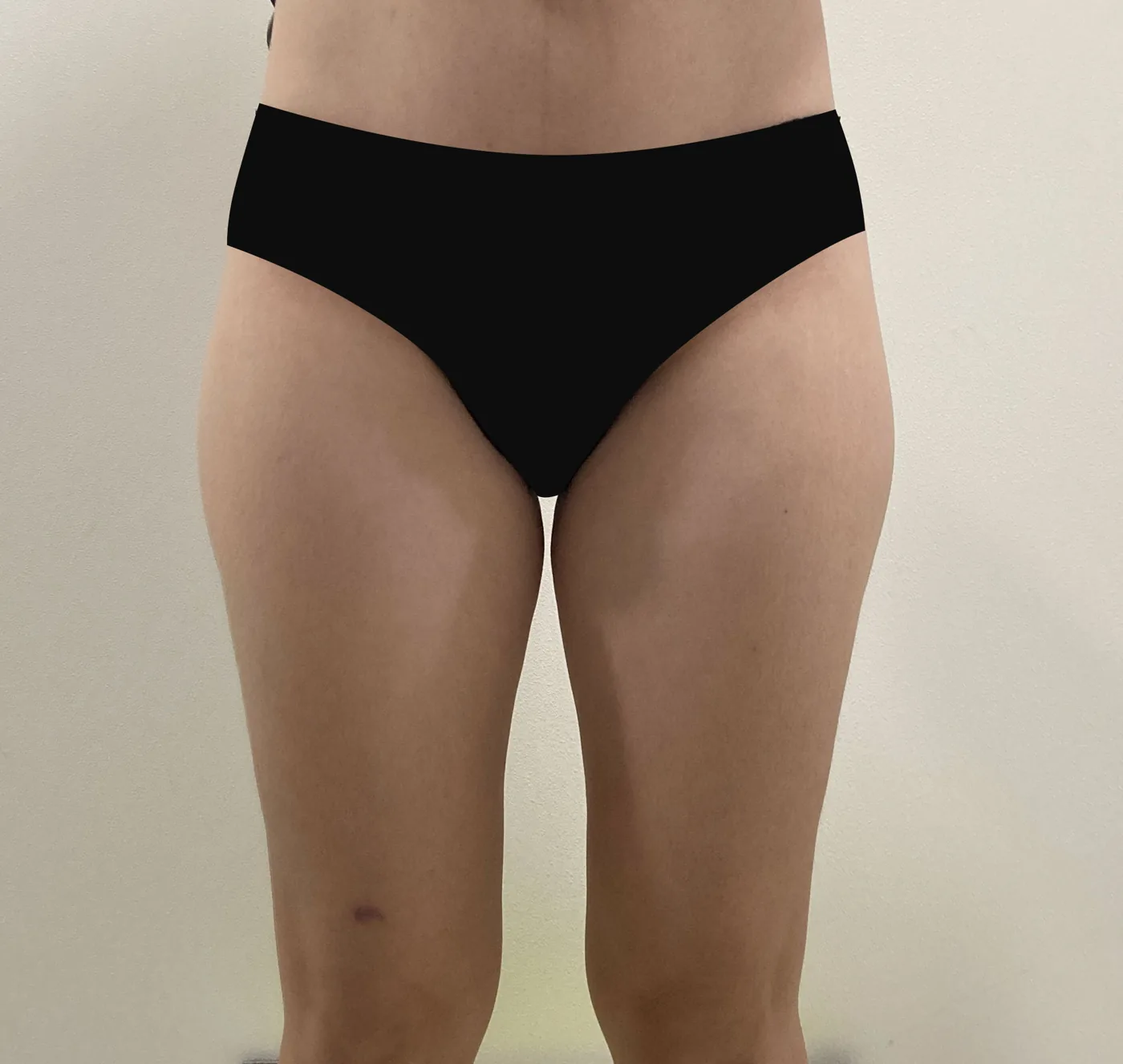
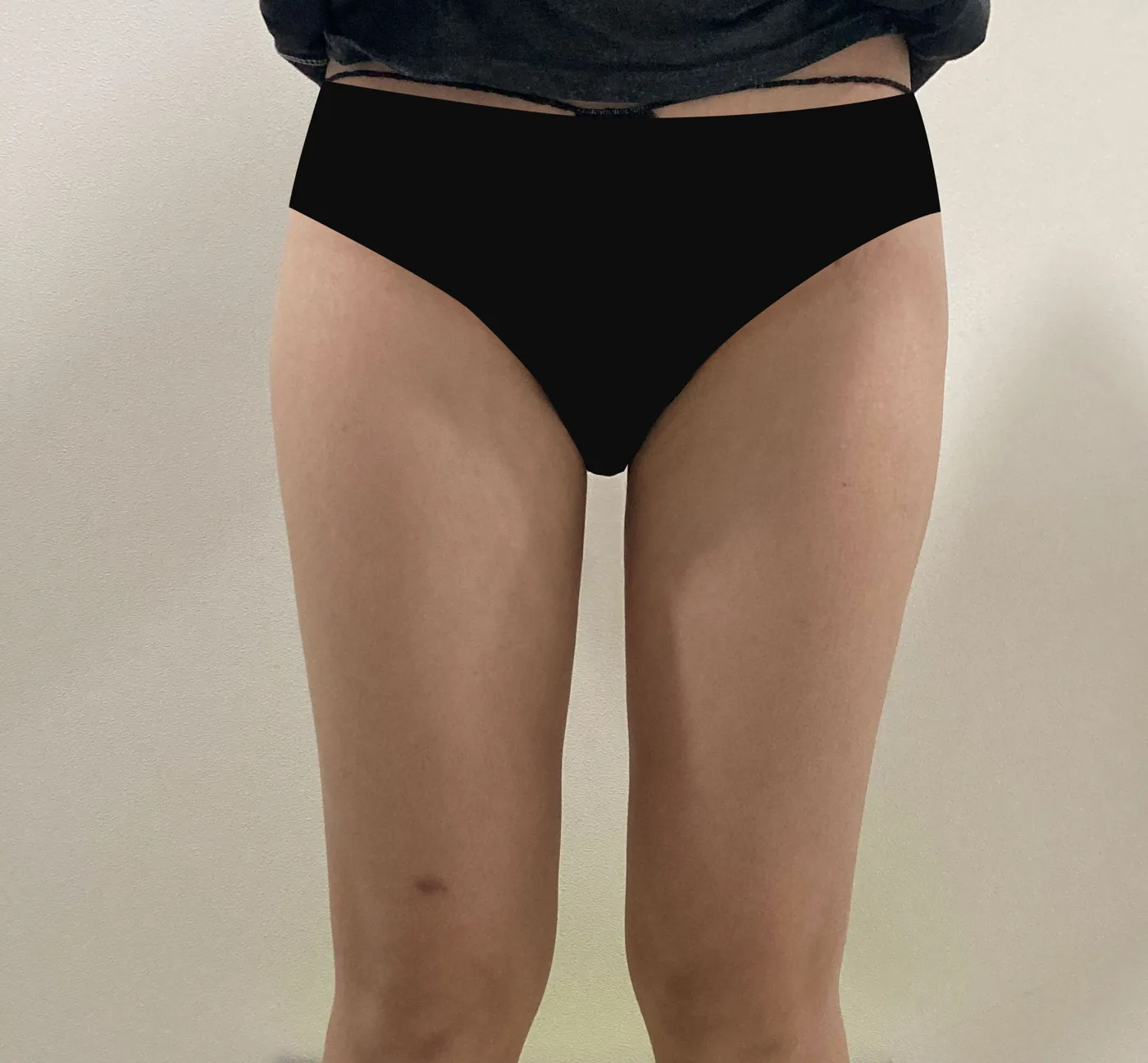
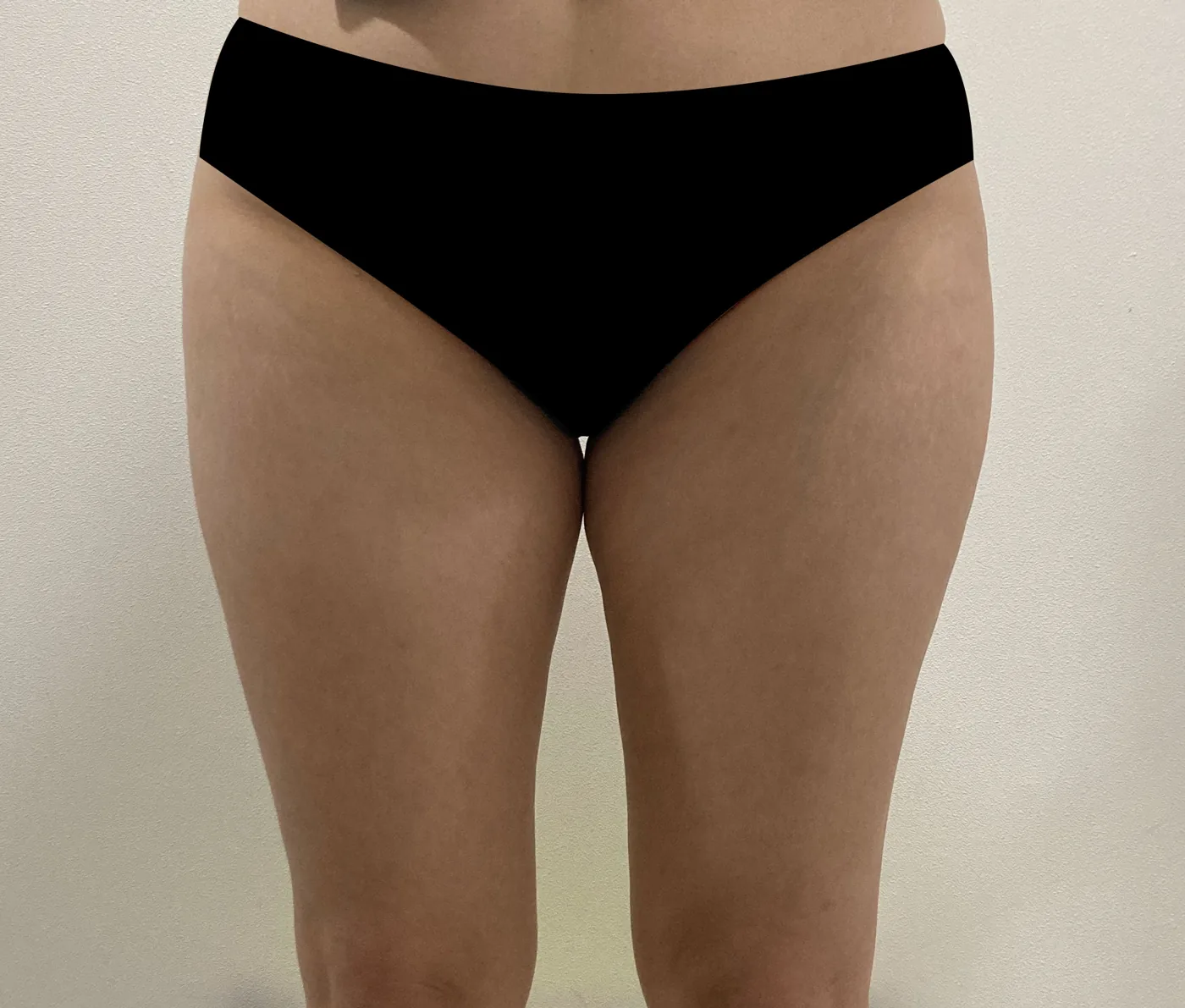
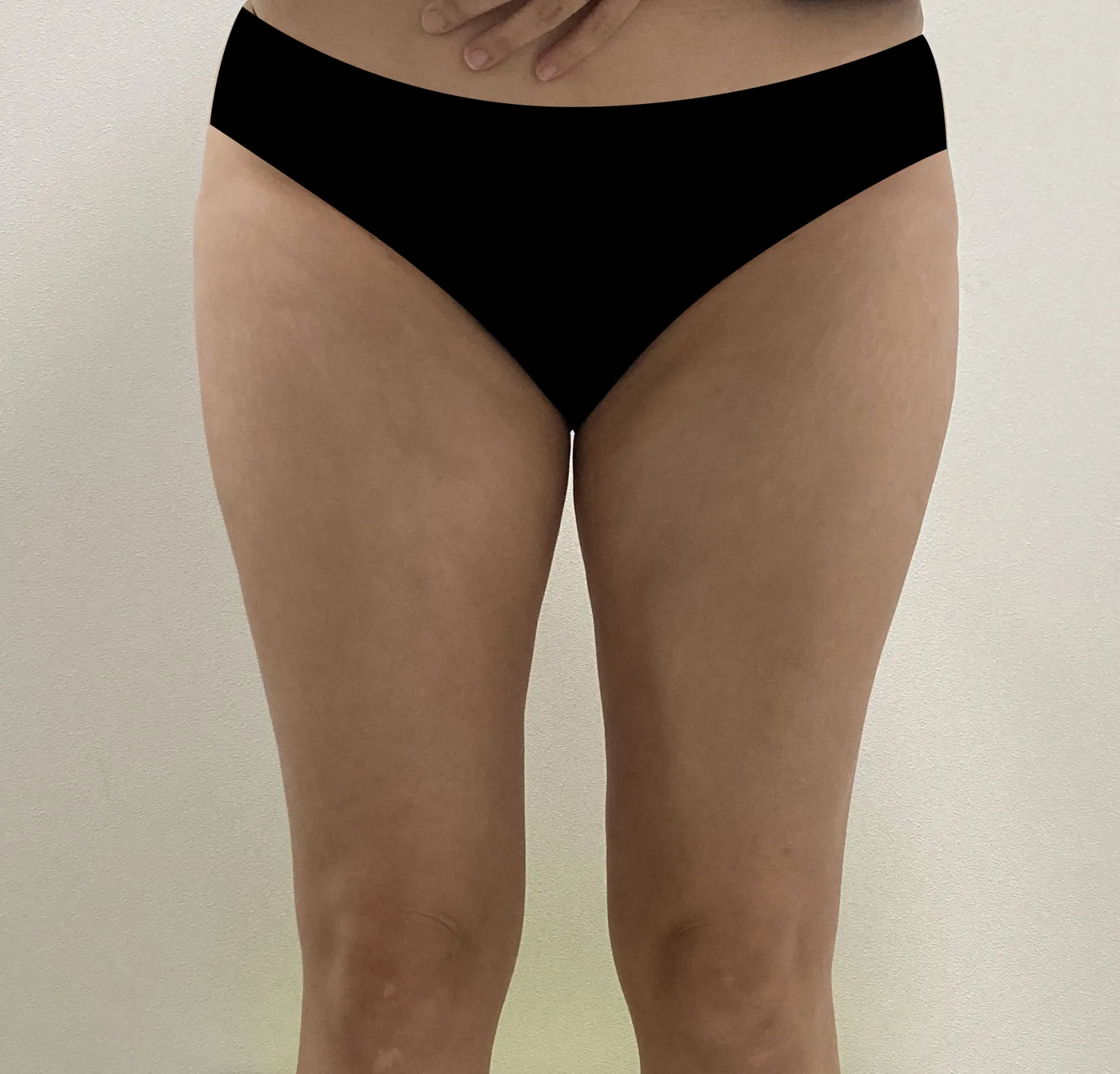
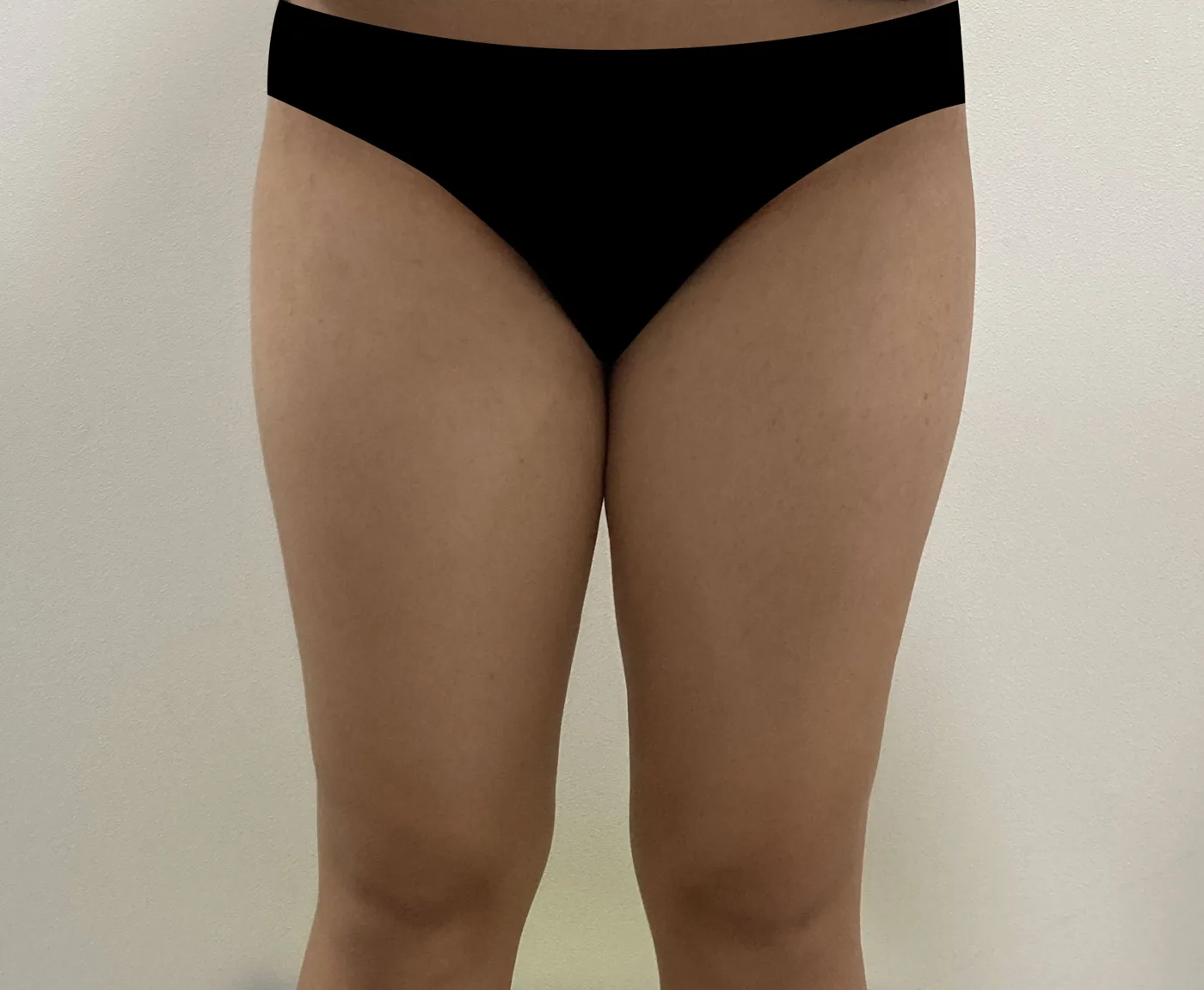
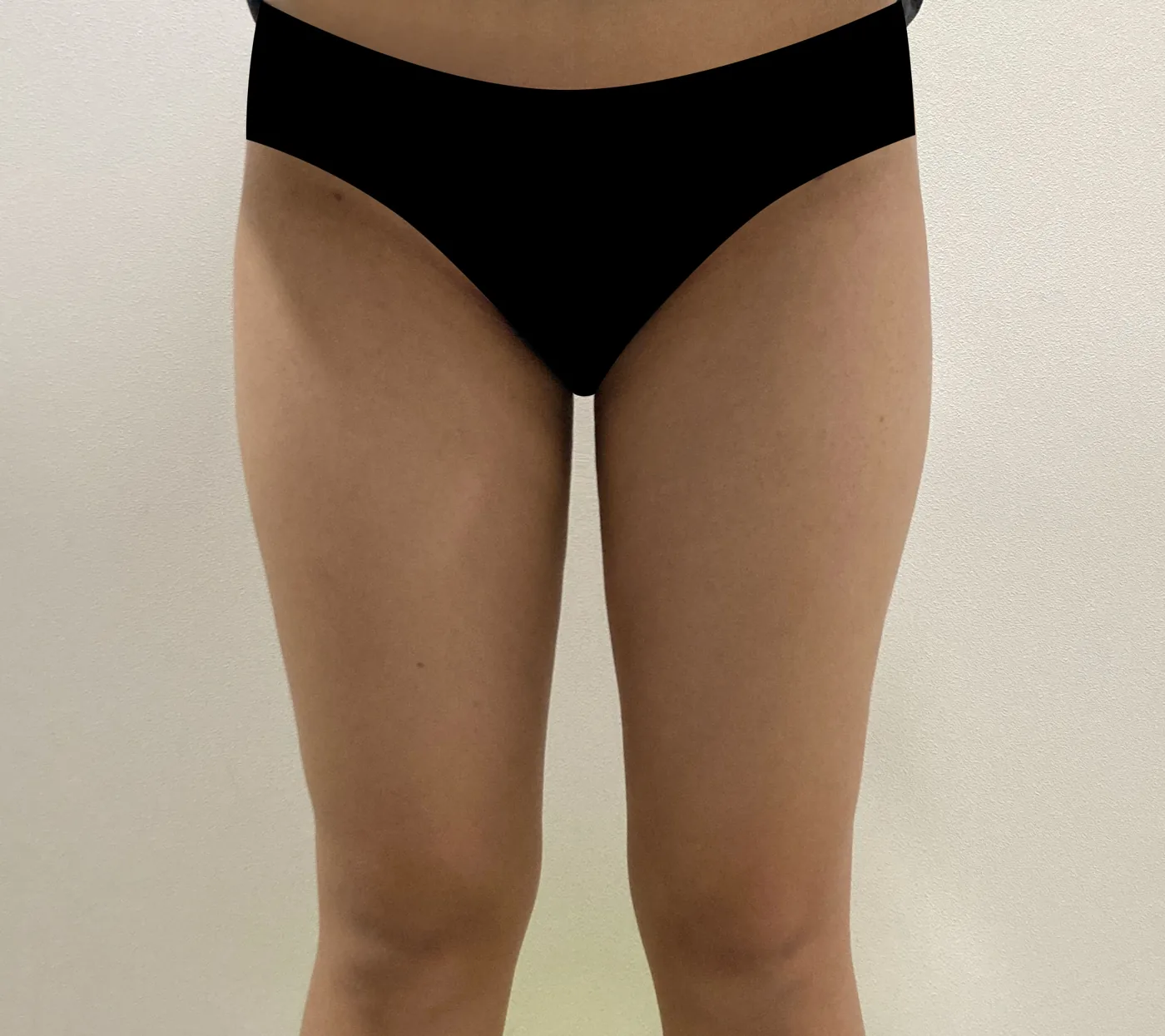
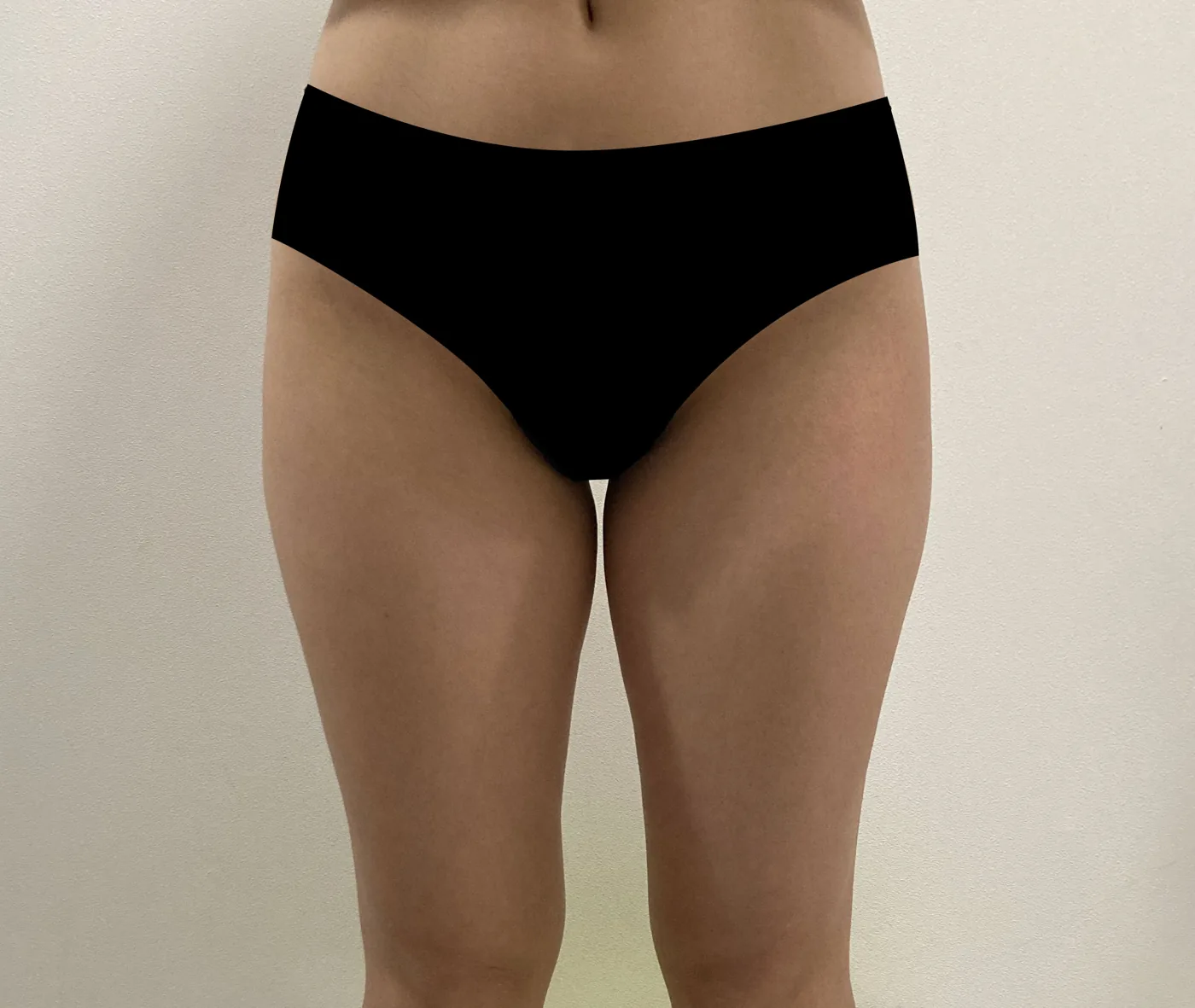
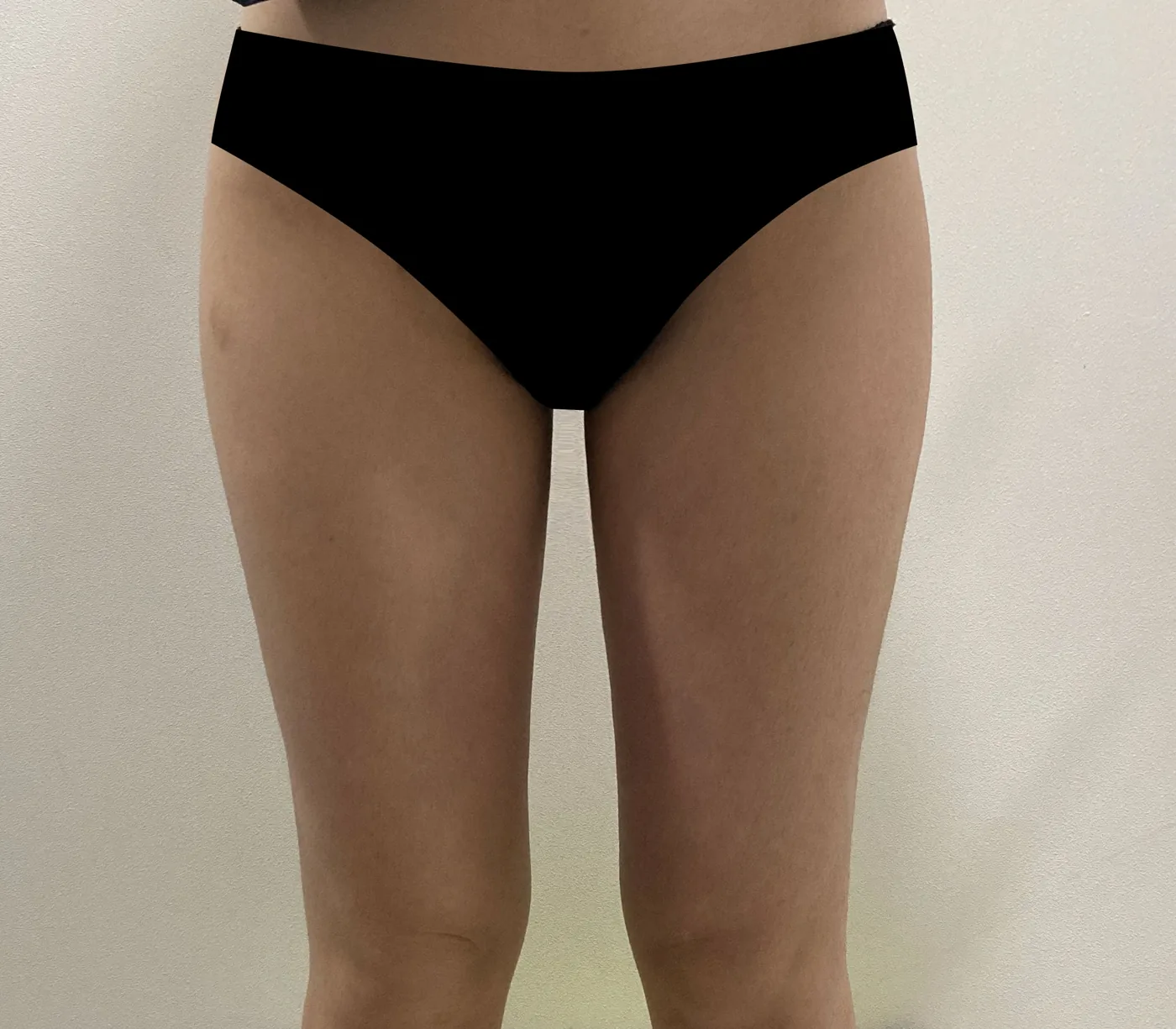
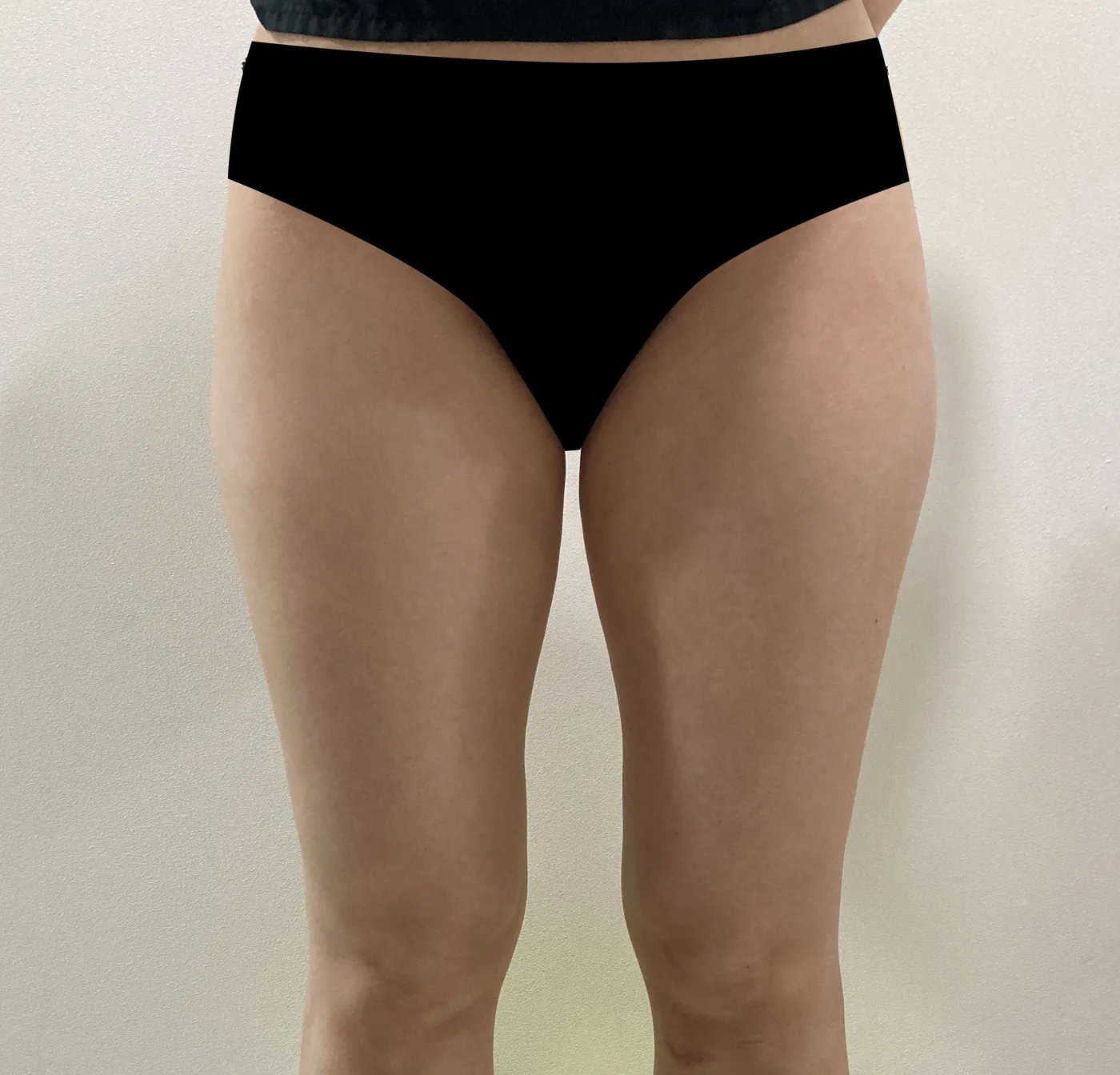
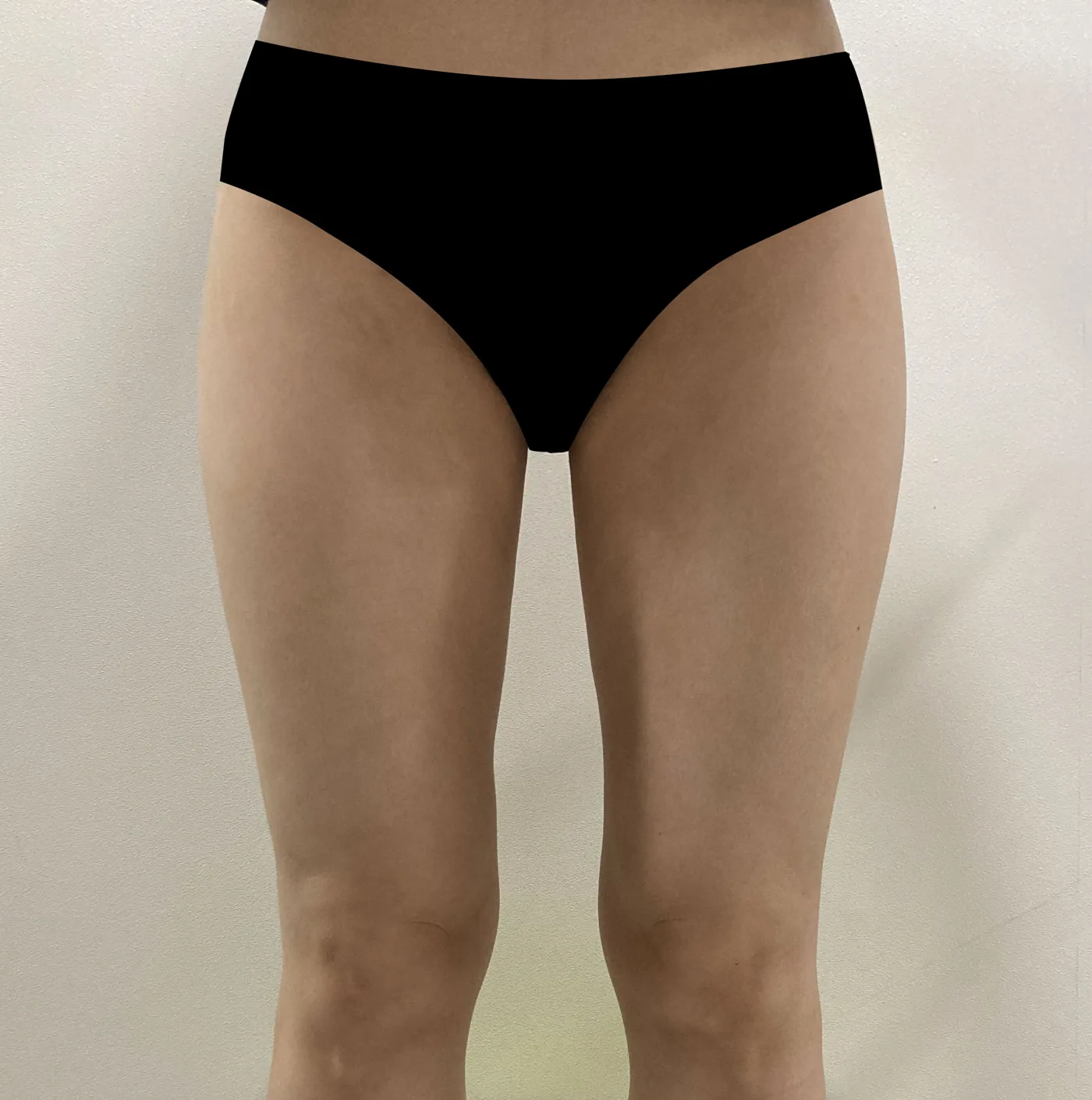
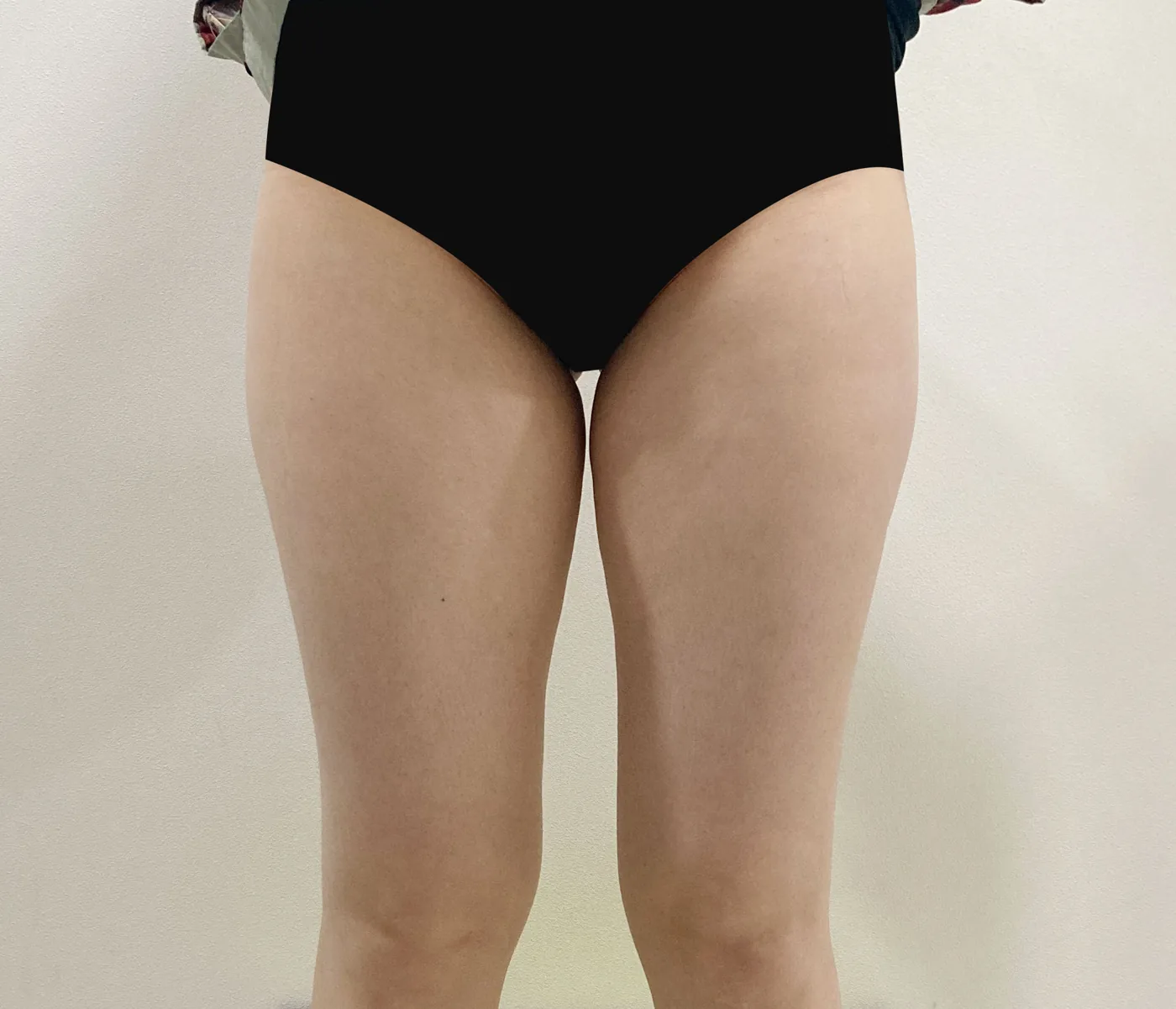
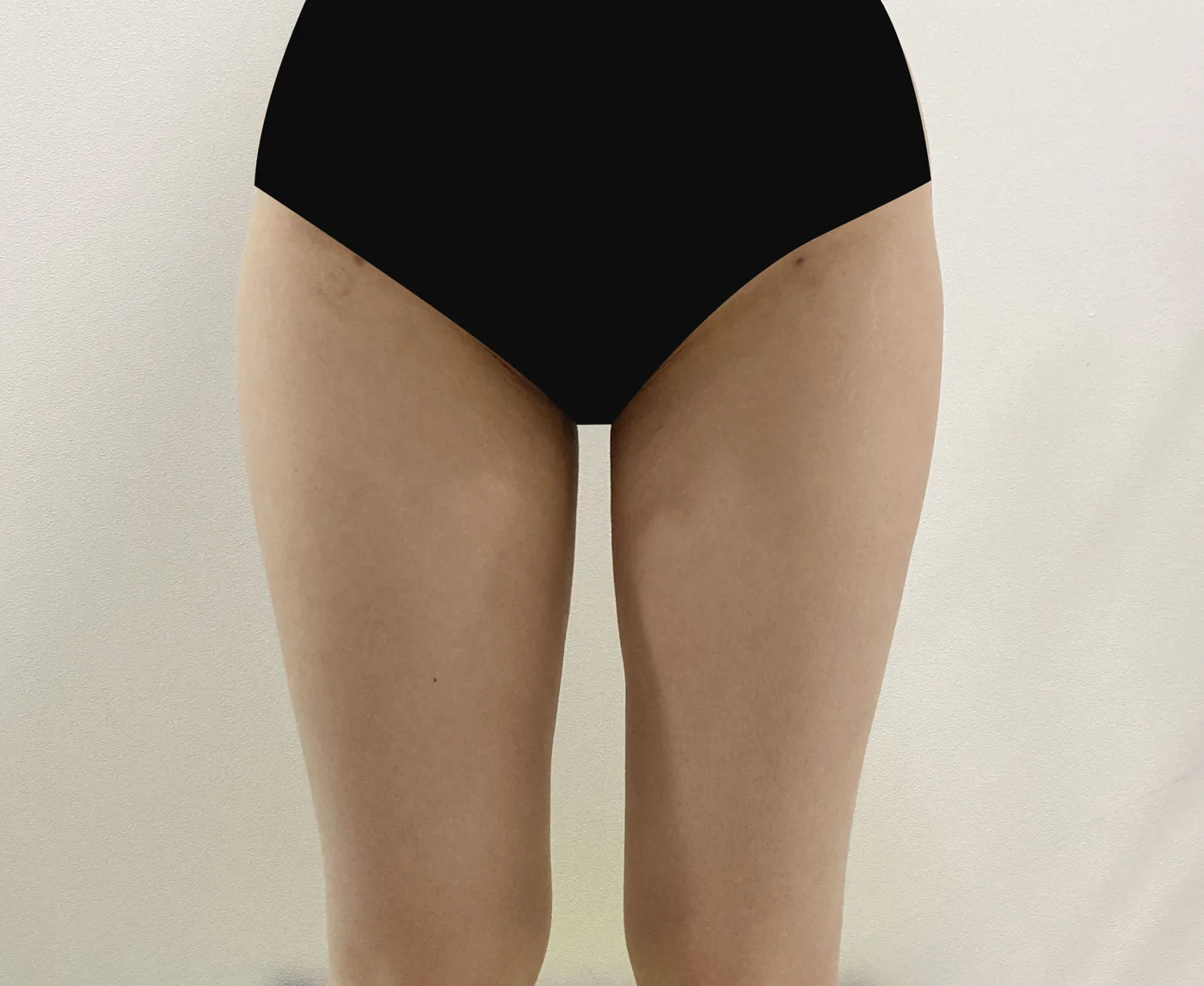
This is a minimally invasive procedure with genuine risks, and the director walks you through them before you consent to anything. Bruising, swelling and soreness across the treated leg are expected early on. Patches of reduced sensation along the outer thigh are common as well, since the skin nerves there run a long superficial course, and they usually fade over weeks. Less frequently patients see surface irregularity, a fluid collection, firm nodules, looser skin, infection at the entry point, or a visible difference between the two legs.
Two things make a thigh its own case. It is a big curved surface, so any dip or ridge catches side light in a way it never would on a forearm; and legs are compared with each other constantly, so both are assessed upright at every review. A garment worn loosely also lets fluid settle towards the knee. Tell the clinic your full medical history, all medications and supplements, any previous leg surgery, and any past reaction to anaesthetic.
Afterwards, wear the compression as instructed, keep the micro-entry point clean and dry, and call the clinic quickly if pain, redness, discharge, calf tightness or swelling increases after the first few days. A resident medical director is on site during opening hours, so a doctor can look at the leg the same day.