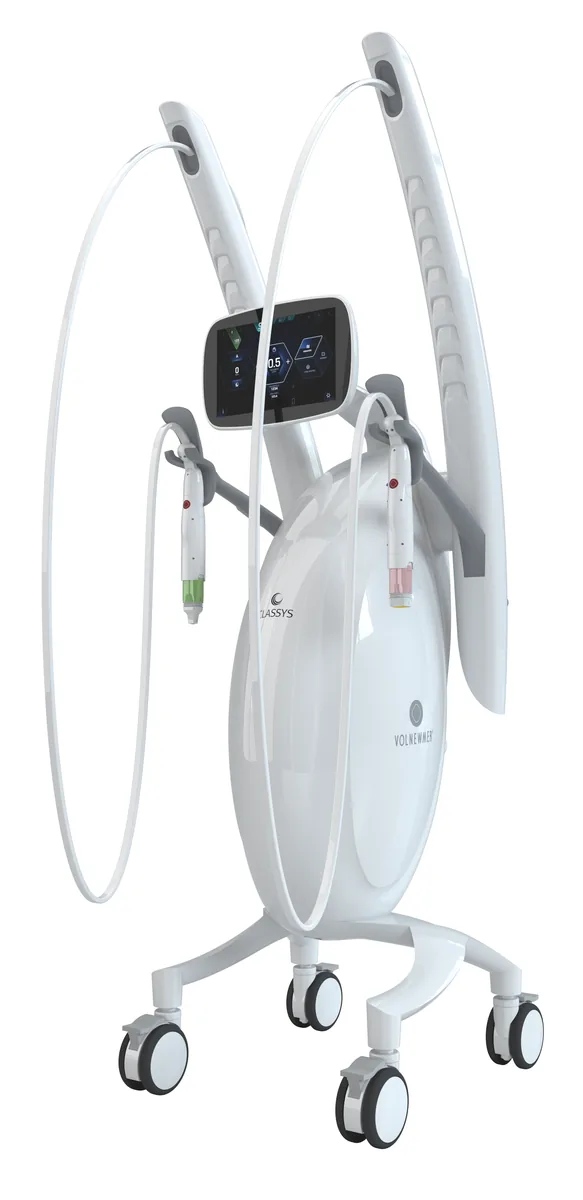
This is heat delivered into living tissue, and it carries real risks that your director goes through by name before you consent. Redness, warmth, mild swelling and tenderness across the treated field are expected and usually settle within a day or two. Small raised welts along a treated line occur in some patients and subside on their own.
The complications that matter are worth stating plainly. A thermal burn is the first: too much energy in one placement, or a pulse delivered where coupling is poor, can injure the skin, and a burn can leave a mark that takes a long time to fade or does not fade at all. Blistering belongs to the same mechanism and shows up as fluid-filled skin in the hours after a session. Uneven texture is the third, where the surface heals with visible irregularity across a field that was heated inconsistently. The fourth is the one patients hear about least: subcutaneous fat loss. Fat under the skin is heat-sensitive, and excessive or misdirected energy can thin the fat pad beneath a treated area, leaving a hollow or a depression in the contour that is difficult to correct. Temporary numbness, altered sensation and nerve irritation are also described, and a proportion of patients simply see little response for the energy they received.
The controls against these are unglamorous and they are the reason a director runs the handpiece personally: appropriate settings for your skin, continuous movement, adequate coupling, and a patient who is encouraged to speak the moment a pulse feels sharp instead of warm. Do not let anyone talk you through pain during an energy treatment. After a session, keep heat off the face, skip the sauna and hard training for the period your director specifies, use sun protection, and contact the clinic if a blister forms, if pain increases after the first day, or if an area of skin changes colour. One of the three medical directors is present in the building during all opening hours.